OPERATING AND MANEUVERING SECTION 6
134
3937 3/99
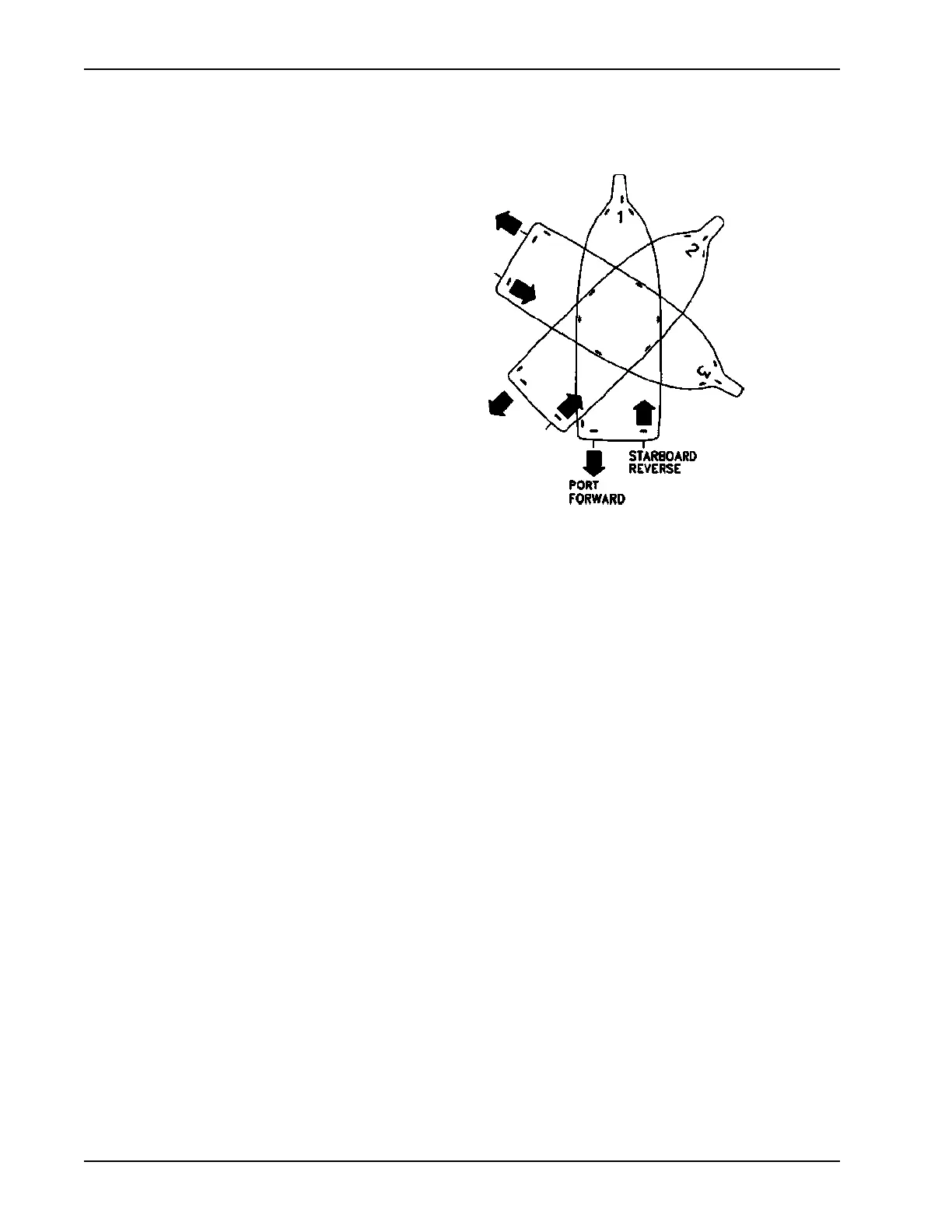
of turn by turning the rudders in the direction of the
turn.
Towing
Always offer assistance to a vessel in distress. However,
towing a capsized boat or a boat with a damaged hull is
not recommended. In these situations, lend aid to the
occupants and call the proper authorities. Remember,
you are obligated to lend aid to any person in distress,
but not to the vessel. If you believe your vessel can not
tow the vehicle in distress, do not attempt it. One
disabled boat is better than two.
An anchor's holding power depends on its weight and
the length of the anchor line. The most effective length
is six to seven times the depth of the water you intend
to anchor in. For example, if the water is 10 feet deep,
you should have 60-70 feet of anchor line.
Approach your selected anchor site from downwind.
Come to a dead stop over the spot where you want to
drop anchor. Have a crew member lower the anchor.
When the anchor hits bottom, reverse engines and
slowly move the boat backwards to pay out more anchor
line as the crew member keeps a slight tension on the
line. When the proper length is out, the crew member
can snub the line by winding it around the bow cleat.
This should cause the anchor flukes to dig in and hold
effectively.
Anchoring



 To Next Page