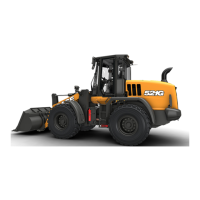
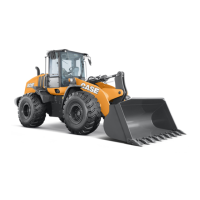
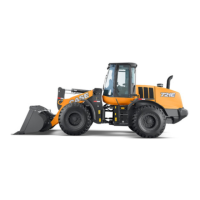
This document provides a comprehensive service manual for the Case 821G and 921G Tier 2 Wheel Loaders, specifically the ZBAR - EH, NEW CAB models. It covers various aspects of the machine, including its engine, transmission, hydraulic systems, axles, brakes, steering, wheels, cab climate control, electrical systems, front loader and bucket, and platform, cab, bodywork, and decals. The manual is intended for qualified dealership personnel and emphasizes strict adherence to instructions and the use of special tools for all repair and maintenance work.
Function Description:
The Case 821G and 921G Tier 2 Wheel Loaders are heavy-duty construction machines designed for various tasks such as loading, digging, and material handling. They feature a ZBAR (Z-bar linkage) front loader arm, an EH (Electro-Hydraulic) control system, and a new cab design, offering enhanced performance and operator comfort. The machines are equipped with a robust engine, powershift transmission, and a four-wheel-drive (4WD) system, ensuring powerful and efficient operation in diverse working conditions. Hydraulic systems control the loader arm, bucket, and other functions, providing precise and responsive operation. The cab climate control system ensures a comfortable working environment for the operator, while the electrical systems manage various machine functions and provide diagnostic capabilities.
Important Technical Specifications:
Engine (821G ZBAR - EH, NEW CAB TIER2 and 921G ZBAR - EH, NEW CAB TIER2):
- Low idle: 870 RPM to 930 RPM
- Alternate low idle: 670 RPM to 730 RPM
- Alternate accelerated idle: 1270 RPM to 1330 RPM
- Working idle (setting from factory):
- 821G (4-speed and 5-speed): 920 RPM to 980 RPM
- 921G (4-speed and 5-speed): 970 RPM to 1030 RPM
- Maximum No Load RPM:
- 821G (4-speed and 5-speed): 2065 RPM to 2185 RPM
- 921G (4-speed and 5-speed): 2115 RPM to 2200 RPM
- Converter Stall:
- 821G (4-speed): 1775 RPM to 1975 RPM
- 821G (5-speed): 1832 RPM to 2032 RPM
- 921G (4-speed): 1865 RPM to 2065 RPM
- 921G (5-speed): 1867 RPM to 2067 RPM
- Hydraulic Stall:
- 821G (4-speed): 1915 RPM to 2115 RPM
- 821G (5-speed): 1920 RPM to 2120 RPM
- 921G (4-speed): 1905 RPM to 2105 RPM
- 921G (5-speed): 1957 RPM to 2157 RPM
- Converter & Hydraulic Stall: 1410 RPM to 1650 RPM (for both models and transmissions)
- Temperature of the torque converter oil: 82 – 104 °C (180 – 219 °F)
- Temperature of the hydraulic oil: 54 – 57 °C (129 – 135 °F)
- Engine oil type: CASE AKCELA UNITEK NO. 1™ SBL CJ-4 (SAE 10W-40 or SAE 0W-40 for cold weather)
- Engine oil capacity (with filter change): 13.25 L (14 US qt)
- Engine total capacity in system: 15.1 L (16 US qt)
- Coolant type: CASE AKCELA ACTIFULL™ OT EXTENDED LIFE COOLANT
- Coolant system capacity: 30 L (32 US qt)
- Fuel system capacity: 288 L (76 US gal)
Hydraulic System:
- Hydraulic fluid type: CASE AKCELA HY-TRAN® ULTRACTION (ISO VG-46) or CASE AKCELA HY-TRAN® ULTRACTION SSL (low temperature)
- Total system capacity:
- 821G: 178 L (47 US gal)
- 921G: 200 L (53 US gal)
- Reservoir capacity:
- 821G: 90.8 L (24 US gal)
- 921G: 110 L (29 US gal)
Transmission:
- Transmission oil type: CASE AKCELA NEXPLORE™ FLUID (SAE 10W - 30)
- Service capacity - with filter change: 34.1 L (36 US qt)
Axles:
- Axle oil type: CASE AKCELA TRANSAXLE FLUID 80W-140 (SAE 80W-140)
- Front axle capacity (Standard and Heavy Duty):
- 821G: 40 L (42.3 US qt)
- 921G: 42 L (44.4 US qt)
- Rear axle capacity (Standard and Heavy Duty): 40 L (42.3 US qt)
Grease:
- Grease type: CASE AKCELA MOLY GREASE
Usage Features:
The wheel loader features a Roll Over Protection System (ROPS) cab for operator safety. Access to the cab is facilitated by a cab door handle and steps. Battery access is provided for maintenance, and a timed disconnect switch with an optional battery jump post is available. The machine is equipped with a bucket (Z-bar version) and loader lift arms, controlled by a bucket cylinder. Driving lights ensure visibility during operation. Other features include a pre-cleaner, sliding access panel, cab side window, cab air filter door, and a windshield washer reservoir. The EH control system allows for precise and smooth operation of the loader functions.
Maintenance Features:
The manual provides detailed instructions for various maintenance and repair procedures. Key maintenance features include:
- Safety Rules: Emphasizes personal safety, machine safety, and the importance of following DANGER, WARNING, and CAUTION messages. It also includes guidelines for emergency preparedness, proper equipment usage, and handling of engine components, radiator, and hydraulic systems.
- Waste Disposal: Provides guidelines for proper disposal of lubricating oil, brake system oil, coolant mixture, fuel, filter elements, and batteries to protect the environment.
- Basic Instructions: Offers important notices regarding equipment servicing, how to use maintenance standards, precautions for disassembly and assembly, and electrical equipment precautions.
- Torque Specifications: Includes minimum tightening torques for normal assembly of Grade 8.8, 10.9, and 12.9 bolts, nuts, and studs.
- Consumables: Lists detailed specifications for engine oil, hydraulic fluid, transmission oil, axle oil, coolant, and grease, including types, capacities, and relevant standards (API, ISO, SAE, MAT).
- Biodiesel Fuel Usage: Provides guidelines for using biodiesel fuel, including approved blends, potential performance effects, and recommendations for maintenance intervals and storage.
- Hydraulic Contamination: Explains the causes and effects of hydraulic contamination (microscopic and visible) and provides guidance on checking for and addressing contamination issues.
- Product Identification: Illustrates the machine's components and their locations, using terms like right-hand, left-hand, front, and rear as seen from the operator's seat.
- Engine Removal and Installation: Detailed steps for safely removing and installing the engine, including disconnecting and reconnecting various hoses, cables, and components, draining fluids, and torquing bolts to specified values. This includes procedures for relieving brake accumulator pressure, releasing hydraulic circuit pressure, and handling the exhaust system, air cleaner, alternator, air-conditioning compressor, and fuel lines.
- Hoses and Tubes: Instructions for replacing damaged hoses and tubes, ensuring correct positioning, and tightening clamps to prevent chafing and leaks.
- O-rings: Recommendations for replacing O-rings, seal rings, and gaskets during disassembly and lubricating new seals for proper installation.
- Battery Maintenance: Safety precautions for handling batteries, including disconnecting/reconnecting cables, avoiding short circuits, and proper treatment for electrolyte contact.
- Flammable Liquids: Safety guidelines for handling flammable liquids, including avoiding open flames, using appropriate extinguishing agents, and preventing spills.
- Tire Maintenance: Instructions for checking tire and rim conditions, inflating tires to correct pressures, and deflating tires before disassembly.
- Cleaning: Emphasizes thorough cleaning of components before repairs, using appropriate cleaning agents, and avoiding water jets on electrical components.
The manual stresses the importance of using original parts and components approved by the manufacturer to maintain warranty coverage and ensure optimal machine performance and safety. It also advises consulting local dealership networks for any questions or specific service needs.

 Need help?
 General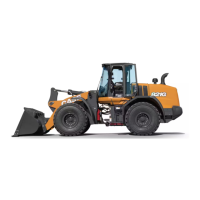

 To Next Page