83
Maintenance Section
Fuel Tank Water and Sediment - Drain
g00467033
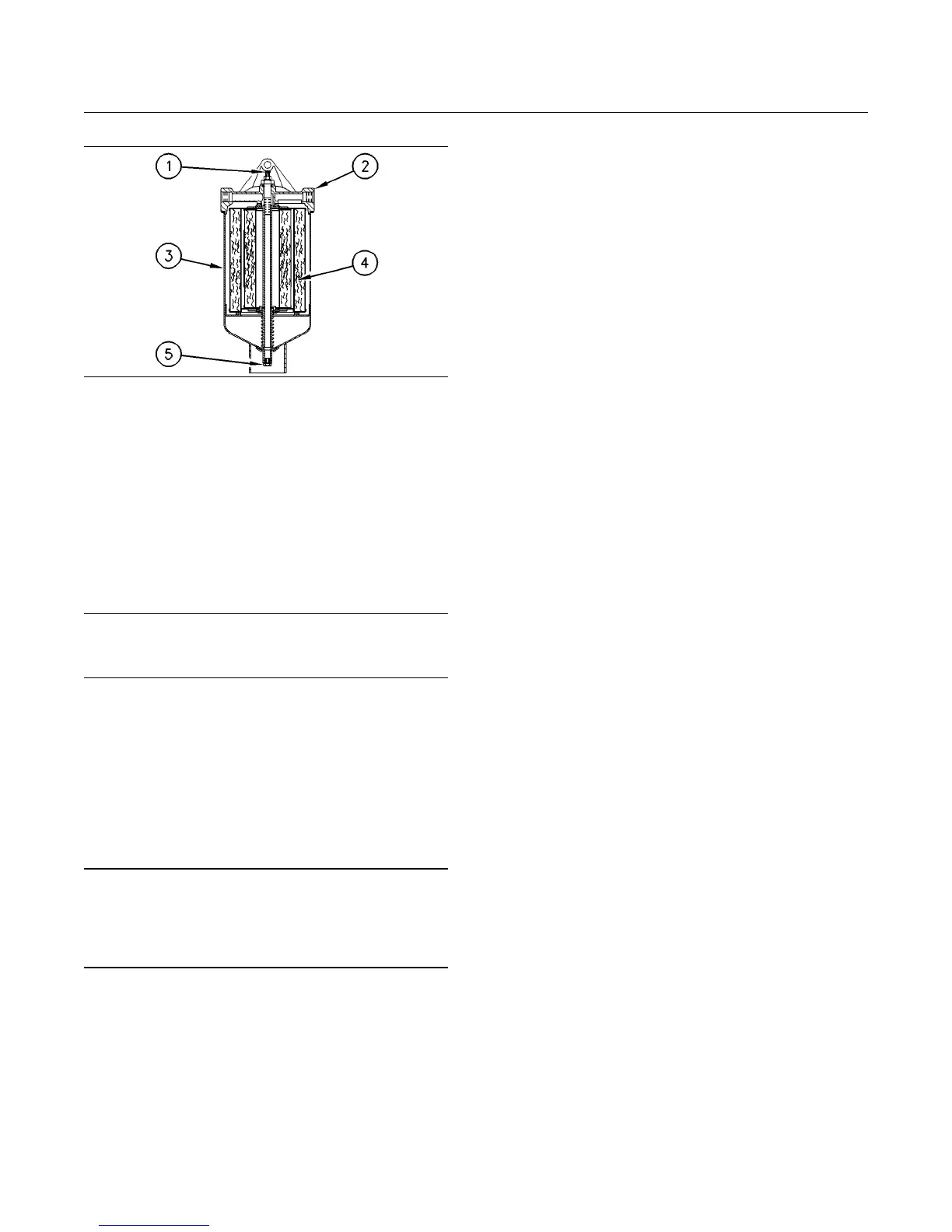
Illustration 33
(1) Vent valve
(2) Base
(3) Can
(4) Element
(5) Drain plug
Water in the fuel can cause fuel system components
to fail. Drain the water separator daily. Drain the
water separator more frequently when a large
concentration of water is present in the fuel system.
1. Close the fuel supply valve.
NOTICE
Use a suitable container to catch any fuel that might
spill. Clean up any spilled fuel immediately.
2. Remove drain plug (5). Depress vent valve (1) in
order to start the flow. Allow the water to drain
into a suitable container. Allow the water to flow
until fuel flows from the drain.
3. Install the drain plug. Dispose of the liquid
properly.
4. Open the fuel supply valve.
NOTICE
The water separator is under suction during normal
engine operation. Ensure that the drain valve is tight-
ened securely to help prevent air from entering the fuel
system.
i00073301
Fuel Tank Water and Sediment
- Drain
SMCS Code: 1273-543-M&S
Fuel Tank
Fuel quality is critical to the performance and to
the service life of the engine. Water in the fuel can
cause excessive fuel system wear. Condensation
occurs during the heating and cooling of fuel. The
condensation occurs as the fuel passes through
the fuel system and the fuel returns to the fuel tank.
This causes water to accumulate in fuel tanks.
Draining the fuel tank regularly and obtaining fuel
from reliable sources can help to eliminate water
in the fuel.
Drain the Water and the Sediment
Fuel tanks should contain some provision for
draining water and draining sediment from the
bottom of the fuel tanks.
Open the drain valve on the bottom of the fuel tank
in order to drain the water and the sediment. Close
the drain valve.
Check the fuel daily. Drain the water and sediment
from the fuel tank after operating the engine or drain
the water and sediment from the fuel tank after the
fuel tank has been filled. Allow five to ten minutes
before performing this procedure.
Fill the fuel tank after operating the engine in
order to drive out moist air. This will help prevent
condensation. Do not fill the tank to the top. The
fuel expands as the fuel gets warm. The tank may
overflow.
Some fuel tanks use supply pipes that allow water
and sediment to settle below the end of the fuel
supply pipe. Some fuel tanks use supply lines that
take fuel directly from the bottom of the tank. If
the engine is equipped with this system, regular
maintenance of the fuel system filter is important.
Fuel Storage Tanks
Drain the water and the sediment from the fuel
storage tank during the following conditions:
•
Weekly
•
Oil change
•
Refill of the tank


 To Next Page
 Loading...