Gauges and Indicators
i01233534
Gauges and Indicators
SMCS Code: 1900; 7450
Your engine may not have the same gauges or all of
the gauges that are described. For more information
about the gauge package, refer to the specifications
for your engine.
Gauges provide indications of engine performance.
Ensure that the gauges are in good working order.
Determine the normal operating range by observing
the gauges over a period of time.
Noticeable changes in gauge readings indicate
potential gauge or engine problems. Problems may
also be indicated by gauge readings that change
even if the readings are within specifications.
Determine and correct the cause of any significant
change in the readings. Consult your Caterpillar
dealer for assistance.
NOTICE
If no oil pressure is indicated, STOP the engine. En-
gine damage can result.
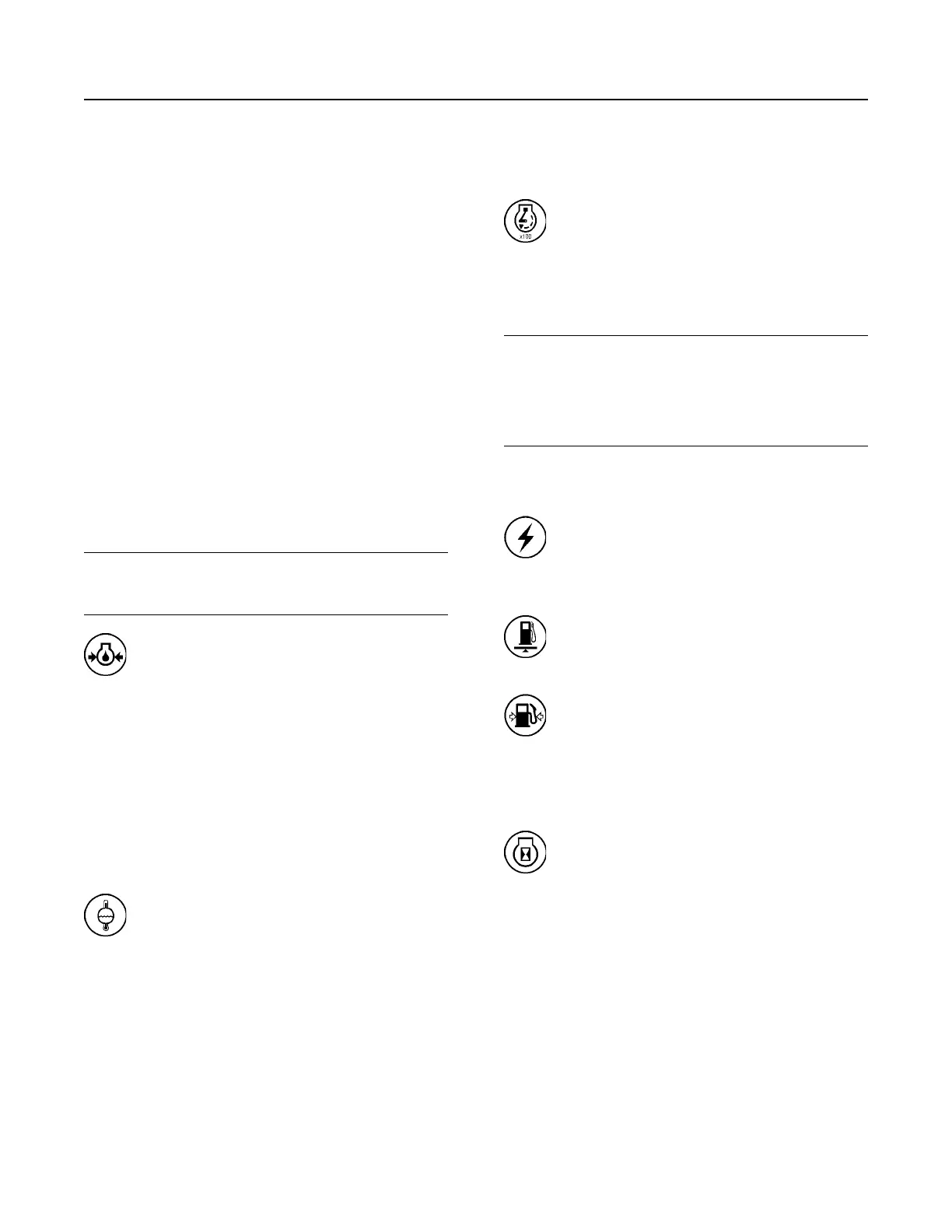
Engine Oil Pressure – The oil pressure
should be greatest after a cold engine is
started. The typical oil pressure for
turbocharged engines at rated rpm with
SAE10W30 is 275 to 606 kPa (40 to 88 psi).
A lower oil pressure is normal at low idle. The
minimum recommended oil pressure at 600 rpm is
103 kPa (15 psi). If the load is stable and the gauge
reading changes, perform the following procedure:
1. Remove the load.
2. Reduce engine speed to low idle.
3. Check the oil level and maintain the oil level.
Jacket Water Coolant Temperature –
Typical temperature range is 87 to 98°C
(189 to 209°F). The maximum allowable
temperature is 104°C (220°F). Higher
temperatures may occur under certain
conditions. The water temperature reading may
vary according to load. The reading should never
exceed the boiling point for the pressurized
system that is being used.
If the engine is operating above the normal range
and steam becomes apparent, perform the following
procedure:
1. Reduce the load and the engine rpm.
2. Inspect the cooling system for leaks.
3. Determine if the engine must be shut down
immediately or if the engine can be cooled by
reducing the load.
Tachometer – This gauge indicates
engine rpm (speed). When the throttle
control lever is moved to the full throttle
position without load, the engine is running at
high idle. The engine is running at the full load
rpm when the throttle control lever is at the full
throttle position with maximum rated load.
NOTICE
To help prevent engine damage, never exceed the
high idle rpm. Overspeeding can result in serious
damage to the engine. The engine can be operated
at high idle without damage, but should never be al-
lowed to exceed high idle rpm.
Note: The high idle rpm and the full load rpm are
stamped on the Information Plate.
Ammeter – This gauge indicates the
amount of charge or discharge in the
battery charging circuit. Operation of
the indicator should be to the right side of ““0””
(zero).
Fuel Level – This gauge indicates the
fuel level in the fuel tank. The fuel level
gauge operates when the start switch is
““ON”” .
Fuel Pressure – This gauge indicates
fuel pressure to the fuel injection pump.
If the gauge moves to the ““out”” position
the engine will not operate properly. If the gauge
is below 160 kPa (23 psi) the engine will not
operate properly. A decrease in fuel pressure
usually indicates a plugged fuel filter.
Service Hour Meter – This gauge
indicates the total number of clock
hours that the engine has operated.
SEBU7125-13
35
Operation Section
Gauges and Indicators


 To Next Page
 Loading...