• Grease fittings
• Pressure taps
• Breathers
• Drain plugs
Use caution when cover plates are removed.
Gradually loosen, but do not remove the last two
bolts or nuts that are located at opposite ends of the
cover plate or the device. Before removing the last
two bolts or nuts, pry the cover loose in order to
relieve any spring pressure or other pressure.
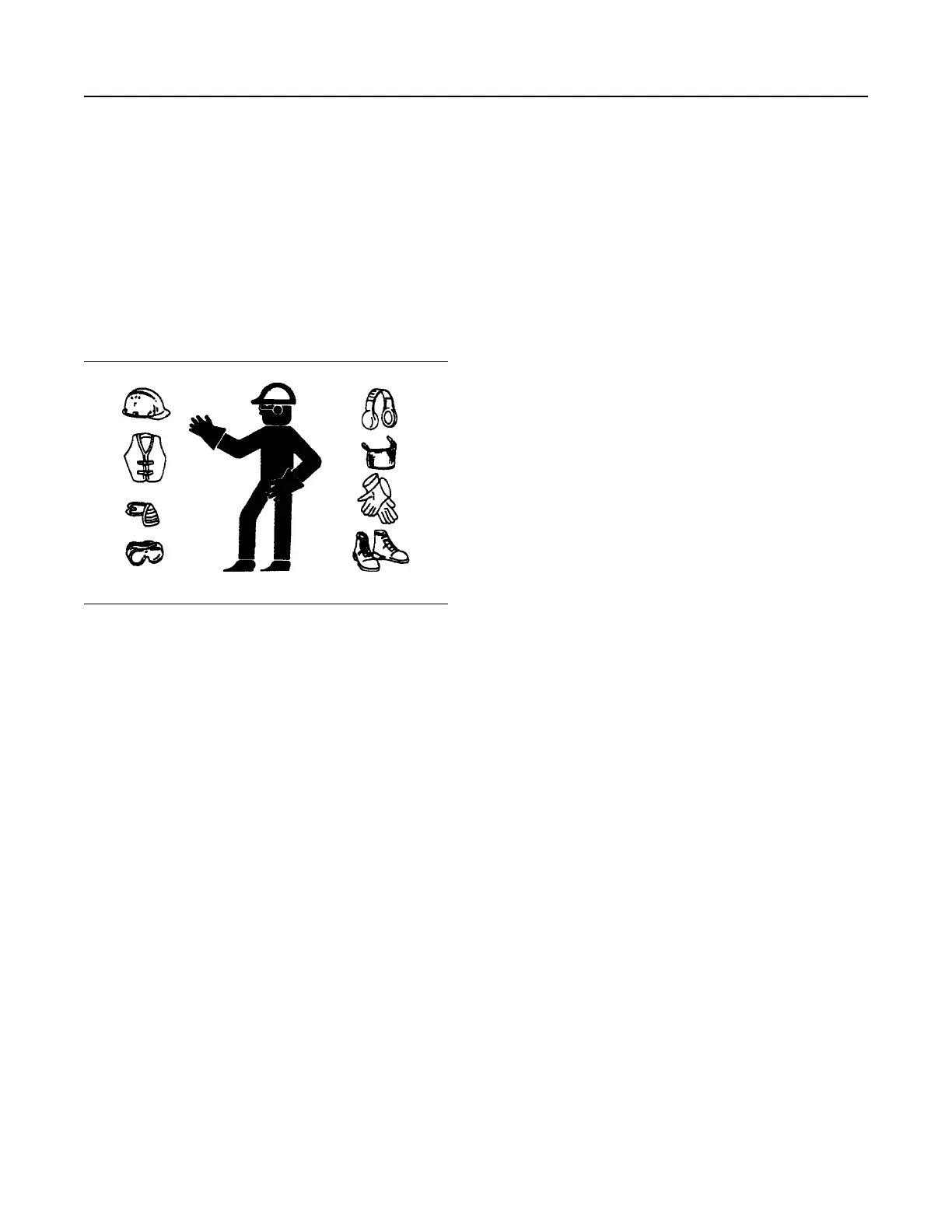
Illustration 16 g00702020
• Wear a hard hat, protective glasses, and other
protective equipment, as required.
• When work is performed around an engine that is
operating, wear protective devices for ears in
order to help prevent damage to hearing.
• Do not wear loose clothing or jewelry that can
snag on controls or on other parts of the engine.
• Ensure that all protective guards and all covers
are secured in place on the engine.
• Never put maintenance fluids into glass
containers. Glass containers can break.
• Use all cleaning solutions with care.
• Report all necessary repairs.
Unless other instructions are provided, perform
the maintenance under the following conditions:
• The engine is stopped. Ensure that the engine
cannot be started.
• The protective locks or the controls are in the
applied position.
• Disconnect the batteries when maintenance is
performed or when the electrical system is
serviced. Disconnect the battery ground leads.
Tape the leads in order to help prevent sparks.
• When starting a new engine, make provisions to
stop the engine if an overspeed occurs. If an
engine has not been started since service has
been performed, make provisions to stop the
engine if an overspeed occurs. Shutting down the
engine may be accomplished by shutting off the
fuel supply and/or the air supply to the engine.
• Do not attempt any repairs that are not
understood. Use the proper tools. Replace any
equipment that is damaged or repair the
equipment.
• Start the engine with the operator controls. Never
short across the starting motor terminals or the
batteries. This method of starting the engine could
bypass the engine neutral start system and/or the
electrical system could be damaged.
Pressurized Air and Water
Pressurized air and/or water can cause debris and/or
hot water to be blown out which could result in
personal injury.
The maximum air pressure for cleaning purposes
must be reduced to 205 kPa (30 psi) when the air
nozzle is deadheaded and used with effective chip
guarding (if applicable) and personal protective
equipment. The maximum water pressure for
cleaning purposes must be below 275 kPa (40 psi).
When pressurized air and/or pressurized water is
used for cleaning, wear protective clothing, protective
shoes, and eye protection. Eye protection includes
goggles or a protective face shield. Always wear eye
protection for cleaning the cooling system.
SEBU7125-13
9
Safety Section
General Hazard Information


 To Next Page
 Loading...