Shoulder Rest
To attach the shoulder rest:
o Adjust the feet so that the shoulder rest will clamp on the edges of the lower bout
o Gently spread the feet to fit over the edge and snap in.
Maintenance
Always keep your instrument and bow in its case with the lid closed when not in use. Also, be
sure that you securely lock the bow in place and remove the shoulder rest or pad before closing
the case. Careless accidents could leave your instrument seriously damaged.
Pegs
If pegs start to slip push the peg in towards the peg box to get a better grip.
Use peg compound to help lock the pegs in place. You can also apply chalk onto the pegs
where it is inserted into the peg box. You should apply peg drop every couple of months.
Over time, all pegs and the peg box become worn. When this happens, it is time to bring the
instrument to a professional repairperson for refitting.
Body
Never use furniture polish or alcohol to clean your instrument
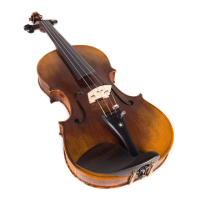
Always clean your violin after playing. Keep a lint-free cloth inside your case and wipe off all the
rosin dust and dirt from your instrument after each time you play. Pay particular attention to the
fingerboard and the top of the instrument. If rosin dust accumulates and is not wiped off it will
fuse with the varnish, and become impossible to remove without damage.
Be careful not to knock the bridge out of place while cleaning.
The Bow
The bow should not be used on anything or for anything other than the strings of a
stringed instrument.
Never touch the horsehair on your bow. The oils from your skin will damage the hair and
take away its ability to grab the strings.
Rosin the bow regularly. For students it is probably sufficient to rosin the bow once a week. Too
much rosin will produce a harsh tone and cause an excessive build-up of white rosin powder on
the instrument.
When your practice session is over loosen the screw so that the hair is no longer taut and return
your bow to its case. This will help you prolong the life of your bow. You should loosen the hair
completely then bring it back with just a single turn of the screw. The goal is to “keep the hair
even but allow the bow to relax.”


 To Next Page