www.usaprocom.com
17200006-01B
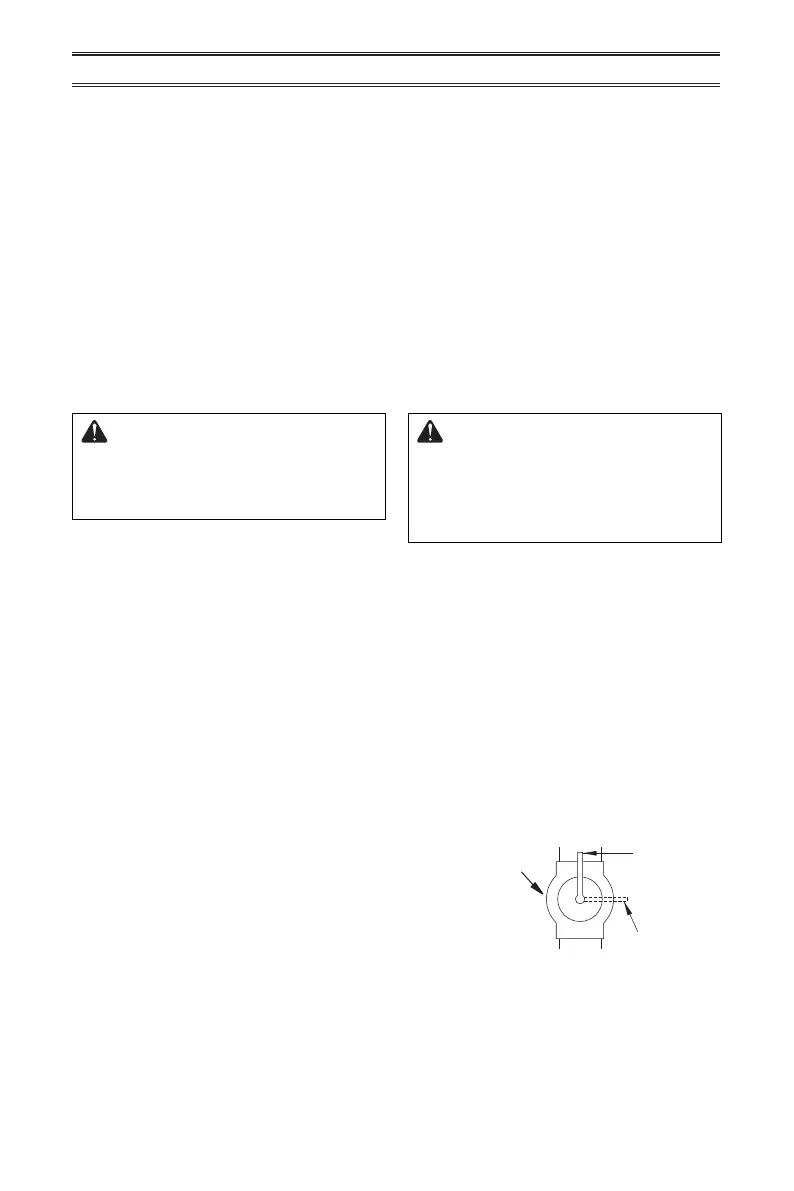
Figure 19 - Equipment Shutoff Valve
CHECKING GAS CONNECTIONS
Open
Closed
Equipment
Shutoff Valve
1. Disconnect heater with its appliance main
gas valve (control valve) and equipment
shutoff valve from gas supply piping sys-
tem. Pressures in excess of 1/2 PSIG will
damage heater regulator.
2. Cap off open end of gas pipe where equip-
ment shutoff valve was connected.
3. Pressurize supply piping system by either
using compressed air or opening gas sup-
ply valve.
INSTALLATION
WARNING: Test all gas piping
and connections for leaks after
installing or servicing. Correct
all leaks at once.
WARNING: Never use an open
ame to check for a leak. Apply a
mixture of liquid soap and water
to all joints. If bubbles form, there
is a leak. Correct all leaks at once.
PRESSURE TESTING GAS SUPPLY PIPING SYSTEM
Test Pressures In Excess Of 1/2 PSIG (3.5 kPa)
4. Check all joints of gas supply piping
system. Apply mixture of liquid soap and
water to gas joints. If bubbles form, there
may be a leak.
5. Correct all leaks at once.
6. Reconnect heater and equipment shutoff
valve to gas supply. Check reconnected
ttings for leaks.
Test Pressures Equal To or Less Than 1/2 PSIG (3.5 kPa)
1. Close equipment shutoff valve (see Fig-
ure 19).
2. Pressurize supply piping system by either
using compressed air or opening gas sup-
ply valve.
3. Check all joints from gas supply (see
Figure 20 or 21, page 18) to equipment
shutoff valve. Apply a noncorrosive leak
detection uid to all joints. Bubbles form-
ing show a leak.
4. Correct all leaks at once.
IMPORTANT: Install an equipment shutoff
valve in an accessible location. The equip-
ment shutoff valve is for turning on or shutting
off the gas to the appliance.
Apply pipe joint sealant lightly to male threads.
This will prevent excess sealant from going
into pipe. Excess sealant in pipe could result
in clogged heater valves.
The installer must supply an external regula-
tor. The external regulator will reduce incom-
ing gas pressure. You must reduce incoming
gas pressure to between 11" and 14" of water.
If you do not reduce incoming gas pressure,
heater regulator damage could occur. Install
external regulator with the vent pointing down
as shown in Figure 18, page 16. Pointing
the vent down protects it from freezing rain
or sleet.
Install sediment trap in supply line as shown
in Figure 17, page 16. Place sediment trap
where it is within reach for cleaning. Place
sediment trap where trapped matter is not
likely to freeze. A sediment trap traps mois-
ture and contaminants. This keeps them from
going into heater controls. If sediment trap is
not installed or is installed wrong, heater may
not run properly.


 To Next Page