
 Need help?
Do you have a question about the Centek Air CT-65J071 and is the answer not in the manual?
Details the intended use of the air conditioning unit for maintaining comfortable indoor temperatures.
Lists essential safety rules and warnings to prevent hazards, injuries, and appliance damage during use.
Highlights critical warnings regarding direct sunlight, air flow obstruction, cold air exposure, and ventilation.
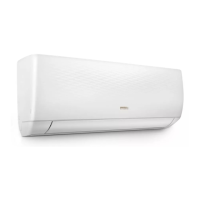
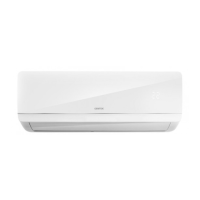
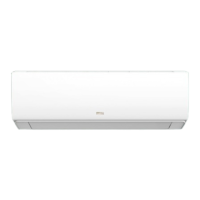
Illustrates and labels the key parts of both the indoor and outdoor units.
Explains how to operate the air conditioner using the manual start button when the remote is unavailable.
Provides information on utilizing the remote control for various functions and operations.
Guides on inserting and replacing batteries for the remote control unit.
Instructions for cleaning and maintaining the front panel of the indoor unit.
Actions to take at the end of the cooling/heating season to prepare the appliance for storage.
Steps to follow at the start of a new season to ensure the appliance is ready for operation.
Troubleshooting steps for when the air conditioner fails to power on.
Diagnoses reasons for the air conditioner not providing cooling or heating.
Addresses problems related to the air conditioner's control system and potential interference.
Explains delays in operation and typical waiting times for certain functions.
Discusses causes of unpleasant odors emitted by the air conditioner.
Explains the cause of running water sounds, often related to refrigerant circulation.
Details the source of crackling sounds due to temperature expansion/contraction.
Describes situations where moisture may be sprayed from the exhaust.
Explains delays in air discharge, particularly in heating mode.
Addresses interruptions in air discharge, often related to defrosting cycles.
Troubleshooting steps for when the remote control unit is not functioning properly.
Guidelines for selecting an appropriate and safe location for the outdoor unit.
Instructions for correctly installing the mounting panel for the indoor unit on the wall.
Information on acceptable height differences between indoor and outdoor units and refrigerant requirements.
Steps for installing the indoor unit, including tube and cable connections.
Procedure for securely mounting the outdoor unit using brackets and ensuring stability.
Detailed instructions for connecting refrigerant tubes using proper torque and bend radius.
Instructions on how to protect the refrigerant and drain tubes with PVC tape.
Procedure for testing the system for leaks and removing moisture using a vacuum pump.
Steps for connecting the electrical power and signal wires to the indoor unit.
Illustrates the electrical connections for the indoor unit based on cooling capacity.
Shows the electrical connections for the outdoor unit based on cooling capacity.
Details the specifications for electrical and interconnect cables used with the air conditioner models.
Guidance on how to properly dispose of the appliance at the end of its service life.
Information on service life, certification, authorized service centers, and warranty terms.
Details the conditions and requirements for a valid guarantee and exclusions.
 General
| Cooling capacity | 7000 BTU |
|---|---|
| Power Supply | 220-240V, 50Hz |
| Power Consumption | 650 W |
| Noise level (indoor unit) | 34 dB |
| Refrigerant type | R410A |
| Indoor unit dimensions | 700x250x190 mm |
| Type | Split-system |
| Main modes | Cooling, Heating, Dehumidification |
| Weight | 25 kg |


 To Next Page