EasyManua.ls Logo

Central Pneumatic 67696 - User Manual

Central Pneumatic 67696
26 pages
Print Icon
To Next Page IconTo Next Page
Loading...
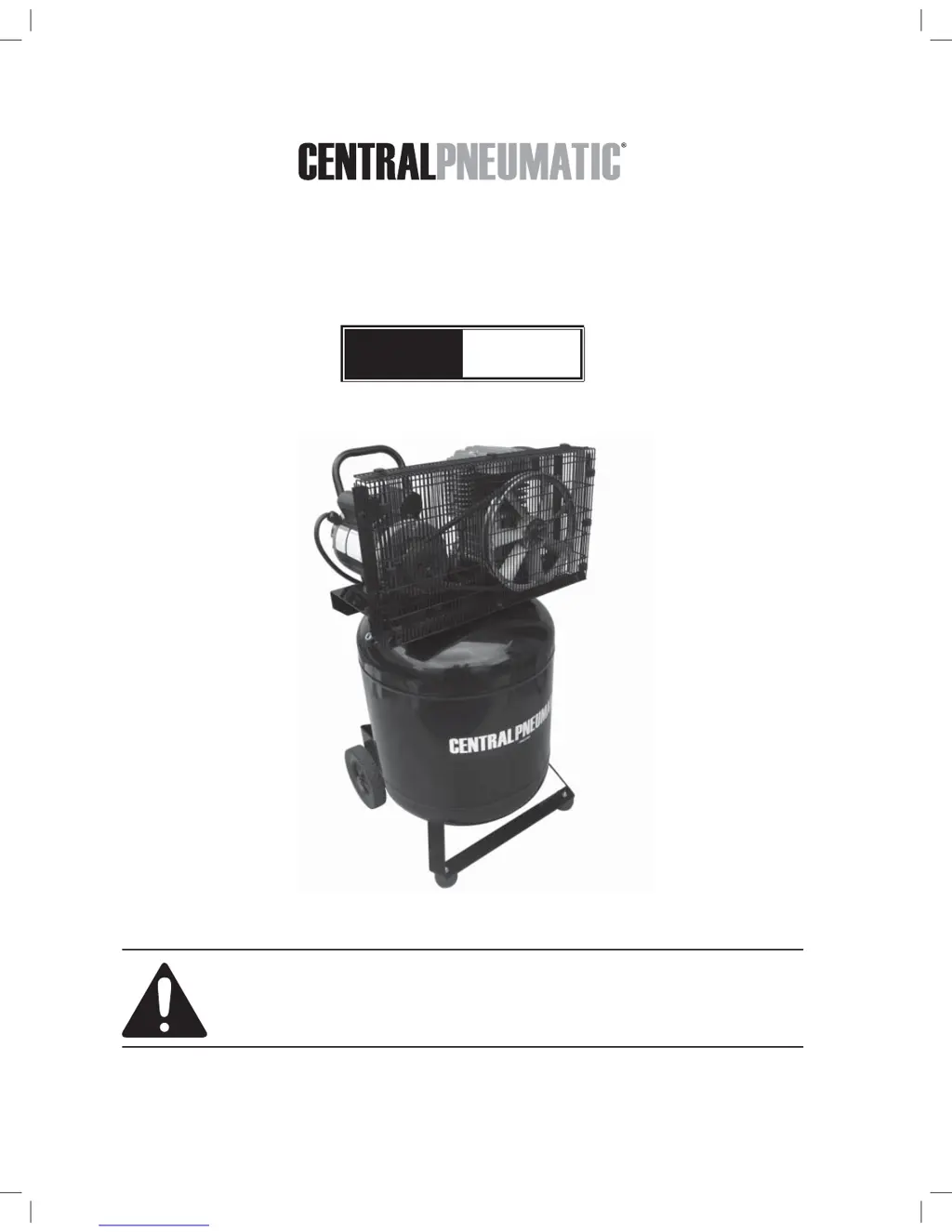
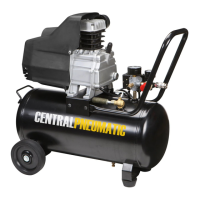
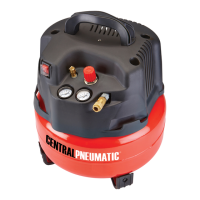
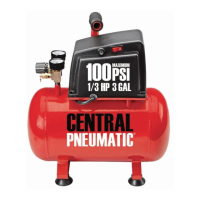
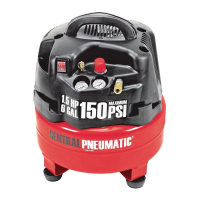
SIX GALLON OILLESS
AIR COMPRESSOR
Model
67696
SET UP AND OPERATING INSTRUCTIONS
Visit our website at: http://www.harborfreight.com
Read this material before using this product.
Failure to do so can result in serious injury.
SAVE THIS MANUAL.
For technical questions or replacement parts, please call 1-800-444-3353.
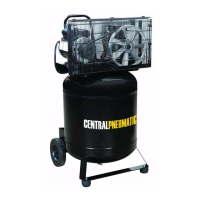
68066
Model
67696
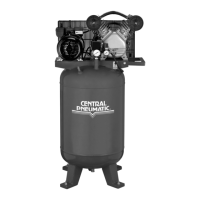
68127
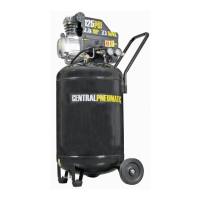
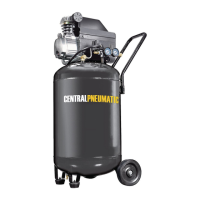
29 GALLON BELT DRIVEN
AIR COMPRESSOR

Other manuals for Central Pneumatic 67696

Questions and Answers

  • C
    Corey ColemanAug 13, 2025
    What to do if my Central Pneumatic 67696 Air Compressor will not run?
    • M
      Mr. Erik CrosbyAug 13, 2025
      If your Central Pneumatic Air Compressor won't run, several factors could be at play. First, ensure the unit is properly plugged in and check for any blown shop/house fuses or tripped breakers. Reset the breaker if necessary, after determining the cause. Also, examine your extension cord to confirm it's suitable for the tool. If the motor has overheated, it will restart once it cools down. Finally, the tank may be full, in which case the compressor will start when the pressure drops. If none of these steps work, the pressure switch might be faulty and require replacement.
  • J
    Jessica Brown DDSAug 16, 2025
    Why does my Central Pneumatic 67696 Air Compressor keep blowing fuses?
    • R
      Rachel BoydAug 16, 2025
      If the fuses blow or the circuit breaker trips repeatedly on your Central Pneumatic Air Compressor, it could be due to an incorrectly sized fuse or a circuit overload. Check that you are using the correct fuse and consider using a time-delay fuse. Try disconnecting other electrical appliances from the circuit or operate the compressor on its own dedicated branch circuit. Also, wrong gauge wire or length of extension cord can cause this issue, so verify that you are using the proper gauge wire and cord length.
  • T
    Teresa ChangAug 20, 2025
    Why is my Central Pneumatic 67696 motor humming but not starting?
    • P
      Peggy ParkerAug 20, 2025
      If the motor of your Central Pneumatic Air Compressor hums but doesn't run or runs slowly, it might be due to low voltage. Check the voltage with a voltmeter. Another possible cause is using the wrong gauge or length of extension cord; ensure you're using the correct gauge wire and cord length. If not any of these, the motor winding may be shorted or open, or the check valve or unloader may be defective.
  • N
    nicholas70Aug 25, 2025
    Why does the thermal overload protector keep tripping on my Central Pneumatic 67696 Air Compressor?
    • T
      Thomas BellAug 25, 2025
      If the thermal overload protector on your Central Pneumatic Air Compressor cuts out repeatedly, check for low voltage using a voltmeter. Ensure the compressor has proper ventilation and that the room temperature isn't too high; move it to a well-ventilated area if needed. Also, verify that you are using the correct gauge wire and cord length for any extension cord.
  • L
    Lauren SnyderAug 27, 2025
    What to do if air pressure drops when Central Pneumatic 67696 shuts off?
    • R
      Robert Cortez MDAug 27, 2025
      If the air pressure in the receiver drops after your Central Pneumatic Air Compressor shuts off, inspect all connections (fittings, tubing, etc.) for leaks by applying a soap and water solution, and then tighten them. Also, make sure the drain valve is tightened properly.
  • S
    sdiazAug 31, 2025
    Why does my Central Pneumatic 67696 keep running?
    • A
      Alice CherryAug 31, 2025
      If your Central Pneumatic Air Compressor runs continuously, it could be due to excessive air usage; try to decrease air usage, or the compressor may not be large enough for the tool’s requirement.
  • A
    Alicia WilliamsSep 4, 2025
    How to reduce moisture in the air from my Central Pneumatic 67696 Air Compressor?
    • N
      nicholasrobbinsSep 4, 2025
      If there's excessive moisture in the discharge air from your Central Pneumatic Air Compressor, it could be due to excessive water in the air tank; drain the tank. High humidity can also contribute, so try moving the compressor to an area with less humidity or use an air line filter.
  • M
    Morgan BurtonSep 7, 2025
    How to fix a vibrating Central Pneumatic 67696 Air Compressor?
    • C
      Christine BaileySep 8, 2025
      If your Central Pneumatic Air Compressor vibrates, tighten the mounting bolts.

Summary

IMPORTANT SAFETY INFORMATION

DO NOT RETURN TO STORE

Instructions regarding returning the product to the store and contact information for support.

INTRODUCTION TO THE AIR COMPRESSOR

GENERAL INTRODUCTION

General information about the tool's features and design priorities, emphasizing safety and performance.

GENERAL SAFETY RULES

WORK AREA SAFETY

Guidelines for maintaining a safe and functional work environment, including lighting and avoiding hazards.

ELECTRICAL SAFETY GUIDELINES

Precautions related to electrical connections, grounding, and using extension cords properly.

PERSONAL SAFETY PRECAUTIONS

Requirements for personal protective equipment and safe operating practices like staying alert.

TOOL USE AND CARE

Proper methods for using and maintaining tools and accessories, including checking for damage.

SERVICE SAFETY GUIDELINES

Guidelines for qualified personnel performing service and maintenance on the compressor.

SPECIFIC SAFETY RULES FOR OPERATION

FIRE AND EXPLOSION HAZARDS

Safety measures to prevent fire and explosion hazards, especially when spraying flammable liquids.

BURSTING RISK PREVENTION

Warnings against over-pressurizing the system or attachments to prevent bursting.

ELECTRIC SHOCK REDUCTION

Precautions to prevent electric shock, including keeping the unit dry and using proper cords.

INSPECT DAMAGED PARTS

Importance of inspecting and repairing damaged components before further use.

UNDERSTANDING SYMBOLS

ELECTRICAL AND CONSTRUCTION SYMBOLS

Definitions of electrical units (Volts, Amperes, Hertz) and construction standards.

OPERATIONAL SAFETY SYMBOLS

Symbols related to manual reading, eye protection, and general safety alerts.

HAZARD WARNING SYMBOLS

Symbols for bursting, fire, shock, hot surface, hearing, and breathing risks.

SIGNAL WORD DEFINITIONS

Explanation of signal words (Danger, Warning, Caution) indicating risk levels.

PROFESSIONAL SERVICE GUIDELINES

Guidelines for professional service and using identical replacement parts.

EYE PROTECTION REITERATION

Reiterates the importance of wearing eye protection for preventing eye injuries.

ELECTRICAL CONSIDERATIONS

EXTENSION CORD GUIDELINES

Guidelines for selecting and using appropriate extension cords based on amperage and length.

MOTOR SPEED AND WIRING

Factors affecting motor speed and considerations for proper shop wiring.

PROPER GROUNDING INSTRUCTIONS

Essential safety instructions for proper grounding of the unit to reduce shock risk.

GLOSSARY OF TERMS

AIR INTAKE AND COMPRESSION COMPONENTS

Definitions of Air Filter, Air Tank, Check Valve, Pump, and related parts.

PRESSURE AND CONTROL COMPONENTS

Definitions of Cut-in/Cut-off Pressure, Pressure Switch, Regulator Knob, and Gauges.

MEASUREMENT AND THREAD STANDARDS

Definitions of PSI, SCFM, NPT, and other relevant measurement standards.

TOOLS NEEDED FOR ASSEMBLY

REQUIRED ASSEMBLY TOOLS

List of tools required for assembling the wheel kit for the air compressor.

PRODUCT FEATURES AND SPECIFICATIONS

AIR COMPRESSOR SPECIFICATIONS

Technical details including horsepower, tank capacity, pressure, and air delivery rates.

COMPRESSOR FAMILIARIZATION

Guidance to familiarize yourself with the compressor's features and safety rules before use.

COMPRESSOR DESCRIPTION

General description of the air compressor's type: air-cooled, oil-lubricated, belt-driven.

PRESSURE CONTROL COMPONENTS

Explanation of Pressure Regulator Knob, Regulator Gauge, Safety Valve, Check Valve, and Tank Gauge.

ASSEMBLY INSTRUCTIONS

PRODUCT UNPACKING AND INSPECTION

Steps for safely unpacking the compressor and checking for included items and damage.

ATTACHING FEET AND WHEELS

Step-by-step guide to attach the rubber feet and wheels to the compressor.

HANDLE ASSEMBLY

Instructions for attaching the handle to the compressor body.

PUMP BREAK-IN PROCEDURE

Procedure for the initial run-in of the pump components to ensure proper operation.

OPERATING THE AIR COMPRESSOR

APPLICATIONS AND USES

Common uses and applications for the air compressor, such as operating tools and inflating items.

STEP-BY-STEP OPERATION GUIDE

Step-by-step guide for operating the compressor, including setting pressure and connecting air lines.

DAILY TANK DRAINING

Procedure for draining moisture from the air tank daily to prevent corrosion.

SAFETY VALVE FUNCTION CHECK

Instructions for testing the functionality of the safety valve to ensure it works correctly.

ROUTINE MAINTENANCE

GENERAL MAINTENANCE TASKS

Routine tasks like draining condensate, checking the tank for imperfections, and cleaning parts.

CHECKING AND CHANGING ENGINE OIL

Procedure for checking the oil level and changing the compressor oil at specified intervals.

V-BELT TENSION ADJUSTMENT

Instructions for adjusting the tension of the V-belt to ensure proper power transmission.

HEAD TENSION ROD TIGHTENING

Procedure for checking and tightening head tension rods to specified torque values.

INTAKE FILTER CLEANING

Steps for cleaning and maintaining the air intake filter to ensure optimal compressor performance.

TROUBLESHOOTING GUIDE

COMPRESSOR FAILS TO START

Diagnosing and resolving issues when the compressor fails to start or run.

MOTOR ISSUES: HUMMING OR SLOW START

Troubleshooting steps for a humming or slow-running motor, checking voltage and cord.

ELECTRICAL TRIPPING PROBLEMS

Identifying causes and solutions for repeated fuse or circuit breaker trips.

THERMAL OVERLOAD ISSUES

Addressing issues with the thermal overload protector tripping, checking ventilation and voltage.

PRESSURE LOSS AFTER SHUTDOWN

Troubleshooting pressure loss after the compressor stops, checking connections and valves.

EXCESSIVE MOISTURE IN AIR

Solutions for high moisture content in the discharged air, such as draining the tank.

CONTINUOUS OPERATION PROBLEM

Diagnosing why the compressor runs continuously, checking pressure switch and air usage.

EXCESSIVE VIBRATION

Troubleshooting excessive vibration issues, checking mounting bolts and belt tension.

REDUCED AIR OUTPUT

Resolving problems with reduced air output, checking connections and inlet valves.

PRESSURE SWITCH AIR LEAKS

Addressing air leaks related to the pressure switch valve by cleaning or replacing parts.

LOW PRESSURE AND HIGH CYCLE ISSUES

Troubleshooting low pressure and frequent start-ups due to high consumption or leaks.

IRREGULAR OVERHEATING PROBLEMS

Diagnosing irregular overheating of the motor or compressor, checking lubrication and ventilation.

THERMAL CUTOUT TRIPPING ON START

Resolving issues where the thermal cutout trips upon starting, checking charge and voltage.

UNEXPECTED SHUTDOWN DURING OPERATION

Troubleshooting unexpected compressor shutdowns during operation, checking thermal cutout.

VIBRATION, BUZZING, AND STARTING FAULTS

Diagnosing vibration, buzzing motor sound, and starting faults, checking capacitor.

OIL PRESENCE IN AIR NETWORK

Troubleshooting issues with irregular presence of oil in the air network.

VENT COCK CONDENSATE LEAKS

Resolving condensate leaks from the vent cock by cleaning or checking segments.

LIMITED WARRANTY INFORMATION

CALIFORNIA PROPOSITION 65 WARNING

Warning about lead content in brass components as per California law.

REPLACEMENT PARTS LIST

PARTS IDENTIFICATION AND CODES

List of all replacement parts with key numbers, codes, descriptions, and quantities.

Central Pneumatic 67696 Specifications

General IconGeneral
BrandCentral Pneumatic
Model67696
CategoryAir Compressor
LanguageEnglish

Related product manuals