The Chicago Pneumatic CP2003/2005/2007/2008/2010/2011 Screwdriver is a professional-grade pneumatic tool designed for the installation and removal of threaded fasteners in wood, metal, and plastic. It is not intended for any other use.
Important Technical Specifications:
The manual provides a detailed table of technical specifications for various models (CP2003, CP2005, CP2007, CP2008, CP2010, CP2011). Key specifications include:
- Free Speed: Ranges from 1,000 to 1,470 min⁻¹.
- Torque:
- Minimum: 0.3-0.4 Nm (for CP2003, CP2005, CP2007, CP2008) and 1.5-2 Nm (for CP2010, CP2011).
- Maximum: 1.1-1.5 Nm (for CP2003), 3.2-4.3 Nm (for CP2005, CP2007, CP2008), and 4.1-5.5 Nm (for CP2010, CP2011).
- Dimensions (LxHxA): Vary by model, for example:
- CP2003: 7.7 x 0.59 inches (197 x 15 mm).
- CP2005: 7.2 x 5.6 x 0.67 inches (182 x 143 x 17 mm).
- CP2007: 9.8 x 0.59 inches (250 x 15 mm).
- CP2008: 10.8 x 0.63 inches (275 x 16 mm).
- CP2010: 10.0 x 0.67 inches (253 x 17 mm).
- CP2011: 10.9 x 0.67 inches (278 x 17 mm).
- Weight: Ranges from 0.4 kg (0.9 lb) to 0.9 kg (2 lb) depending on the model.
- Air Consumption at Load: Ranges from 240 l/min (8.5 SCFM) for CP2003 to 390 l/min (13.8 SCFM) for most other models. CP2011 has 13.8 l/min (6.5 SCFM).
- Air Inlet: 1/8 BSP for most models, 1/4 BSP for CP2011.
- Inner Hose Diameter: 3/8 inches (9.5 mm) for all models.
- Sound Pressure (LPA): Ranges from 73 dB(A) to 81 dB(A).
- Sound Power (LWA): Ranges from 84 dB(A) to 92 dB(A).
- Vibrations (and K): All models are listed as >2.5 m/s².
- Max Operating Pressure: 6.3 bar (90 psi).
Usage Features:
The screwdriver is designed for straightforward operation.
- Accessory Attachment: Ensure accessories are correctly attached to the tool.
- Air Connection: Connect the device as shown in Figure 01 of the manual, ensuring a minimum hose diameter of 5 mm and maximum pressure of 6.3 bar.
- Starting and Stopping: To start the machine, pull the trigger (A). The machine's speed increases with increasing pressure on the trigger. To stop, release the trigger.
- Direction Reversal: The reverse switch (B) should only be used when the drive spindle has completely stopped. Changing speed before the drive spindle stops can damage the machine. To change the rotation direction, push the switch (B) as shown in Figure 03.
- Torque Adjustment: The manual includes an illustration (Figure 02) showing how to adjust the torque and select the rotation direction.
Maintenance Features:
Regular maintenance is crucial for the tool's longevity and safe operation.
- Lubrication: Use an air line lubricator with SAE #10 oil, adjusted to two drops per minute. If an air line lubricator cannot be used, add air motor oil to the inlet once a day.
- Environmental Regulations: Follow local country environmental regulations for safe handling and disposal of all components.
- Qualified Personnel: Maintenance and repair work must be carried out by qualified personnel using only original spare parts. Contact the manufacturer or your nearest authorized dealer for technical advice or spare parts.
- Energy Disconnection: Always ensure the machine is disconnected from the energy source to prevent accidental operation.
- Regular Inspection: Disassemble and inspect the tool every three months if it is used daily. Replace damaged or worn parts.
- High-Wear Parts: Parts subject to high wear are underlined in the parts list.
- Disposal: Dispose of the equipment according to the legislation of the respective country. All damaged, heavily worn, or malfunctioning devices MUST BE TAKEN OUT OF OPERATION. Repairs should only be performed by technical maintenance personnel.
The manual also includes a "WARNING" section emphasizing the importance of reading and understanding all instructions, including separately provided safety instructions (part number 6159948700), to reduce the risk of injury. It also provides a "Declaration of Noise and Vibration Emissions" in accordance with ISO 15744 and ISO 28927-2, highlighting that declared values are for comparison and may not be suitable for risk assessments in individual workplaces. It warns that the tool can cause hand-arm vibration syndrome if not managed properly and recommends a health surveillance program to detect early symptoms.

 Need help?
 General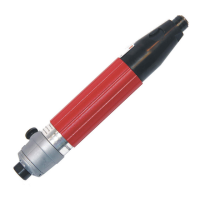

 To Next Page