7
Picture-01
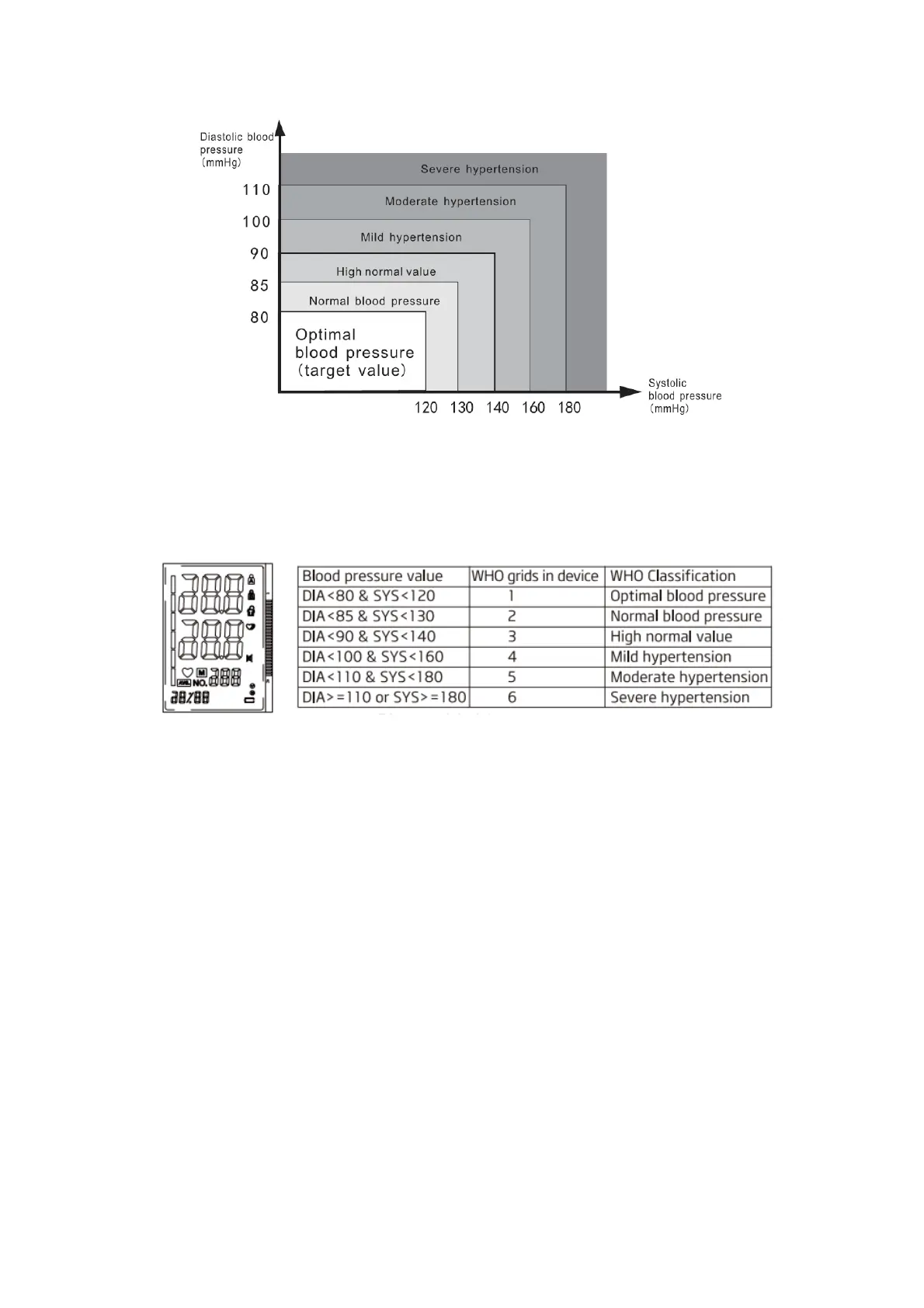
There are six grids in the display of device. Please refer to the picture-01-01. Different grids
represent d ifferent interval scales of WHO.
Picture-01-01
Blood pressure is very high if your diastolic pressure is above 90 mmHg and/or your systolic
blood pressure is over 160 mmHg, while at rest. In this case, please consult your physician
immediately. L ong-term values at this level end anger your health due to c ontinual damage to
the blood vessels in your body. If your systolic blood pressure values are between 140 mmHg
and 159mmHg and/or the diastolic blood pressure values between 90 mmHg and 99mmHg,
consult y our physician. Regular self-checks are necessary. If you have blood pressure values
that are too low, (i.e., systolic values under 105mmHg a nd/or diastolic values under 60 mmHg),
consult your ph ysician. Even with normal blood pressure values, a regular self-check with your
Upper Arm Type Blood Pressure Monitor is recommended. You can detect p ossible changes in
your values early and react ap propriately. If you are undergoing medical treatment to control
your blood pressure, keep a record of values along with time of day and date. Show these
values to you r physician. Never use the results of your measurements to independently alter
the drug doses prescribed by your physician.
Further information
• If you r values are mostly normal under resting conditions but exceptionally high under
conditions of physical or psych ological stress, it is possible that you are s uffering from
so-called “labile hypertension.” Consult your doctor.


 To Next Page