Need help?
Do you have a question about the Clark C 500 Series and is the answer not in the manual?
Emphasizes professional training and accident prevention.
Never drive with raised forks to prevent injury or damage.
Practice maneuvers for confidence and skill development.
Adhere to traffic rules, maintain control, and avoid sharp turns.
Drive backward if vision is obstructed, watching for hazards.
Be aware of overhead obstructions like sprinkler systems.
Ensure floors can support the truck's and load's weight.
Prohibits carrying passengers due to fall and distraction risks.
Obey signs, slow at intersections, and horn at blind corners.
Use overhead guards and backrest extensions for operator protection.
Avoid loading dock edges to prevent accidents.
Center loads and position forks for balance and stability.
Keep body parts within the truck's running lines.
Prohibits smoking during refueling and requires spill cleanup.
Avoid placing body parts in the upright or under forks; no riders under forks.
Maintain focus on work and anticipate dangers.
Secure bridge plates and block vehicle wheels.
Check gauges, controls, and fluid levels before starting.
Report faults to supervisor; do not attempt repairs.
Lower forks flat on the ground when parking.
Always stop fully before reversing direction.
Approach loads gently to avoid damage.
Repile or band unstable loads before moving.
Always look where you are going.
Drive down ramps in low gear, backing up, avoid turning.
Ensure forks are fully under the load.
Tilt load back for security and use backrest extensions.
Raise loads just enough to clear obstructions.
Avoid double-tiered loads due to instability.
Avoid overloading; break down loads for control.
Keep unauthorized people away from controls.
Keep right, maintain distance, and stay in control.
Do not pass at intersections or blind spots.
Slow down, horn, yield to emergency vehicles.
Cross tracks at an angle, park away from tracks.
Slow down on slippery surfaces; turning and high speeds are dangerous.
Ensure seat latch is secured and watch lift chains in racks.
Shows sequence of ejection during tip-over; advises against jumping.
Instructs to stay in seat, grip wheel, and brace feet during a tip-over.
Identifies key parts like overhead guard, forks, upright, and brakes.
Explains how to read the model number, serial number, capacity, and weight.
Details functions of column and console mounted control levers.
Explains dashboard instruments: fuel, oil pressure, temperature, ammeter, hour meter.
Describes key switch, parking brake, choke control, and diesel engine stop.
Covers hydraulic functions, lever operation, and control locations.
Explains transmission types, pedals, and operating procedures for Hydratork and manual shift.
Lists checks for truck components, systems, and controls.
Details checks for engine oil, fuel, damage, tires, and clutch lubrication.
Covers coolant, air cleaner, lights, horn, and steering performance.
Tests service brake pedal firmness and parking brake holding power.
Checks hydraulic functions, movements, and fluid level indication.
Details steps for starting gasoline and L.P. gas engines, including choke and valve operation.
Provides steps for starting diesel engines and using the cold starting aid.
Covers stopping procedures for gasoline, L.P. gas, and diesel engines.
Guidelines for parking in designated areas and on inclines.
Recommends safe storage and handling of LPG tanks.
Safety guidelines for fueling, including no smoking and designated areas.
Explains the function and use of the reserve fuel supply.
Step-by-step guide for safely exchanging L.P. gas tanks.
Lists recommended fuel grades and engine oil viscosity based on temperature.
Warns about rim separation during tire work and stresses the need for training.
Daily inspection of wheels/tires and procedures for checking air pressure.
Covers removing air, using safety cages, and checking tire pressures.
 General
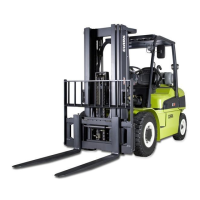
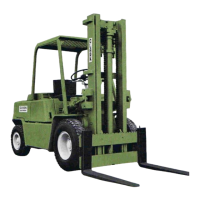
| Model | C500 Series |
|---|---|
| Fuel Type | Diesel |
| Power Type | Internal Combustion |
| Tire Type | Pneumatic |
| Mast Type | Triplex |

 To Next Page