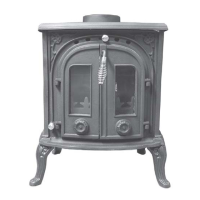
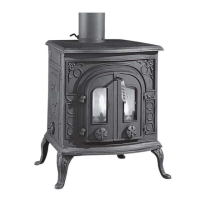
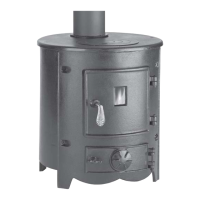
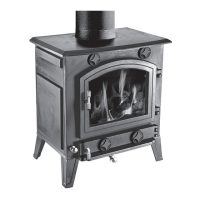
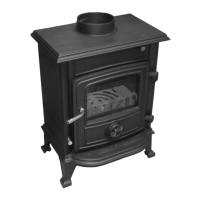
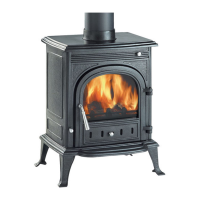
This document describes the Clarke Classic Cast Iron Stove, model JUNIOR FRANKLIN (Part No: 6910120), a multi-fuel, intermittent operation stove designed for heating.
Function Description
The Classic Cast Iron Stove is designed to provide heat using either solid fuel or wood. Its operation is regulated by two air control systems: primary air supply controlled by lower air controls built into the doors, and a secondary, pre-heated air supply to the combustion area, controlled by upper air controls mounted at the top of the doors. The secondary air supply is typically kept open. The stove is intended for indoor use and must be connected to a suitable flue outlet. It is crucial to follow installation and safety guidelines to ensure safe and efficient operation.
Important Technical Specifications
- Part Number: 6910120
- Weight: 102 kg
- Dimensions (w x h x l): 755 x 658 x 540 mm
- Flue Size: 170 mm o/d
- Max BTU Output: 54,000
- Efficiency: 78% @ 9 kW
- Fuel Type: Multi fuel
- Nominal Heat Output: 10 kW
- Class: 1
- Operation: Intermittent
Usage Features
The stove is designed for both wood and solid fuel burning.
- Fire-Lighting with Wood:
- Open air controls.
- Place firelighters or rolled newspapers on the grate with dry kindling wood, then 2-3 small logs.
- Light with a long taper and close doors.
- Add further logs (up to 10mm diameter) once the fire is burning strongly.
- Close air controls as required when the stove is hot.
- Reduce burn rate by partially closing air controls, ensuring lasting flames until wood becomes charcoal.
- Fire-Lighting with Solid Fuel:
- Open air controls.
- Place firelighters or rolled newspapers on the grate with dry kindling wood, then a small quantity of solid fuel.
- Light with a long taper and close doors.
- Add further fuel once the fire is burning strongly.
- Close top air controls when the stove is hot.
- Reduce burn rate by partially closing lower air controls.
- Refuelling:
- Open doors slowly to avoid smoke spillage and add fuel.
- Open air controls for a few minutes to allow gasses in the wood to burn before closing.
- Keep doors closed to contain fumes, except during lighting, refuelling, or ash removal.
- The refuelling rate and heat output depend on user experience. Initially, burn fast to drive off gasses and moisture, then close air vents to control the burn rate.
- Overnight burning involves a full charge of fuel, burning off gasses/moisture, then fully closing air vents.
- Avoid leaving the stove alight at night or using it in mild weather, which can lead to poor combustion and soot buildup.
- Fuel Types:
- All fuel should be dry, with timber seasoned to a moisture content below 20%. Damp wood leads to soot, deposits, and reduced heat output.
- Avoid 'green' unseasoned wood, treated wood (e.g., telegraph poles, plywood, chipboard) containing glues and resins, as these pollute the environment, cause rapid burning, and produce excessive tar or creosote, potentially damaging the chimney or causing a chimney fire.
- Dry wood can be identified by radial cracks deep enough to be considered splits. This dryness can take up to two years to achieve.
- Maximum log length is approximately 26 cm to lay flat over embers. Logs over 10 cm diameter should be split.
- Suitable smokeless fuels include Phurnacite, Coalite Nuts, or Extracite. Consult your fuel provider for the best type. Larger fuels increase draught and speed up combustion.
- Household coal is not recommended due to excessive ash and chimney deposits.
- A mixture of fuels can be used, with wood or compressed block fuels forming the base, and coal products added in smaller volumes. With solid fuels, less hard burning is needed after refuelling, and refuelling is less frequent than with wood.
- First Use (Seasoning):
- After installation or prolonged disuse, the stove must be seasoned to prevent cracking of metal castings.
- Light a small fire in the middle, away from sides.
- Warm slowly with air controls almost closed, avoiding intense flames, for about three hours.
- Gradually increase fire size with larger logs over 10 days, keeping the stove on a low setting.
- Full strength fires should only be used after approximately 20 days of mild use.
- Initial use may produce a smell due to gas emission; ventilate the room thoroughly until no smells are detected.
Maintenance Features
Maintenance should be performed when the stove is cold.
- Chimney Sweeping:
- Inspect the flue and chimney regularly for deposit buildup, especially after prolonged disuse.
- The entire chimney/flue should be swept frequently by a registered chimney sweep. Frequency depends on usage and fuel type.
- An inspection after a few weeks of regular use can indicate the required sweeping frequency.
- Annually, the chimney is best swept just before the main winter burning season.
- Cleaning:
- The inside of the stove may require regular cleaning, particularly during peak use.
- Wear a dust mask, protective gloves, and safety glasses.
- Use a stiff brush and industrial vacuum cleaner to dislodge and remove material, starting from the top.
- Pay attention to air inlet controls, which can become obstructed.
- General Maintenance:
- Check for damaged or broken parts; replacements can be obtained from a Clarke dealer. Do not use unauthorised spare parts.
- Inspect fireproof door seals for effectiveness; re-fix with stove rope adhesive if loose, or replace if in poor condition.
- For ornamental stoves, painting provides a durable finish. For heating/cooking stoves, use high-temperature heat-resistant paint (aerosol or brush applied).
- If rust appears, clean with a wire brush and apply suitable anti-rust treatment.
- Window glass should remain clean during normal use. Blackening can occur with damp fuels or slow burn rates. This may be dispersed by burning at a higher temperature or cleaned with specialist glass cleaner.
- If glass breaks, remove by unscrewing retaining clips, taking care not to damage the fireproof seal. Place replacement glass carefully against the seal and re-tension clips evenly to avoid breakage.
- During prolonged periods of disuse, leave air inlets open and the door slightly ajar to circulate fresh air and prevent condensation/corrosion.
- Ash Removal:
- Keep the stove free from heavy ash buildup.
- Remove ash before it builds up to the underside of the grate, as this can cause the grate to burn hot on both sides, shortening its life.
- Dispose of cooled ashes in a metal container.
- Remove ash when the fire is at its lowest point, typically in the morning.
Safety Warnings:
- Not for use in mobile homes.
- Must be connected to a suitable flue outlet.
- Due to high temperatures, position well away from furniture and curtains.
- Children and adults must be alerted to hot surfaces. Supervise young children carefully.
- Do not place clothing or flammable material on or near the stove.
- Keep the stove area clear of combustible materials, flammable liquids, or vapours.
- Over-firing the stove can cause a house fire. If the chimney glows, the stove is over-fired.
- Improper installation can result in a house fire. Consult local building or fire officials for restrictions and installation requirements.



 To Next Page
 General