Need help?
Do you have a question about the Climax CTC-1052-QT and is the answer not in the manual?
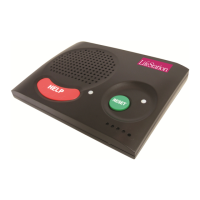
Details the various components and indicators of the CTC-1052-QT.
Explains the AC adapter, rechargeable battery, and power supply requirements.
Instructions for inserting the SIM card, including precautions.
Guidance on selecting a location and mounting the control panel.
Notes compatibility with the SMS Editor for remote programming.
Describes learning devices using specific commands (93-94).
Explains the local method for learning devices via buttons.
Details learning devices using their unique Device ID via SMS or software.
Instructions for removing devices using commands 80-84.
Explains local device removal via button presses.
Process for learning silent pendants and other devices.
Instructions for removing learned devices.
Steps to enter local programming mode using a phone.
Options for remote access via phone calls.
General guidance on entering commands for programming.
Setting Caller IDs and telephone numbers for reporting.
Selecting numbers for alarm/status reporting and setting account numbers.
Programming alarm reporting methods (Speech, SMS).
Ringer enable, help arrived signaling, emergency button.
Silent mode, AC fault reports, follow-on/call-back functions.
Access code, guard time delay, auto-answer.
Periodic test calls, mobility timer, follow-on modes.
SIM PIN input, speaker volume, microphone sensitivity.
Guard time for fall sensor, help arrived timer, help not arrived call.
Procedure to reset the panel to factory default settings.
Guide on programming the panel using SMS commands.
Comprehensive table of SMS commands and their usage.
Overview of using the PC software for panel programming.
Steps to install the necessary USB driver for PC connection.
Instructions for downloading and running the PC programming software.
Navigating and using different function tabs in the software.
Configuring report settings using the software interface.
Configuring IP report settings for GPRS/IP communication.
Programming telephone numbers and account numbers via software.
General configuration settings accessible through the software.
Managing devices (learning/removing) through the software interface.
Programming Caller IDs using the software interface.
Creating, saving, and applying configuration profiles.
Describes the system's state when ready to execute functions.
How the panel answers incoming calls and opens communication.
Details behavior during AC power failure and restoration.
How the panel reports its own and connected devices' low battery status.
Functionality and reset of the mobility timer.
How alarms are triggered and processed.
Configuring GPRS reporting settings via SMS commands.
Describes the panel's behavior when help is signaled and arrives.
How speech reporting works, including two-way communication.
How the panel sends reports to multiple destinations and handles failures.
Procedures for testing device signal range.
Testing the complete system's functionality.
Explanation of CID event code composition and meanings.
Detailed table of DTMF commands for programming.
List of voice prompts and their corresponding conditions.
 General
| Brand | Climax |
|---|---|
| Model | CTC-1052-QT |
| Category | Security System |
| Language | English |


 To Next Page