EasyManua.ls Logo

Coleman 533 Series - User Manual

Coleman 533 Series
12 pages
Print Icon
To Next Page IconTo Next Page
Loading...
Dual-Fuel
TM
Stove
Instructions for use
© 2008 The Coleman Company, Inc.
www.coleman.com
533 Series
CSA B140.9.2-2008 Proposed
Portable Pressurized Type Liquid
Petroleum Fuelled Camp Stoves
Sportster
®
II
Dual-Fuel
Stove
English
®
®
IMPORTANT
CONSUMER/USER: This instruction manual
contains important information necessary for the
proper assembly and safe use of the appliance.
Read and follow all warnings and instructions before
assembling and using the appliance. Follow all
warnings and instructions when using the appliance.
Keep this manual for future reference.
If you have questions about assembly, operation, servicing or repair of this
appliance, please call Coleman at 1-800-835-3278 or TDD: 316-832-8707. In
Canada call 1-800-387-6161.

Questions and Answers

  • M
    Melissa GreenAug 12, 2025
    What to do if my Coleman 533 Stove burner won't light or has a low flame?
    • R
      Randall ReidAug 12, 2025
      If the burner of your Coleman Stove will not light, or the flame is low, or the flame self-extinguishes, it could be due to low pressure in the fuel tank. Ensure the fuel cap is tight and pump the stove 30 times to increase pressure.
  • T
    Theresa ScottAug 15, 2025
    Why is my Coleman Stove flame yellow and smokey?
    • M
      Matthew WilliamsAug 16, 2025
      If your Coleman Stove is producing a yellow, smoky flame, it might be due to obstructions like spider webs or insects in the burner and air tube. To resolve this, remove the burner to inspect and clean both the burner and the air tube.
  • D
    Debra DonovanAug 19, 2025
    Why isn't my Coleman 533 Stove pump building pressure?
    • P
      Paul PhillipsAug 20, 2025
      If your Coleman Stove pump isn't pressurizing the liquid fuel canister, the pump seals might be dry or worn. Try squirting a few drops of oil into the oil hole in the pump cap to keep it functioning properly. If that doesn't solve the problem, you may need to replace the pump seals or get a new pump assembly.
  • M
    Michael Miller MDAug 23, 2025
    Why does my Coleman Stove have a yellow flame?
    • S
      Stacy HernandezAug 23, 2025
      A yellow flame on your Coleman Stove is normal until the generator warms up. However, if the yellow flame persists, turn off the stove, let the flame extinguish itself, and allow the stove to cool down. If necessary, invert the stove to remove any excess liquid fuel from the burner, then follow the lighting instructions again.
  • L
    Lisa PageAug 27, 2025
    What causes a persistent small yellow flame on a Coleman 533 Stove?
    • J
      Jason OchoaAug 27, 2025
      If your Coleman Stove has a persistent small yellow flame, it indicates a faulty generator. You should replace it with a new one.
  • J
    jessica21Aug 31, 2025
    What to do if my Coleman Stove burner self-extinguishes during warm-up?
    • V
      valdezclaytonAug 31, 2025
      If your Coleman Stove burner self-extinguishes during the one-minute warm-up, the generator might not be fully warmed up. In temperatures below freezing, you might need to use preheating paste. Apply a generous amount of preheating paste on the burner cap beneath the generator.
  • R
    Rebecca LewisSep 3, 2025
    Why is my Coleman 533 producing low heat?
    • A
      amy07Sep 3, 2025
      If your Coleman Stove is producing low heat, the generator tip might be plugged. Turn the red fuel lever back and forth several times to clean the generator tip. Make sure you are using only fresh and clean fuel. Alternatively, the generator could be faulty and need replacement, which is a normal maintenance procedure, especially when using fuels other than clean Coleman fuel.
  • W
    Willie AndersonSep 7, 2025
    How to fix intermittent yellow flame on Coleman Stove after extended use?
    • A
      Andrea CollinsSep 7, 2025
      If you notice an intermittent yellow flame after using your Coleman Stove on a low heat setting for a while, the flame might need adjustment. Simply use the red fuel lever to adjust the flame to a slightly higher level.

Summary

Safety Precautions and Hazards

Carbon Monoxide Dangers

Critical information on carbon monoxide risks and prevention.

Fuel and Fire Hazard Warnings

Essential warnings regarding flammable fuels, fire, and explosion risks.

Setup and Fueling

Stove Operation: Pumping, Leak Check, and Lighting

Lighting the Stove Safely

Detailed instructions and safety precautions for lighting the stove.

Advanced Operation and Shutdown

Critical Lighting Restrictions

Crucial safety reminder against filling or lighting the stove indoors.

Storage and Maintenance

Troubleshooting Common Issues

Warranty and Additional Information

Overview

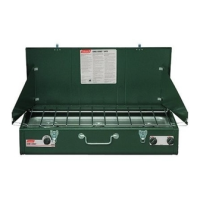
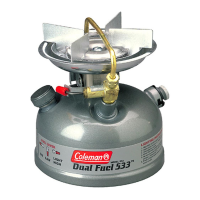
The Coleman Sportster II Dual-Fuel Stove is a portable, pressurized liquid petroleum-fueled camp stove designed for outdoor cooking. It is a versatile appliance that can operate on either Coleman Liquid Fuel or unleaded gasoline, offering flexibility for users in various outdoor settings. The stove is built for ease of use and portability, making it suitable for camping, backpacking, and other outdoor activities where a reliable cooking source is needed.

Function Description

The primary function of the Coleman Sportster II Dual-Fuel Stove is to provide a heat source for cooking outdoors. It operates by pressurizing liquid fuel in a tank, which is then vaporized in a generator and ignited at the burner. The stove features a single burner that can be adjusted to control the flame intensity, allowing for precise cooking temperatures. This makes it suitable for a range of cooking tasks, from simmering delicate sauces to boiling water rapidly. The stove is designed to be stable on level surfaces, providing a secure platform for cookware. Its compact design allows for easy transport and storage, making it a practical choice for outdoor enthusiasts.

Usage Features

The Coleman Sportster II Dual-Fuel Stove incorporates several features to enhance its usability and safety during outdoor cooking.

  • Dual-Fuel Capability: One of its most significant features is the ability to run on two types of fuel: Coleman Liquid Fuel or unleaded gasoline. Coleman Liquid Fuel is recommended for optimal performance, especially in temperatures below 40°F (4°C) or at high elevations, as it burns cleaner and extends generator life. Unleaded gasoline can be used as a substitute when Coleman Liquid Fuel is not available, offering convenience in various locations. Kerosene and leaded automotive fuel should never be used.
  • Easy Fuel Filling: The stove is designed for outdoor fuel filling to minimize risks. Users are instructed to move the red fuel lever to the "off" position before loosening or removing the fuel cap. A funnel or suitable filling device is recommended to fill the tank with clean, fresh fuel, avoiding overfilling and spillage. Any spilled fuel should be wiped up and disposed of safely.
  • Pumping System for Pressurization: To operate, the fuel tank needs to be pressurized. This is achieved by opening the pump knob one full turn and then pumping approximately 30 full strokes with a thumb over the hole in the pump knob. This pressurization forces the fuel through the generator to the burner.
  • Simple Lighting Procedure: Lighting the stove involves holding a lit match at the burner while turning the red fuel lever to the "high" (light) position. Once the burner lights, the pump knob is opened one turn, and an additional 30 full strokes are pumped to ensure full heat output. For temperatures below freezing, preheating paste may be required. This paste is applied to the burner cap beneath the generator and lit, allowing the generator to warm up before the main fuel is ignited.
  • Flame Adjustment: The red fuel lever also serves as the flame adjustment control, allowing users to achieve the desired heat level for cooking. This precise control is crucial for various culinary tasks.
  • Safety Mechanisms: The stove includes safety warnings regarding carbon monoxide hazards, fire, and explosion risks. It is strictly for outdoor use only and should never be used inside houses, campers, tents, vehicles, or other unventilated or enclosed areas. Users are warned against storing or using flammable liquids near the stove. The design emphasizes adequate clearances from combustible materials during operation.
  • Leak Check Procedure: Before each use, a leak check is recommended. This involves ensuring the fuel valve is fully off and then checking for fuel mist, wet surfaces, escaping gas hisses, or fuel odor. If any leaks are detected, the stove should not be used.

Maintenance Features

Proper maintenance is essential for the longevity and safe operation of the Coleman Sportster II Dual-Fuel Stove.

  • Regular Cleaning: The stove should be cleaned frequently to prevent grease accumulation, which can lead to grease fires. A soft cloth and mild dish detergent are recommended for cleaning, avoiding abrasive materials.
  • Fuel Tank Maintenance: The fuel tank should be rinsed twice a year with fresh fuel to remove sediment, gum formations, and moisture accumulations. This helps maintain fuel system integrity and performance.
  • Pump System Lubrication: Seasonally or before storage, a few drops of oil should be squirted into the "OIL HOLE" in the pump cap. This lubricates the pump seals, ensuring the pump functions properly and maintains pressure. If the pump seals become dry or worn, they may need to be replaced, or a new pump assembly might be required.
  • Generator Maintenance: The generator is a critical component that vaporizes the liquid fuel. The red fuel lever moves a small needle in and out of the generator gas tip, which helps clean it. If the stove is hard to light or does not produce full heat, turning the red fuel lever back and forth several times can help clean the generator tip. The generator's life is dependent on the type of fuel used, with clean Coleman Liquid Fuel extending its lifespan. If the generator becomes faulty, it should be replaced.
  • Burner and Air Tube Inspection: If a yellow smokey flame persists, the burner should be removed to inspect and clean the burner and air tube for spider webs, insects, or other obstructions.
  • Connection Checks: All connections and fittings should be kept clean and inspected for dirt or damage. During stove set-up, all fittings should be checked for leaks using soapy water, never a flame. Liquid Coleman fuel present at connections indicates a leak.
  • Storage Guidelines: When storing the stove, ensure it is cool and moved away from any flames or ignition sources. To prevent dust and cobweb accumulation, especially in common storage areas like basements, attics, or garages, placing the stove in a plastic bag and sealing it with a rubber band is recommended.
  • Flame Quality Monitoring: A good flame should be blue with a minimal yellow tip. Some yellow tips are acceptable as long as no carbon or soot deposits appear. Persistent yellow flames may indicate issues with the generator or excess fuel in the burner, requiring troubleshooting steps such as turning off the stove, allowing it to cool, and inverting it to remove excess liquid fuel.
  • Part Replacement: The manual provides a detailed replacement parts list, including the fuel cap, pump repair kit, generator, valve assembly, burner ring set, burner bowl, grate, pump cup & nut, burner box assembly, generator bracket, screw package, check valve & stem assembly, and valve stem assembly. This facilitates easy identification and ordering of necessary replacement parts to keep the stove in optimal working condition.

Coleman 533 Series Specifications

General IconGeneral
Burn TimeUp to 2 hours on high
Number of Burners1
IgnitionManual
MaterialSteel
Fuel TypeUnleaded gasoline or Coleman Fuel
Output10, 500 BTU
Wind ResistanceGood

Related product manuals