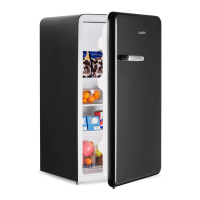
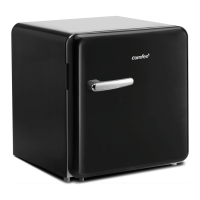
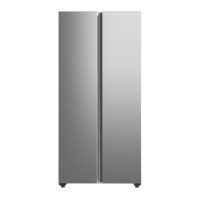
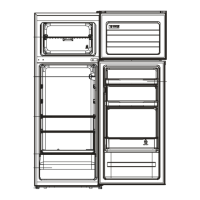
EasyManua.ls Logo

Comfee CRM45D3ABB - User Manual

Comfee CRM45D3ABB
16 pages
Print Icon
To Next Page IconTo Next Page
Loading...
comfee’
CRM45D3ABB
/
CRM45D3AST
4.5
cu.ft.
Double
Door
Refrigerator
e
'
CRM45D3ABB
:
m‘e::::\:jzlh:empera\ure
Control
CRM45D3AST
«
Transparent
Crisper
VOLTAGE/Hz:
115V~/60Hz
«
Large
Door
Rack
18.5%20.1X46.9
i
+
Tempered
Glass
Shelf
oRopucTSIZE:
Stames
o
+
Reversible
door
COLOR:
Black/Stainless
Steel
«
Adjustable
legs
Question and Answer IconNeed help?

Do you have a question about the Comfee CRM45D3ABB and is the answer not in the manual?

Summary

Safety Warnings

General Warning

Covers general hazards, flammable materials, and usage restrictions.

Meaning of Safety Symbols

Explains prohibition, warning, and caution symbols used in the manual.

Electrical Safety

Safe practices for power cord use, dedicated sockets, and grounding.

Usage Warnings

Advises against disassembly, finger pinching, and improper food handling.

Placement Warnings

Guidance on positioning the refrigerator away from heat and moisture.

Energy Saving Warnings

Tips to optimize energy efficiency and reduce consumption.

Disposal Warnings

Procedures for environmentally safe disposal of the refrigerator.

Proper Use of Refrigerator

Placement and Installation

Instructions on selecting a location, ensuring ventilation, and stability.

Leveling Feet Adjustment

Procedure for adjusting the feet to achieve a stable, level position.

Door Reversal

Detailed steps and required tools for changing door swing direction.

Initial Startup and Operation

Guidance on pre-operation waiting periods and initial food loading.

Energy Saving Tips

Recommendations for optimizing energy consumption and efficiency.

Structure and Functions

Key Components Overview

Identification of main parts like shelves, drawers, and controls.

Temperature Control

Explanation of how to operate the temperature control knob.

Maintenance and Care

Overall Cleaning Procedures

Instructions for cleaning interior, exterior, and specific parts.

Defrosting Instructions

Steps for safely defrosting the appliance and managing water.

Out of Operation Guidance

Guidance for power failures, long-term storage, and transportation.

Troubleshooting

Troubleshooting Common Issues

A guide to diagnosing and resolving common problems.

Summary

Safety Warnings

General Warning

Covers general hazards, flammable materials, and usage restrictions.

Meaning of Safety Symbols

Explains prohibition, warning, and caution symbols used in the manual.

Electrical Safety

Safe practices for power cord use, dedicated sockets, and grounding.

Usage Warnings

Advises against disassembly, finger pinching, and improper food handling.

Placement Warnings

Guidance on positioning the refrigerator away from heat and moisture.

Energy Saving Warnings

Tips to optimize energy efficiency and reduce consumption.

Disposal Warnings

Procedures for environmentally safe disposal of the refrigerator.

Proper Use of Refrigerator

Placement and Installation

Instructions on selecting a location, ensuring ventilation, and stability.

Leveling Feet Adjustment

Procedure for adjusting the feet to achieve a stable, level position.

Door Reversal

Detailed steps and required tools for changing door swing direction.

Initial Startup and Operation

Guidance on pre-operation waiting periods and initial food loading.

Energy Saving Tips

Recommendations for optimizing energy consumption and efficiency.

Structure and Functions

Key Components Overview

Identification of main parts like shelves, drawers, and controls.

Temperature Control

Explanation of how to operate the temperature control knob.

Maintenance and Care

Overall Cleaning Procedures

Instructions for cleaning interior, exterior, and specific parts.

Defrosting Instructions

Steps for safely defrosting the appliance and managing water.

Out of Operation Guidance

Guidance for power failures, long-term storage, and transportation.

Troubleshooting

Troubleshooting Common Issues

A guide to diagnosing and resolving common problems.

Overview

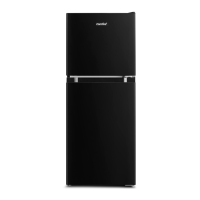
This document provides a comprehensive guide for the Comfee CRM45D3ABB / CRM45D3AST 4.5 cu.ft. Double Door Refrigerator, covering safety warnings, proper usage, structure and functions, maintenance, and troubleshooting.

Function Description

The Comfee double-door refrigerator is designed for household use, primarily for storing food items. It features a refrigerating chamber and a freezing chamber, each serving distinct purposes for food preservation. The refrigerating chamber is ideal for short-term storage of fruits, vegetables, beverages, and other foods that do not require freezing. The freezing chamber, on the other hand, is designed for long-term preservation of frozen foods and for making ice. This dual-chamber design allows for versatile storage options, catering to different food preservation needs.

Usage Features

Placement and Installation: Proper placement is crucial for optimal performance and safety. The refrigerator should be placed in a well-ventilated indoor area, away from direct sunlight and heat sources. It's important to ensure the ground is flat and sturdy, with adjustable leveling feet to achieve a horizontal level. A minimum of 30cm space above the refrigerator and 10cm from the wall is recommended for adequate heat dissipation. Before initial use, all packing materials, including bottom cushions, foam pads, and tapes, must be removed. The protective film on the doors and body should also be peeled off. After placement, the refrigerator should remain still for two hours before connecting to power. For optimal cooling, it should run for 2-3 hours (or 4 hours in summer) before any food is placed inside.

Door Right-Left Change: The refrigerator offers the flexibility to change the door's opening direction from right to left. This process involves several steps:

  1. Power off the refrigerator and remove all objects from the door trays.
  2. Remove the hinge cover, upper hinge screws, upper hinge, and hole cap on the opposite side.
  3. Remove the freezer door, middle hinge, and screw hole caps.
  4. Remove screws and limit blocks from the lower end cover of the refrigeration compartment.
  5. Remove the refrigerating door, bottom hinge, and adjustable foot from the other side.
  6. Install the adjustable foot to the right side and fix two limit blocks from the plastic bag to the left side of the lower end cover with screws.
  7. Remove the other side of the lower hinge from the instruction bag and install it on the left side.
  8. Place the refrigerating door from top to bottom, insert the gasket from the plastic bag into the axle hole on the left side of the refrigerating door, and fix the center hinge with screws and install the studs.
  9. Put the freezer door on the middle hinge, assemble the upper hinge on the other side, fix the hinge cover on the upper hinge, and fix the hole cap on the other side.

Temperature Control: The refrigerator is equipped with a mechanical temperature control knob. Turning the knob to '3' lowers the internal temperature, while turning it to '1' raises it. The '0' setting indicates that the refrigerator is not working. Users are advised to adjust the temperature between '1' and '3' for normal operation.

Food Storage: For the refrigerating chamber, it's recommended to store a variety of fruits, vegetables, and beverages. Cooked foods should be cooled to room temperature before being placed inside. Sealing foods before storage is also advised. The glass shelves are adjustable for flexible storage space. In the freezing chamber, foods like meat, fish, and rice balls can be stored for longer periods. Meat chunks should be divided into small pieces for easier access. Overloading the refrigerator, especially during initial operation, can negatively affect the freezing performance.

Energy Saving Tips: To maximize energy efficiency, place the appliance in the coolest part of the room, away from heat-producing appliances and direct sunlight. Allow hot foods to cool to room temperature before placing them inside. Overloading the appliance forces the compressor to run longer, potentially spoiling food. Wrap foods properly and wipe containers dry to prevent frost buildup. Avoid lining storage bins with aluminum foil or wax paper, as this can hinder cold air circulation. Organize and label food to reduce door opening times and duration.

Maintenance Features

Overall Cleaning: Regular cleaning is essential for maintaining the refrigerator's performance and preventing odors.

  • Exterior: Dust behind the refrigerator and on the ground should be cleaned regularly to improve cooling efficiency. Wipe the outer surface with a soft cloth dampened with soapy water or diluted detergent, then dry.
  • Interior: Turn off the power before cleaning the interior. Remove all food, drinks, shelves, and drawers. Clean the inside with a soft cloth or sponge using a solution of two tablespoons of baking soda and a quart of warm water. Rinse with water and wipe clean. Allow the interior to air dry naturally before restoring power. For hard-to-reach areas, use a soft rag, brush, or thin sticks.
  • Door Gasket: Regularly check the door gasket for debris and clean it with a soft cloth dampened with soapy water or diluted detergent.
  • Accessories: Clean bottle frames, shelves, and drawers with a soft cloth dampened with soapy water or diluted detergent, then dry naturally.
  • Prohibited Cleaners: Avoid using hard brushes, steel balls, wire brushes, abrasives (like toothpaste), organic solvents (alcohol, acetone, benzene, banana oil), boiling water, or acidic/alkaline items, as these can damage the fridge's surface and interior. Do not rinse directly with water or other liquids to prevent short circuits.

Defrosting: Defrosting is necessary to prevent excessive frost buildup.

  1. Unplug the power cord.
  2. Remove all food from the refrigerator and store it properly to prevent melting.
  3. Clear the drain pipe using soft materials to avoid damage to the liner.
  4. Allow natural defrosting or use an ice shovel (plastic or wooden) to remove frost.
  5. Hot water can be used to speed up defrosting, followed by drying with a towel.
  6. Once defrosted, return the food and power on the refrigerator.

Out of Operation:

  • Power Failure: During a power outage, especially in summer, food can be kept for several hours. Minimize door openings and avoid adding fresh food.
  • Long-Time Non-Use: Unplug and clean the appliance. Leave the doors open to prevent odors.
  • Moving: Before moving, remove all internal objects. Secure glass partitions, vegetable holders, and freezer drawers with tape. Tighten the leveling feet. Close and tape the doors. During movement, avoid laying the appliance upside down or horizontally, and keep the inclination no more than 45°. The appliance should run continuously once started; interruptions can impair its service life.

Changing the Light: Any replacement or maintenance of the LED lamps (115V, 2W) should be performed by the manufacturer, its service agent, or a similarly qualified person.

Comfee CRM45D3ABB Specifications

General IconGeneral
Total Capacity4.5 cu. ft.
Energy Star RatedYes
ColorBlack
Defrost TypeManual
Noise Level42 dB
Door OpeningReversible
Shelves2
Temperature Range32°F to 50°F
TypeMini Fridge

Related product manuals