
EasyManua.ls Logo

CONVECTAIR 8028-C09 - User Manual

CONVECTAIR 8028-C09
40 pages
Print Icon
To Next Page IconTo Next Page
Loading...
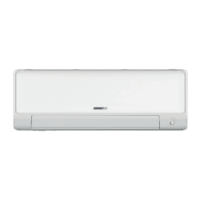
SPLIT-TYPE ROOM AIR CONDITIONER
Owner’s Manual &
Installation Manual
IMPORTANT NOTE:
Read this manual and SAFETY MANUAL(if any)
carefully before installing or operating your new
air conditioning unit. Make sure to save this
manual for future reference.
Please check the applicable models, technical
data, F-GAS(if any) and manufacturer information
from the “Owner's Manual - Product Fiche ”
in the packaging of the outdoor unit (European Union
products only) or in the packaging of the indoor unit
(model dependent)
For models:
8028-C09
8028-C12
8028-C18
8028-C24

Questions and Answers

Summary

Safety Precautions - Product Use and Maintenance

WARNINGS FOR PRODUCT USE

Key safety warnings for operating the air conditioner to prevent injury or damage.

CLEANING AND MAINTENANCE WARNINGS

Safety guidelines for cleaning and maintaining the air conditioner to avoid electrical shock or damage.

Safety Precautions - Electrical and Component

CAUTION

General cautions and warnings for safe operation and handling of the air conditioner.

ELECTRICAL WARNINGS

Critical electrical safety warnings covering power cords, grounding, and connections.

FUSE SPECIFICATIONS

Information regarding the specifications of the circuit board's fuse for overcurrent protection.

UV-C Lamp Safety

Safety precautions related to the UV-C lamp, including operation and potential hazards.

Safety Precautions - Installation and Refrigerant

WARNINGS FOR PRODUCT INSTALLATION

Safety warnings and guidelines specifically for the installation of the air conditioning unit.

Note about Fluorinated Gasses

Information regarding fluorinated greenhouse gases used in the air conditioning unit.

Safety Precautions - Refrigerant and Disposal

WARNING for Using R32;R290 Refrigerant

Safety precautions and requirements when using R32/R290 refrigerants.

European Disposal Guidelines

Guidelines for the proper disposal of the air conditioner as waste electrical and electronic equipment.

Unit Specifications and Features

Indoor unit display

Description of the display window and indicators on the indoor unit, including error codes.

Display Code Meanings

Explanation of the various codes and symbols displayed on the indoor unit's display window.

Operating Temperature Specifications

Operating temperature

Details on the recommended operating temperature ranges for different modes and unit types.

Other Features and Functions

Feature Descriptions

Details on various features like Auto-Restart, Anti-mildew, Wireless Control, Louver Memory, Active Clean, Breeze Away.

Intelligent Control Features

Information on ECO Intelligent eye, Refrigerant Leakage Detection, and Sleep Operation modes.

Airflow Control and Manual Operation

Setting Angle of Air Flow

Instructions for adjusting the vertical and horizontal airflow direction of the louvers.

Manual Operation

Procedure for operating the unit manually when the remote control is unavailable.

Care and Maintenance

Cleaning Your Indoor Unit

Instructions for cleaning the indoor unit using a soft cloth and warm water.

Cleaning Your Air Filter

Step-by-step guide on how to remove, clean, and re-install the air filter.

Maintenance Reminders and Procedures

Air Filter Reminders

Optional reminders for air filter cleaning ('CL') and replacement ('nF').

Maintenance for Non-Use

Procedures for maintaining the unit during long periods of non-use.

Pre-Season Inspection

Checks to perform before periods of frequent use or after long non-use.

Troubleshooting Common Issues

Common Issues Overview

Details on common problems like unit not turning on, mode changes, and white mist emission.

Unit Noises

Explanation of normal and abnormal noises the indoor and outdoor units may produce.

Troubleshooting Performance and Operation

Poor Cooling Performance

Identifying causes and solutions for poor cooling performance, such as dirty heat exchangers or filters.

Outdoor Unit Issues and Odor

Addressing outdoor unit noises, dust emission, bad odors, and fan operation issues.

Erratic Operation and Interference

Troubleshooting erratic unit operation due to external interference or power cycling.

Troubleshooting Unit Operation and Errors

Unit Not Working and Frequent Stops

Resolving issues with the unit not working or starting and stopping frequently.

Poor Heating Performance

Addressing issues related to poor heating performance and cold air entry.

Indicator Lamps and Error Codes

Interpreting flashing indicator lamps and error codes for diagnosis and resolution.

Accessories

Accessory List and Details

List of included and optional accessories with their quantities and shapes.

Indoor Unit Installation Summary

Installation Steps Overview

Visual summary of the 9 steps involved in installing the indoor unit.

Unit Parts Identification

Indoor and Outdoor Unit Components

Diagrams identifying the various parts of the indoor and outdoor units with numbered labels.

Indoor Unit Installation - Location and Mounting Plate

PRIOR TO INSTALLATION

Pre-installation checks, including model matching and selecting the appropriate location.

Step 1: Select installation location

Standards for choosing a proper location and locations to avoid for indoor unit installation.

Step 2: Attach mounting plate to wall

Instructions for attaching the mounting plate to the wall, including notes for different wall types.

Indoor Unit Installation - Wall Hole

Step 3: Drill wall hole for connective piping

Procedure for drilling the wall hole, ensuring correct angle and dimensions for piping.

Indoor Unit Installation - Piping Preparation

Step 4: Prepare refrigerant piping

Instructions for preparing refrigerant piping, including angles and connection notes.

Indoor Unit Installation - Drain Hose and Electrical

Step 5: Connect drain hose

Guidance on attaching and routing the drain hose for proper drainage.

ELECTRICAL WORK REGULATIONS

Important regulations and warnings to follow before performing any electrical work on the unit.

Indoor Unit Installation - Wiring

Step 6: Connect signal and power cables

Procedure for connecting signal and power cables, including choosing the right cable size.

Indoor Unit Installation - Mounting

Step 7: Wrappping and cables

Instructions for bundling and insulating piping, drain hose, and signal cable.

Step 8: Mount indoor unit

Steps for securely mounting the indoor unit onto the wall mounting plate.

Outdoor Unit Installation - Location

Installation Instructions - Outdoor unit

General guidelines for installing the outdoor unit, including location selection standards.

Step 1: Select installation location

Standards for selecting a proper location for the outdoor unit, considering airflow and environmental factors.

Outdoor Unit Installation - Drain and Anchoring

Step 2: Install drain joint(Heat pump unit only)

Procedure for installing the drain joint at the bottom of the outdoor unit, especially for heat pump models.

Step 3: Anchor outdoor unit

Instructions for anchoring the outdoor unit to the ground or a wall-mounted bracket.

Outdoor Unit Installation - Wiring

Step 4: Connect signal and power cables

Procedure for connecting signal and power cables to the outdoor unit's terminal block.

Refrigerant Piping Connection - Overview and Cutting

Note on Pipe Length

Information on how pipe length affects unit performance and specifications for maximum length.

Step 1: Cut pipes

Instructions for cutting refrigerant pipes to the correct length and angle for connection.

Refrigerant Piping Connection - Flaring

Step 2: Remove burrs

Procedure for removing burrs from cut pipe ends to ensure an airtight seal.

Step 3: Flare pipe ends

Detailed steps for flaring pipe ends properly to achieve an airtight seal.

Step 4: Connect pipes

Instructions for connecting refrigerant pipes, including sequence and minimum bend radius.

Air Evacuation - Preparations and Instructions

Preparations and Precautions

Key preparations and precautions before performing air evacuation to prevent damage or injury.

Evacuation Instructions

Step-by-step guide on how to use a vacuum pump and manifold gauge for system evacuation.

Air Evacuation - Adding Refrigerant

Note on Adding Refrigerant

Guidance on calculating and adding refrigerant based on pipe length and unit model.

Electrical and Gas Leak Checks

Before Test Run

Checks to perform before starting the test run, including electrical safety and gas leak checks.

Electrical Safety Checks

Procedures for confirming electrical wiring is safe and properly grounded.

Gas Leak Checks

Methods for checking refrigerant leaks using soap and water or a leak detector.

Test Run Procedure

Test Run Instructions

Procedure for performing the test run, including function checks and pipe connection verification.

DOUBLE-CHECK PIPE CONNECTIONS

Instructions for re-checking refrigerant pipe connections during the test run for leaks.

IF AMBIENT TEMPERATURE IS BELOW 17°C (62°F)

Procedure for testing the COOL function using manual control in low ambient temperatures.

Packing and Unpacking the Unit

Unpacking Instructions

Steps for safely unpacking the indoor and outdoor units and their accessories.

Packing Instructions

Steps for repacking the indoor and outdoor units for storage or transport.

CONVECTAIR 8028-C09 Specifications

General IconGeneral
BrandCONVECTAIR
Model8028-C09
CategoryAir Conditioner
LanguageEnglish

Related product manuals