37
12
Before you ride
Before your first ride
Dock battery and phone
Fully charge your battery and dock
it into your bike, allowing it 30
minutes to 'wake up' before your
first ride. When docking your phone
in the cockpit, always use the Quad
Lock mount provided and check
the phone is securely clicked in
place. Note that wireless charging
will not work if you have a metal
phone case. Your bike can interrupt
wireless charging if it senses your
phone is overheating.
Take it slow
Get used to your new bike in a safe
area with minimal traffic.
When mounting your bike, make
sure to not step on the pedals
before you sit on the saddle and
get a firm grip on the handlebar
and brake levers. It is recom-
mended to start with one pedal
in the lowest position.
To maximise braking power and
avoid squeaking noises you will
need to bed in the brakes.
You can do so by coming to a full
stop 30-40 times on your new bike.
Follow local regulations
If you want to use your bike on
public roads, make sure that you
comply with local driving regula-
tions, for example those governing
lights and reflectors. These vary
from country to country.
The regulations on bikes with
pedal assistance can change
in your country. Make sure you
always stay up to date by reading
the daily press and government
publications.
Ride safely
The bike is equipped with hydraulic
disc brakes. Note that the left-hand
lever actuates the front brake while
the right-hand lever actuates the
rear brake. In the UK, it is on the
opposite side (rear brake on left-
hand side and front brake on the
right-hand side).
The brakes on your bike are
responsive and you should avoid
braking too suddenly. Remember
to apply the brakes carefully until
you reach a full stop in a safe area.
After heavy use, the brake discs
may be hot. Please beware.
Stopping distances for your bike
may be longer than they are for
conventional bikes you may have
had experience with. Under wet
conditions, stopping distances
may increase further as braking
effect is reduced. Extra caution
is required.
Watchouts
The weight distribution on this bike
differs from conventional bikes
you may have had experience with.
Bear this in mind when loading,
parking or lifting the bike. Do not
hang bags or heavy objects on
the handlebar as this can have
an adverse effect on your ability
to accurately and safely steer the
bicycle. Note that your bike has
been designed for a maximum
load of 130kg (bike, accessories,
rider and cargo included).
Avoid wearing loose clothes such
as skirts and wide-legged trousers
and make sure you secure any
loose straps. These can get
caught in the belt and/or wheels
and cause accidents. You may
wish to use trouser grips.
Before every ride
1. Make sure that the battery
is fully clicked into the frame.
2. Tires deflate during shipping
and storage. Inflate them to a
pressure of 2.5 bars for heavier
payload and less for a lighter
payload. We don’t recommend
a tire pressure below 1.5 bars or
at the max pressure of 4 bars
as this will make your ride less
comfortable.
3. Squeeze the brakes to check
they are working perfectly.
4. Check the belt tension by
pressing firmly down in the
middle of the belt with your
index finger. The deflection
of the belt should be between
0.5cm and 1cm.
Note that lubrication is not
necessary, but we recommend
cleaning the belt with silicon spray
to keep it running smoothly and
quietly.
5. Wear the correct protective
gear. Always wear a helmet
and be visible on the roads.
6. Remember that you will need
to brake sooner and more
smoothly in wet conditions as
stopping distances increase.
7. Adjust your total payload to stay
within the 130kg limits of your
bike (including accessories,
rider and cargo). The empty
weight of the EAPC is:
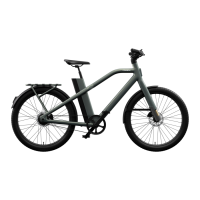
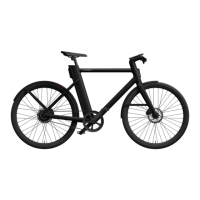
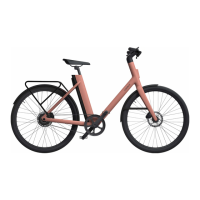
- 27,9 kg for Cross
- 26,5 kg for Cross ST
Any questions? Speak to us.
If you wish to attach a bicycle
trailer, check the Cowboy webshop
to get a specific adapter.
If you wish to use third party
accessories with your bike
(such as a child seat), first check
compatibility with the accessory’s
manufacturer.
36


 To Next Page
 Loading...