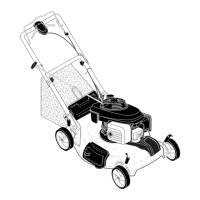
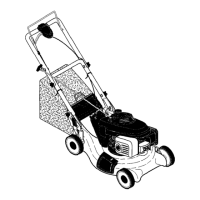
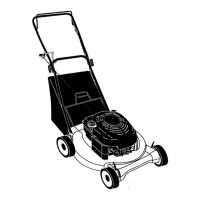
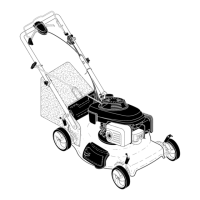
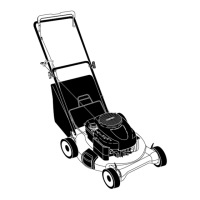
This document is an owner's manual for a Craftsman Rotary Lawn Mower, model number 944.363520. It's a 6.5 horsepower, 21-inch Multi-Cut lawn mower. The manual provides comprehensive information on assembly, operation, maintenance, troubleshooting, and repair parts for the device.
Function Description:
The Craftsman Rotary Lawn Mower is designed for cutting grass in residential settings. Its "Multi-Cut" feature suggests it can perform various cutting functions, likely including mulching, bagging, and side discharging, allowing users to choose the best method for their lawn conditions. The mower is powered by a 6.5 horsepower engine, providing sufficient power for typical lawn care tasks. It is a walk-behind model, requiring the operator to push it. A key safety feature is the operator presence control bar, which must be held down to operate the engine and released to stop it, minimizing the risk of blade contact injury.
Important Technical Specifications:
- Model No.: 944.363520
- Horsepower: 6.5 HP
- Cutting Width: 21 inches
- Gasoline Capacity / Type: 1.5 Litres (Unleaded Regular)
- Oil Type (API-SF-SJ): SAE 30 (above 32°F); SAE 5W-30 (below 32°F)
- Oil Capacity: 0.58 Litres
- Spark Plug (Gap): 0.76 mm, Champion RJ19LM
- Blade Bolt Torque: 35-40 ft. lbs. / 47-54 N-m
- Engine Model: Briggs & Stratton, Model Number 123K02-0258-E1
- RPM Settings: Low: 1900-2100; High: 3000-3200
- Safety Standards: Conforms to American National Standards Institute and U.S. Consumer Product Safety Commission standards.
Usage Features:
- Multi-Cut Capability: The mower is shipped ready for mulching. It can be converted to bagging by installing the grass catcher or to side discharging by opening the mulcher door and installing the discharge deflector.
- Adjustable Cutting Height: The cutting height can be adjusted by squeezing the adjuster lever towards the wheel and moving the wheel up or down. The manual recommends a medium position for most lawns and advises ensuring all wheels are set to the same height.
- Engine Starting: For a cold engine, the primer should be pushed three times. The operator presence control bar must be held down to the handle, and the starter handle pulled quickly. Over-priming in warm weather can flood the engine.
- Engine Stopping: Simply release the operator presence control bar to stop the engine.
- Handle Adjustment: The handle can be adjusted to a high or low position for operator comfort by repositioning the lower handle on its mounting pins.
- Fuel and Oil: The mower is shipped without oil or gasoline. Users must add 0.58 liters of SAE 30 or SAE 5W-30 oil and 1.5 liters of fresh, clean, regular unleaded gasoline (minimum 87 octane) before starting. Alcohol-blended fuels are cautioned against for storage longer than 30 days due to potential damage to the fuel system.
- Mowing Tips:
- For very tall grass, raising the height of cut or reducing ground speed may be necessary to prevent overloading the engine and leaving clumps.
- For heavy cutting, reducing the width of cut by overlapping previously cut paths and mowing slowly is recommended.
- Engine speed should be set to FAST for better grass bagging.
- Regularly hose off cloth grass catchers to prevent pores from filling with dirt.
- Keep the top of the engine around the starter clear of grass clippings for proper airflow and extended engine life.
- Mulching Mowing Tips:
- For best performance, keep the mower housing free of built-up grass and trash.
- The special mulching blade recuts clippings multiple times for dispersion into the lawn, providing nutrients.
- Always mulch at the highest engine (blade) speed.
- Avoid mowing wet grass, as it tends to clump.
- Adjust cutting height to cut only the top one-third of grass blades.
- For overgrown lawns, raise the cutting height.
- For extremely heavy grass, reduce the width of cut and mow slowly.
- Some grass types may require a second cut, perpendicular to the first.
- Changing cutting patterns weekly (e.g., north-south then east-west) helps prevent matting and graining.
Maintenance Features:
- Maintenance Schedule: A detailed schedule is provided for lubrication, checking tires, drive wheels, fasteners, grass catcher, cleaning the mower (under drive cover, housing), checking/sharpening/replacing the blade, checking/recharging the battery (if electric start), checking/changing engine oil, cleaning/inspecting/replacing the air filter, inspecting the muffler, and replacing the spark plug.
- Engine Oil: Check oil level before each use and after every 5 hours of use. Change oil after every 25 hours of operation or once a season. More frequent changes may be needed in dusty conditions. To change oil, disconnect the spark plug wire, remove the oil cap, tip the mower to drain oil, and refill slowly to the FULL mark on the dipstick.
- Air Filter: Replace the air filter cartridge every 100 hours or once a season, or more often in dusty conditions. To clean, loosen the screw, tilt the cover, remove the cartridge, and tap gently on a flat surface. Do not use petroleum solvents, pressurized air, or oil on the cartridge.
- Muffler: Inspect and replace corroded mufflers to prevent fire hazards.
- Spark Plug: Replace the spark plug at the beginning of each mowing season or after every 100 hours of operation.
- Blade Maintenance: For best results, the blade should be kept sharp. Replace bent or damaged blades. To remove the blade, disconnect the spark plug wire, block the blade, and loosen the blade bolt. To sharpen, ensure the blade is balanced.
- Grass Catcher: Clean the grass catcher frequently with water, especially when mowing in dusty conditions, to maintain its effectiveness.
- Cleaning the Mower: Clean the underside of the mower housing after each use to remove grass and trash build-up. Keep the engine clean to prevent overheating. Avoid using a garden hose to clean the mower unless the electrical system, muffler, air filter, and carburetor are covered to prevent water entry, which can shorten engine life.
- Storage: Before storing for 30 days or longer, empty the fuel tank, run the engine until fuel lines and carburetor are empty, and add fresh fuel next season. Clean the entire mower, lubricate moving parts, check for loose fasteners, and touch up any rusted or chipped paint. For engine oil, see the "ENGINE" section. Store the unit indoors in a dry, dust-free area, covering it to protect from dust and dirt.

 Need help?
 General

 To Next Page