ENGLISH
6
1. Plug the charger into an appropriate outlet before
inserting batterypack.
2. Connect the charger and battery pack, making sure
the battery is fully seated. The (charging) light will
blink continuously indicating that the charging process
hasstarted.
3. The completion of charge will be indicated by the light
remaining ON continuously. The battery pack is fully
charged and may be removed and used at this time or
left in the charger.
NOTE: To remove the battery pack, some chargers require
the battery pack release button to bepressed.
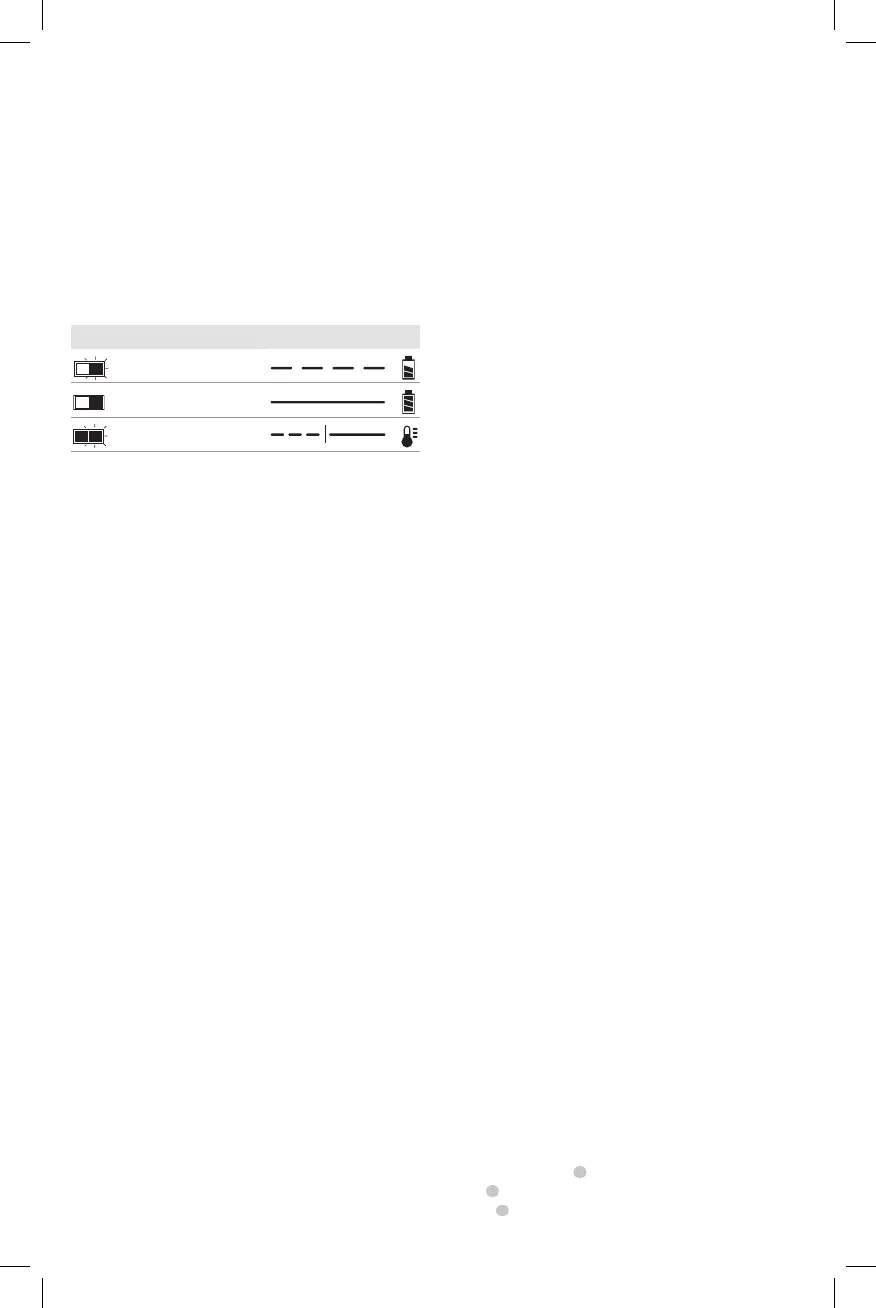
Indicators
Charging
Fully Charged
Hot/Cold Pack Delay
A charger will not charge a faulty battery pack. The charger
refusing to light could indicate a problem with the charger.
NOTE: If the charger refuses to light, take the charger and
battery pack to be tested at an authorized servicecenter.
Hot/Cold Pack Delay
When the charger detects a battery pack that is too hot
or too cold, it automatically starts a Hot/Cold Pack Delay,
suspending charging until the battery pack has reached an
appropriate temperature. The charger then automatically
switches to the pack charging mode. This feature ensures
maximum battery packlife.
A cold battery pack may charge at a slower rate than a
warm batterypack.
Important Charging Notes
1. Longest life and best performance can be obtained if
the battery pack is charged when the air temperature
is between 65°F – 75°F (18° C– 24°C). DO NOT charge
when the battery pack is below +40°F (+4.5°C), or
above +104°F (+40°C). This is important and will
prevent serious damage to the batterypack.
2. The charger and battery pack may become warm to the
touch while charging. This is a normal condition, and
does not indicate a problem. To facilitate the cooling of
the battery pack after use, avoid placing the charger or
battery pack in a warm environment such as in a metal
shed or an uninsulatedtrailer.
3. If the battery pack does not charge properly:
a. Check operation of receptacle by plugging in a lamp
or other appliance;
b. Check to see if receptacle is connected to a light
switch which turns power off when you turn out
the lights;
c. Move the charger and battery pack to a location
where the surrounding air temperature is
approximately 65°F – 75°F (18°C – 24°C);
d. If charging problems persist, take the tool, battery
pack and charger to your local servicecenter.
4. The battery pack should be recharged when it fails to
produce sufficient power on jobs which were easily
done previously. DO NOT CONTINUE to use under these
conditions. Follow the charging procedure. You may
also charge a partially used pack whenever you desire
with no adverse effect on the batterypack.
5. Foreign materials of a conductive nature such as, but
not limited to, grinding dust, metal chips, steel wool,
aluminum foil, or any buildup of metallic particles
should be kept away from charger cavities. Always
unplug the charger from the power supply when there
is no battery pack in the cavity. Unplug the charger
before attempting toclean.
6. Do not freeze or immerse the charger in water or any
otherliquid.
Charger Cleaning Instructions
WARNING: Shock hazard. Disconnect
the charger from the AC outlet before cleaning. Dirt
and grease may be removed from the exterior of the
charger using a cloth or soft non-metallic brush. Do
not use water or any cleaningsolutions.
ASSEMBLY AND ADJUSTMENTS
WARNING: To reduce the risk of
serious personal injury, turn unit off and remove
the battery pack before making any adjustments
or removing/installing attachments or
accessories. An accidental start-up can causeinjury.
SAVE THESE
INSTRUCTIONS
FOR FUTURE USE
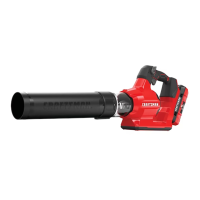
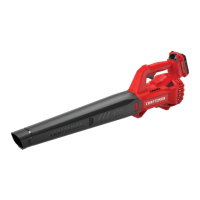
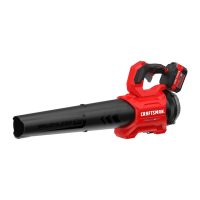
COMPONENTS (FIG. A)
Intended Use
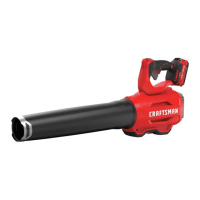
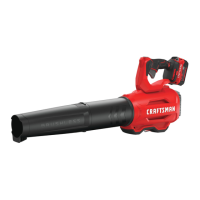
This cordless handheld blower is designed for household
blowing applications.
DO NOT use under wet conditions or in presence of
flammable liquids orgases.
DO NOT let children come into contact with the tool.
Supervision is required when inexperienced operators use
thistool.
CAUTION: Ensure the battery is removed
before removing extension attachment or end
attachment. An attachment must be attached to the
housing before use.
Tube Assembly (Fig. A, B)
• To attach the tube
4
to the blower,line up theguide
rail
7
on the housing opening with the notch onthe
tube
8
opening. Push the tube into the blower housing




 To Next Page