
 Need help?
Do you have a question about the Craftsman M100 and is the answer not in the manual?
Provides essential instructions for safe mower operation, maintenance, and general usage guidelines.
Outlines crucial steps and checks before starting mower operation, focusing on safety.
Details safe procedures and precautions during the operation of the lawn mower.
Specific safety warnings and guidelines regarding children around lawn mowers.
Provides safety instructions and limitations for operating mowers on sloped terrain.
Safety precautions and guidelines for handling gasoline and preventing fire hazards.
Safety recommendations and procedures related to mower maintenance and repair.
Instructions for adjusting the mower's cutting height using single or dual levers.
Instructions and safety warnings for starting the mower engine.
Safety and procedures for inspecting, sharpening, or replacing the mower blade.
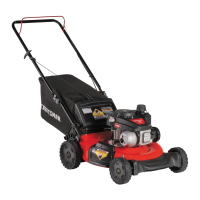
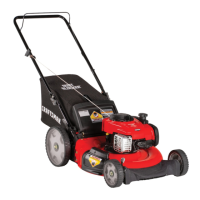
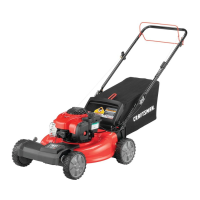
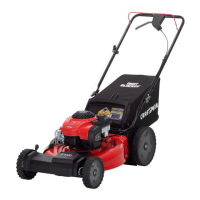
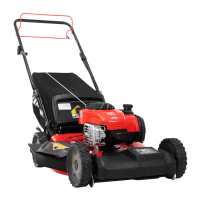
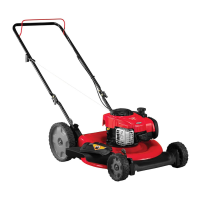
This document serves as the Operator's Manual for a push mower, providing comprehensive instructions for its safe operation, assembly, maintenance, and service. The mower is designed for residential use, primarily for cutting normal grass up to 7 inches (17.5 cm) in height. It is shipped without gasoline or oil in the engine, requiring the operator to service the engine with appropriate fluids before initial use.
The push mower is a power equipment designed for cutting grass. It features a blade control, which is a safety device that must be depressed and squeezed against the upper handle to operate the mower. Releasing this control stops both the blade and the engine, ensuring user safety. The cutting height is adjustable, offering two configurations: single lever and dual lever. The single lever system is located above the rear left wheel, while the dual lever system has levers above the front and rear right wheels. These adjustments allow the operator to select the desired cutting height for various lawn conditions.
The mower can be used in several modes: mulching, grass catching, and side discharge. For mulching, the grass catcher is removed, and the rear discharge door is closed, allowing clippings to be recirculated back to the lawn. When using the grass catcher, clippings are collected for disposal. The side discharge chute, if equipped, directs grass clippings to the side of the mower, preventing collection in the grass catcher or mulching.
Some models may include a vertical storage feature, allowing the handle to be folded forward and the mower tipped back for vertical storage, which is useful for saving space. This feature requires the engine to be designed for upright storage to prevent fuel or oil leaks. Additionally, some mowers are equipped with a deck wash system, which allows for easy rinsing of grass clippings from the deck's underside using a garden hose.
Before operating the mower, a thorough inspection of the mowing area is crucial to remove any objects that could be thrown by the blade, such as stones, sticks, wire, bones, or toys. Operators are advised to stay in the operator zone behind the mower handles and keep bystanders, children, and pets at least 75 feet (23 meters) away. Safety glasses or goggles are mandatory during operation and maintenance to protect against thrown objects. Sturdy, rough-soled work shoes and close-fitting clothing are recommended, while bare feet, sandals, or loose clothing should be avoided.
Fueling the mower requires extreme caution due to gasoline's flammability and explosive vapors. The fuel tank should not be overfilled, leaving about 1 inch (2.5 cm) of space for expansion. Refueling should only occur when the engine is cool, and never indoors or near ignition sources.
When starting the engine, the recoil starter handle is pulled slowly until resistance is felt, then rapidly. The blade control must be held down during this process. To stop the engine, the blade control is simply released. The blade should come to a complete stop within three seconds; if not, professional service is required.
Special attention is given to slope operation. Operators are warned not to mow on slopes greater than 15 degrees (25%) and to always mow across slopes, never up and down. Maintaining sure footing and balance is critical, and if balance is lost, the blade control handle should be immediately released.
Regular maintenance is essential for the mower's safe and efficient operation. This includes keeping the mower in good working order, replacing worn or damaged parts, and ensuring all nuts, bolts, and screws are tight. The blade control's pivot points and all wheel hubs/axles should be lubricated at least once a season and before storage.
The engine requires regular cleaning to prevent the buildup of grass, chaff, or debris, which can impede air movement and increase the risk of overheating. Linkage, springs, and controls should also be kept clean. Engine oil levels should be checked before each use.
Blade care is a critical maintenance aspect. The blade should be inspected periodically for bends or cracks, especially after striking foreign objects or experiencing excessive vibration. When removing the blade for sharpening or replacement, heavy gloves or a heavy rag should be used to protect hands. The blade must be balanced after sharpening to prevent excessive vibration, which can damage the engine and cause personal injury. The blade mounting bolt torque should be checked annually.
For models with a deck wash system, the deck's underside should be rinsed after each mowing to remove grass clippings and corrosive chemicals. This involves attaching a garden hose to the deck wash nozzle, starting the engine for a few minutes, and then allowing the deck to dry thoroughly after stopping the engine.
The manual also emphasizes the importance of not modifying the engine in any way, as tampering with the governor setting can lead to unsafe speeds and void the engine warranty. Safety interlock systems should be checked regularly for proper function. If the mower strikes a foreign object, the engine must be stopped, the spark plug wire disconnected, and the mower thoroughly inspected for damage before restarting.
 General
| Engine | 140cc |
|---|---|
| Cutting Width | 21 inches |
| Deck Material | Steel |
| Cutting Height Positions | 6 |
| Drive Type | Push |
| Cutting Height | 1.25-3.75 inches |
| Grass Discharge | Side discharge, mulching |
| Engine Type | Gas |


 To Next Page