Need help?
Do you have a question about the Crane FOAM ROLLER and is the answer not in the manual?
This document is a quick guide for the Crane Foam Roller, a fitness accessory designed for self-myofascial release and muscle recovery. The manual provides basic instructions on how to use the foam roller through illustrative examples and includes important safety information.
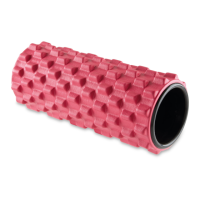
The Crane Foam Roller is a fitness tool primarily used for self-myofascial release, a technique that involves applying pressure to specific points on your body to help release muscle tightness and knots. By rolling over various muscle groups, users can target trigger points, improve flexibility, increase blood flow, and aid in muscle recovery after exercise. It can be incorporated into warm-up routines to prepare muscles for activity or cool-down routines to facilitate recovery and reduce muscle soreness. The textured surface of the foam roller is designed to provide a deeper massage and stimulate circulation.
While specific technical specifications such as dimensions, weight, and material composition are not explicitly detailed in this quick guide, the visual representation suggests a standard cylindrical foam roller with a textured surface. The product is manufactured in China for Aldi Stores Ltd. in the UK and Aldi Stores (Ireland) Ltd. in Ireland. The document's date is 01/2017, with a product code 67607.
The quick guide illustrates several ways to use the foam roller, demonstrating its versatility for targeting different muscle groups. The examples show individuals using the foam roller in various positions to work on areas such as:
The illustrations emphasize controlled movements, suggesting that users should slowly roll over the foam roller, pausing on tender spots to allow for muscle release. The presence of a textured surface, as depicted in the images, indicates that the roller is designed to provide a more intense massage compared to smooth foam rollers, helping to break up adhesions and improve tissue mobility.
The quick guide does not explicitly detail maintenance features for the foam roller. However, typical maintenance for such a device would involve:
The manual includes a crucial "Risk of injury!" section, highlighting important safety guidelines that users must adhere to:
These safety instructions underscore the potential risks associated with improper use and the importance of listening to one's body and seeking professional medical advice when necessary. The foam roller is presented as a tool to enhance fitness and recovery, but its effective and safe use depends on adherence to these guidelines.
 General
| Brand | Crane |
|---|---|
| Model | FOAM ROLLER |
| Category | Fitness Equipment |
| Language | English |

 To Next Page