EasyManua.ls Logo

Crown FM100 - User Manual

Crown FM100
111 pages
Print Icon
To Next Page IconTo Next Page
Loading...
i
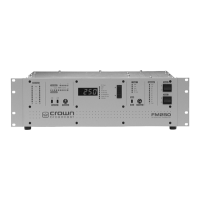
FM30/FM100/FM250
Broadcast Transmitter
User's Manual
®
©2005 Crown Broadcast, a division of International Radio and Electronics, Inc.
25166 Leer Drive, Elkhart, Indiana, 46514-5425 U.S.A.
(574) 262-8900
Question and Answer IconNeed help?

Do you have a question about the Crown FM100 and is the answer not in the manual?

Summary

Getting Acquainted

Your Transmitter

Overview of the FM30, FM100, and FM250 transmitter family, highlighting integration, ease-of-use, and reliability.

Applications and Options

Discusses various operational modes (stand-alone, backup, booster) and optional configurations of the transmitter.

Transmitter;Exciter Specifications

Detailed technical specifications covering frequency range, power output, impedance, and performance metrics.

Receiver Specifications

Technical specifications for the optional receiver module, including sensitivity and connector type.

Safety Considerations

Crucial safety information, including Dangers, Warnings, and Cautions for safe operation and handling.

Installation

Operating Environment

Guidelines for proper placement and ventilation of the transmitter for optimal performance.

Power Connections

Instructions for connecting AC and DC power, setting line voltage, and fuse identification.

Frequency (Channel) Selection

Step-by-step procedure for selecting and setting the transmitter's operating frequency.

Receiver Frequency Selection

How to set the receiver module's frequency using SW1 and SW2 switches.

RF Connections

Connecting the RF load, antenna, or external power amplifier to the transmitter.

Audio Input Connections

Connecting audio sources via XLR connectors for left, right, or mono inputs.

SCA Input Connections

Connecting external SCA generators to the BNC input connectors.

Composite Input Connection

Method for feeding composite audio directly to the RF exciter, bypassing internal processing.

Audio Monitor Connections

Connecting monitors to the rear panel jacks for audio testing and monitoring.

Pre-emphasis Selection

How to select the pre-emphasis curve via jumpers on the audio processor board.

Program Input Fault Time-out

Configuring the automatic carrier turn-off feature for program input failures.

Remote I;O Connector

Details of the 15-pin D-sub connector for remote control and metering functions.

Operation

Initial Power-up Procedures

A comprehensive guide to powering up the transmitter for the first time and initial parameter checks.

Power Switches

Explanation of the DC breaker, main power switch, and carrier switch functions.

Front Panel Bar-Dot Displays

Description of the front panel displays showing audio levels, gain, and modulation status.

Input Gain Switches

How to adjust audio input sensitivity using the designated gain switches.

Processing Control

Guidance on setting the processing control for optimal audio density and dynamic range.

Stereo-Mono Switch

Function of the switch to select between stereo and mono transmission modes.

RF Output Control

How to set and control the transmitter's RF output power level.

Digital Multimeter

Understanding the front panel digital multimeter readings for various parameters.

Fault Indicators

Interpretation of fault indicators and their relation to transmitter status and errors.

Principles of Operation

Part Numbering

Explanation of the component and circuit board part numbering system.

Audio Processor Circuit Board

Detailed breakdown of the audio processor board's circuitry and operational principles.

Stereo Generator Circuit Board

Detailed breakdown of the stereo generator board's circuitry and signal processing.

RF Exciter Circuit Board

Detailed breakdown of the RF exciter (frequency synthesizer) board's circuitry.

Metering Circuit Board

Detailed breakdown of the metering board's circuitry for RF/DC measurements and ALC.

Motherboard

Description of the motherboard's role in interconnecting boards and supporting options.

Display Circuit Board

Explanation of the display board's circuitry for indicators, meter, and controls.

Voltage Regulator Circuit Board

Details on the voltage regulator board's switching regulators and control circuits.

Power Regulator Circuit Board

Explanation of the power regulator board's components and functions.

RF Driver;Amplifier (FM30)

Description of the RF driver/amplifier assembly for the FM30 model.

RF Driver (FM100;FM250)

Description of the RF driver assembly for the FM100/FM250 models.

RF Amplifier (FM100;FM250)

Description of the RF amplifier assembly for the FM100/FM250 models.

Chassis

Overview of chassis components, including power supply and filtering.

RF Output Filter & Reflectometer

Explanation of the RF low-pass filter and reflectometer circuitry for harmonic suppression and impedance matching.

Receiver Circuit Board Option

Technical details of the receiver board, enabling translator functionality.

Adjustments and Tests

Audio Processor Adjustments

Procedures for selecting and fine-tuning pre-emphasis curves for optimal audio processing.

Stereo Generator Adjustments

Steps for adjusting stereo separation and composite output levels for quality stereo signal.

Frequency Synthesizer Adjustments

Procedures for setting, measuring, and adjusting the frequency synthesizer's operating frequency.

Metering Board Adjustments

Calibration adjustments for power, SWR, and PA current limit on the metering board.

Motherboard Adjustments

Details on motherboard jumper configurations for various optional features.

Display Modulation Calibration

Calibrating the front panel modulation bar graph display sensitivity.

Voltage Regulator Adjustments

Setting time delays for the program input fault time-out feature.

Bias Set (RF Power Amplifier)

Procedure for setting the bias trim pot in the RF power amplifier for optimal performance.

Performance Verification

Comprehensive tests to verify transmitter performance and signal quality parameters.

Carrier Frequency

Method for measuring and adjusting the carrier frequency to meet FCC specifications.

Output Power

Procedures for measuring and setting the transmitter's RF output power level accurately.

RF Bandwidth and RF Harmonics

Verifying RF bandwidth and spurious emissions using an RF spectrum analyzer.

Pilot Frequency

How to measure and adjust the 19-kHz stereo pilot frequency.

Audio Frequency Response

Measuring the audio frequency response across the audible spectrum.

Audio Distortion

Measuring audio distortion levels at various frequencies for signal integrity.

Modulation Percentage

Confirming modulation percentage and its consistency between stereo and mono modes.

FM and AM Noise

Taking noise readings from the de-emphasized output for signal-to-noise ratio assessment.

Stereo Separation

Measuring the separation between left and right audio channels.

Crosstalk

Measuring crosstalk between main and subcarrier audio signals.

38-kHz Subcarrier Suppression

Ensuring the 38-kHz subcarrier is adequately suppressed in stereo transmissions.

Additional Checks

Performing final physical inspections and functional checks of the transmitter.

Reference Drawings

Views

Illustrations showing front and rear views of the transmitter, identifying key controls and connectors.

Board Layouts and Schematics

Detailed component layout diagrams and schematics for internal circuit boards.

Service and Support

Service

Procedures for obtaining warranty service, including returning the unit for repair or replacement.

24-Hour Support

Information on how to access 24-hour technical assistance for urgent support needs.

Spare Parts

Contact details for ordering replacement spare parts for the transmitter.

Summary

Getting Acquainted

Your Transmitter

Overview of the FM30, FM100, and FM250 transmitter family, highlighting integration, ease-of-use, and reliability.

Applications and Options

Discusses various operational modes (stand-alone, backup, booster) and optional configurations of the transmitter.

Transmitter;Exciter Specifications

Detailed technical specifications covering frequency range, power output, impedance, and performance metrics.

Receiver Specifications

Technical specifications for the optional receiver module, including sensitivity and connector type.

Safety Considerations

Crucial safety information, including Dangers, Warnings, and Cautions for safe operation and handling.

Installation

Operating Environment

Guidelines for proper placement and ventilation of the transmitter for optimal performance.

Power Connections

Instructions for connecting AC and DC power, setting line voltage, and fuse identification.

Frequency (Channel) Selection

Step-by-step procedure for selecting and setting the transmitter's operating frequency.

Receiver Frequency Selection

How to set the receiver module's frequency using SW1 and SW2 switches.

RF Connections

Connecting the RF load, antenna, or external power amplifier to the transmitter.

Audio Input Connections

Connecting audio sources via XLR connectors for left, right, or mono inputs.

SCA Input Connections

Connecting external SCA generators to the BNC input connectors.

Composite Input Connection

Method for feeding composite audio directly to the RF exciter, bypassing internal processing.

Audio Monitor Connections

Connecting monitors to the rear panel jacks for audio testing and monitoring.

Pre-emphasis Selection

How to select the pre-emphasis curve via jumpers on the audio processor board.

Program Input Fault Time-out

Configuring the automatic carrier turn-off feature for program input failures.

Remote I;O Connector

Details of the 15-pin D-sub connector for remote control and metering functions.

Operation

Initial Power-up Procedures

A comprehensive guide to powering up the transmitter for the first time and initial parameter checks.

Power Switches

Explanation of the DC breaker, main power switch, and carrier switch functions.

Front Panel Bar-Dot Displays

Description of the front panel displays showing audio levels, gain, and modulation status.

Input Gain Switches

How to adjust audio input sensitivity using the designated gain switches.

Processing Control

Guidance on setting the processing control for optimal audio density and dynamic range.

Stereo-Mono Switch

Function of the switch to select between stereo and mono transmission modes.

RF Output Control

How to set and control the transmitter's RF output power level.

Digital Multimeter

Understanding the front panel digital multimeter readings for various parameters.

Fault Indicators

Interpretation of fault indicators and their relation to transmitter status and errors.

Principles of Operation

Part Numbering

Explanation of the component and circuit board part numbering system.

Audio Processor Circuit Board

Detailed breakdown of the audio processor board's circuitry and operational principles.

Stereo Generator Circuit Board

Detailed breakdown of the stereo generator board's circuitry and signal processing.

RF Exciter Circuit Board

Detailed breakdown of the RF exciter (frequency synthesizer) board's circuitry.

Metering Circuit Board

Detailed breakdown of the metering board's circuitry for RF/DC measurements and ALC.

Motherboard

Description of the motherboard's role in interconnecting boards and supporting options.

Display Circuit Board

Explanation of the display board's circuitry for indicators, meter, and controls.

Voltage Regulator Circuit Board

Details on the voltage regulator board's switching regulators and control circuits.

Power Regulator Circuit Board

Explanation of the power regulator board's components and functions.

RF Driver;Amplifier (FM30)

Description of the RF driver/amplifier assembly for the FM30 model.

RF Driver (FM100;FM250)

Description of the RF driver assembly for the FM100/FM250 models.

RF Amplifier (FM100;FM250)

Description of the RF amplifier assembly for the FM100/FM250 models.

Chassis

Overview of chassis components, including power supply and filtering.

RF Output Filter & Reflectometer

Explanation of the RF low-pass filter and reflectometer circuitry for harmonic suppression and impedance matching.

Receiver Circuit Board Option

Technical details of the receiver board, enabling translator functionality.

Adjustments and Tests

Audio Processor Adjustments

Procedures for selecting and fine-tuning pre-emphasis curves for optimal audio processing.

Stereo Generator Adjustments

Steps for adjusting stereo separation and composite output levels for quality stereo signal.

Frequency Synthesizer Adjustments

Procedures for setting, measuring, and adjusting the frequency synthesizer's operating frequency.

Metering Board Adjustments

Calibration adjustments for power, SWR, and PA current limit on the metering board.

Motherboard Adjustments

Details on motherboard jumper configurations for various optional features.

Display Modulation Calibration

Calibrating the front panel modulation bar graph display sensitivity.

Voltage Regulator Adjustments

Setting time delays for the program input fault time-out feature.

Bias Set (RF Power Amplifier)

Procedure for setting the bias trim pot in the RF power amplifier for optimal performance.

Performance Verification

Comprehensive tests to verify transmitter performance and signal quality parameters.

Carrier Frequency

Method for measuring and adjusting the carrier frequency to meet FCC specifications.

Output Power

Procedures for measuring and setting the transmitter's RF output power level accurately.

RF Bandwidth and RF Harmonics

Verifying RF bandwidth and spurious emissions using an RF spectrum analyzer.

Pilot Frequency

How to measure and adjust the 19-kHz stereo pilot frequency.

Audio Frequency Response

Measuring the audio frequency response across the audible spectrum.

Audio Distortion

Measuring audio distortion levels at various frequencies for signal integrity.

Modulation Percentage

Confirming modulation percentage and its consistency between stereo and mono modes.

FM and AM Noise

Taking noise readings from the de-emphasized output for signal-to-noise ratio assessment.

Stereo Separation

Measuring the separation between left and right audio channels.

Crosstalk

Measuring crosstalk between main and subcarrier audio signals.

38-kHz Subcarrier Suppression

Ensuring the 38-kHz subcarrier is adequately suppressed in stereo transmissions.

Additional Checks

Performing final physical inspections and functional checks of the transmitter.

Reference Drawings

Views

Illustrations showing front and rear views of the transmitter, identifying key controls and connectors.

Board Layouts and Schematics

Detailed component layout diagrams and schematics for internal circuit boards.

Service and Support

Service

Procedures for obtaining warranty service, including returning the unit for repair or replacement.

24-Hour Support

Information on how to access 24-hour technical assistance for urgent support needs.

Spare Parts

Contact details for ordering replacement spare parts for the transmitter.

Crown FM100 Specifications

General IconGeneral
Output Power100 W
Modulation TypeFM
RF Output Impedance50 Ohms
Power Requirements100-240 VAC, 50/60 Hz
Input Voltage100-240 VAC
CoolingForced air
Frequency Range88-108 MHz

Related product manuals