EasyManua.ls Logo

Culina UBHH60BK - User Manual

Culina UBHH60BK
28 pages
Print Icon
To Next Page IconTo Next Page
Loading...
IE
GB
IE
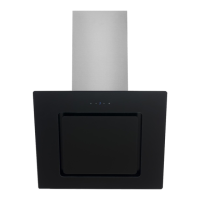
Angled Glass Hood
USER MANUAL
UBHH60_70_90BK, UBDHH60_70_90W Version 02
Question and Answer IconNeed help?

Do you have a question about the Culina UBHH60BK and is the answer not in the manual?

Summary

Getting Started Guide

Appliance Safety Guidelines

Essential safety instructions and warnings for appliance use and installation.

Pre-Installation Checks

Checks to perform and items needed before appliance installation and use.

Detailed Operation and Maintenance

Product Features Overview

Description of the cooker hood's capabilities and how it operates.

Power and Fan Control

Instructions on how to operate the appliance's power and fan controls.

Cleaning and Maintenance Procedures

Guidance on cleaning filters, the appliance, and general upkeep.

Troubleshooting Common Issues

Common issues, their causes, and recommended solutions for the cooker hood.

Environmental Disposal Information

Information on the environmentally responsible disposal of the appliance.

Technical and Legal Compliance

Details on electrical requirements, wiring, and compliance.

Product Appendix and Information

Cooker Hood Installation Guide

Step-by-step guide for mounting the cooker hood and connecting ducting.

EU Energy and Technical Specifications

Technical specifications and energy performance data for EU regulations.

Overview

This document serves as a comprehensive user manual for an Angled Glass Hood, providing detailed instructions for its installation, operation, and maintenance. The manual emphasizes safety precautions, ensuring users can operate the appliance effectively and without risk.

The primary function of this appliance is to extract air from the kitchen, effectively removing cooking odors and maintaining an optimal level of air quality within the room. Additionally, it provides illumination for the cooking area, enhancing visibility and convenience during meal preparation.

Usage Features:

The cooker hood is designed for domestic use and can be operated by children aged 8 years and above, as well as persons with reduced physical, sensory, or mental capabilities, provided they have been given supervision or instruction concerning its safe use and understand the associated hazards. Children should not play with the appliance, and cleaning and user maintenance should not be performed by children unless they are older than 8 and supervised.

The appliance is switched on and off at a switched fused connection unit. Once switched on, it is ready for use. The hood features a touch control panel located on its front, which includes:

  • Power button: Pressing this button for 3 seconds activates a 15-minute delay timer, after which the motor power will turn off.
  • Downshift button: Decreases the fan speed.
  • Upshift button: Increases the fan speed.
  • Light button: Controls the illumination for the cooking area.

For optimal results, it is recommended to leave the cooker hood switched on for 15 minutes after cooking has finished to ensure thorough air extraction.

The manual outlines two types of installation options:

  1. Ducted option: In this configuration, the extracted air is vented outside the building through a ducting tube.
  2. Recirculation option: This method filters the air through active charcoal filters and then recirculates the cleaned air back into the kitchen.

When installing the appliance, specific distances between the top of the cooker or hob and the lowest part of the cooker hood must be observed: 650mm for gas hobs and 435mm for electric hobs.

Maintenance Features:

Regular maintenance is crucial for the safe and efficient operation of the cooker hood. Users are advised to always switch off the electricity supply before performing any maintenance work.

  • Aluminium filters: These filters should be cleaned thoroughly once a month, or whenever the display pilot light illuminates (if fitted), to prevent fire hazards. To clean, remove the filters and soak them in hot water and detergent for an hour. If using a dishwasher, position the filters vertically to improve the cleaning process.
  • Active charcoal filters: For recirculation models, these filters need to be replaced every 3 months. It is important to ensure the filter is securely locked after replacement; otherwise, it could loosen and pose a danger. When activated carbon filters are attached, the suction power may be lower. The manual provides a hotline number for ordering carbon filters.
  • General cleaning: There is a risk of electric shock and fire if cleaning is not carried out in accordance with the instructions.
  • Power cord and plug: Regularly check the power plug and power cord for damage. If the supply cord is damaged, it must be replaced by the manufacturer, its service agent, or similarly qualified persons to avoid danger or injury.
  • Light bulb replacement: Information for replacing the bulb can be found in the "Care and maintenance" section. If the lamp fails, users are advised to contact after-sales care.

The manual also includes a troubleshooting section to help users identify and resolve common issues such as excessive vibration, motor malfunction, reduced suction performance, and lingering cooking smells. For instance, if excessive vibration occurs, users should check if the appliance is properly fixed. If the fan blade is damaged or jammed, or the fan motor is not fixed tightly, the appliance should be switched off, and repairs should be carried out by qualified service personnel. Reduced suction performance might be due to an incorrect distance between the hood and hob, dirty aluminum grease filters, or an obstructed top vent. Lingering cooking smells could indicate that the charcoal filter is not fitted correctly in recirculation mode or is full of grease, requiring replacement or proper fitting.

Safety Precautions:

The manual emphasizes several critical safety instructions:

  • All installation work must be carried out by a competent person or qualified electrician, strictly following the manufacturer's instructions.
  • Accessible parts of the appliance may become hot during use and remain hot after operation. Young children should be kept away, and care should be taken to avoid touching hot surfaces.
  • The manufacturer strongly recommends keeping the appliance out of reach of babies and small children.
  • Means for disconnection must be incorporated into the fixed wiring in accordance with wiring rules, with an all-pole disconnection switch having a contact separation of at least 3mm in all poles.
  • Electric cables must not touch hot parts of the appliance, and the power cord should not be caught under or in the appliance to prevent damage.
  • The appliance should not be installed outdoors in damp places or areas prone to water leaks. In case of a water leak, the machine should be allowed to dry naturally.
  • Failure to install screws or fixing devices according to instructions may result in electrical hazards.
  • When the range hood and other non-electric appliances are simultaneously in operation, the negative pressure in the room must not exceed 4 Pa (4x10^-5 bar).
  • Packing materials should be disposed of carefully.
  • Flammable sprays should not be used in close vicinity to the appliance.
  • A steam cleaner must not be used for cleaning.
  • The appliance is not intended to be operated by external timers or separate remote-control systems.
  • Local regulations regarding fume outlets must be consulted. The hood should not be connected to a fume, ventilation, or hot air duct. Room ventilation must be appropriate with local authorities, and the maximum air extraction flow rate for appliances in the room should not exceed 4 Pa (0.04 mbar). Adequate ventilation is required if an extractor hood is used simultaneously with gas or other fuel-burning appliances. Air must not be discharged into a flue used for exhausting fumes from other appliances.
  • Before connecting the hood, the electricity supply must be switched off, and the supplied voltage and frequency must match those indicated on the appliance nameplate.
  • The hood may temporarily stop working during an electrostatic discharge (e.g., lightning) without risk of damage; simply switch off the electricity supply and reconnect after one minute.
  • To avoid fire risks, metal filters should be cleaned regularly, and pans containing hot oil should be closely watched and regulated.
  • The hood should not be used if it shows signs of damage or imperfection; customer services should be contacted in such cases.
  • Flambé cooking must not be carried out underneath the appliance.
  • The manufacturer declines all liability for personal or material damage resulting from misuse or incorrect installation.

The manual also provides information on recycling and disposal, stating that waste electrical products should not be disposed of with household waste but should be recycled at designated collection points. It also includes technical and legal information, including wiring diagrams and electrical requirements, emphasizing that the appliance must not be earthed. For UK installations, a Switched Fused Connection Unit to BS 1363 Part 4 is recommended, with a 3 Amp fuse. The mains lead wires are colored brown for Live (L) and blue for Neutral (N). The connection point should be accessible for engineers in case of a breakdown.

Culina UBHH60BK Specifications

General IconGeneral
TypeUnder Cabinet
ColourBlack
Width60 cm
MaterialStainless Steel
Number of Fan Speeds3
Noise Level65 dB
LightingLED
Voltage120V

Related product manuals