INSTALLATION
Exceeding the recommended pressure and
temperature limits from Table 1, or those indicated
on the nameplates of your CVS Controls Valve, can
result in personal injury and property damage. CVS
Controls recommends the installation of a relief
valve to protect against overpressure situations.
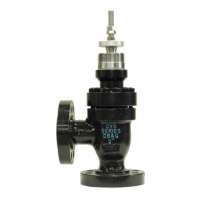
CVS Series DBQ and DBAQ are designed to meet
specific conditions for fluid control, temperature,
pressure and pressure drop. The limiting factor
on these valves can be the body/trim material
combinations. Do not install these valves in any
other applications without first consulting with
your CVS Controls representative.
1. Inspect the valves for shipping damage and
foreign debris while uncrating.
2. Ensure the pipeline is free from welding slag, chips
and other debris by blowing out the line before
installation.
3. Position the valve on the line so the flow direction
indicator corresponds to the direction of the flow
of the pipeline.
4. CVS Controls recommends the installation of a
standard three-valve maintenance bypass. This
will allow the isolation of the control valve
without shutting down the pipeline system.
5. Install approved gaskets between the valve body
and the pipeline flanges.
6. If the actuator has been shipped separately, refer
to the mounting procedure in the applicable
instruction manual.
7. If the valve body arrives without packing installed
in the packing box, it will be necessary to install
the packing before putting the valve into service.
To complete these procedures, follow the
instructions under packing maintenance in this
manual.
8. *Note: It may be necessary to adjust the
packing to prevent leakage. Prior to shipping
the packing was tightened, and may require
some adjustment for specific conditions.
MAINTENANCE
Internal valve components are subject to normal
deterioration and must be inspected and replaced
as required. The necessity of inspections and
replacement of parts will depend on the severity
of service conditions. Inspections and
maintenance must be carried out on a regularly
scheduled basis.
To ensure the safety of personnel and to protect
against property damage, the following steps
should be carried out before beginning
disassembly.
1. To prevent the valve from opening suddenly,
disconnect any operating lines to the
actuator. This would include air pressure,
electrical power or control signal lines.
2. Isolate the valve by using the bypass valve, or
by shutting down the process completely.
Relieve the pressure and drain the process
fluid from both sides of the valve.
3. Relieve the pressure contained in the actuator
by venting the actuator loading pressure and
relieving any power actuator spring
compression.
4. Lock-out procedures should be strictly
adhered to while the equipment is being
serviced.
5. To ensure a good gasket seal, the gasket
should be replaced upon re-assembly
whenever it becomes disturbed by removing
or shifting gasketed parts.


 To Next Page
 Loading...