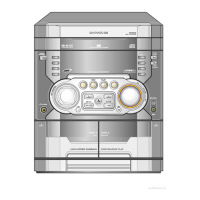
This document serves as a comprehensive service manual for the DAEWOO MINI COMPONENT SYSTEM, specifically models XM-111 and XM-113. It provides essential information for the proper operation, adjustment, and maintenance of the device, ensuring safety and optimal performance.
Function Description
The DAEWOO MINI COMPONENT SYSTEM is a versatile audio entertainment unit designed to provide a range of functionalities for an immersive listening experience. It integrates multiple audio sources into a single, compact system, making it suitable for various home environments. The core functions include:
- Tuner (AM/FM Radio): The system features an integrated tuner for receiving both AM and FM radio broadcasts. This allows users to access a wide array of radio stations, from music and news to talk shows, providing continuous entertainment and information. The tuner section includes components for RF amplification, IF processing, and PLL (Phase-Locked Loop) for stable frequency tuning.
- Tape Deck (Cassette Player/Recorder): Equipped with a cassette deck, the system supports playback and recording of audio cassettes. This feature caters to users who still enjoy their cassette collections or wish to record audio from other sources onto tape. The tape deck incorporates mechanisms for tape transport, playback/record heads, and an erase head, along with associated amplification and bias oscillator circuits. It supports auto-stop functionality to prevent tape damage.
- CD Player: A built-in CD player allows for the playback of compact discs, offering high-quality digital audio. This is a primary feature for accessing modern music collections. The CD player mechanism includes components for disc loading, laser pickup, sled, spindle, tracking, and focusing motors, all controlled by a dedicated DSP (Digital Signal Processor) and ASSP (Application Specific Standard Product) for accurate data retrieval and audio processing.
- Auxiliary Input: The system includes an auxiliary input, enabling connection of external audio devices such as smartphones, MP3 players, or other media sources. This expands the system's versatility, allowing users to play audio from virtually any compatible device through the component system's speakers.
- Amplifier (AMP): At the heart of the audio output, the amplifier section boosts the audio signals from all sources to drive the connected speakers. It ensures sufficient power and clarity for an enjoyable listening experience. The amplifier includes power output stages and a pre-amplifier section with tone controls and a volume regulator.
- Front Panel Control: The front panel serves as the primary user interface, featuring various knobs and buttons for controlling the system's functions. This includes power on/off, function selection (Tuner, Tape, CD, AUX), volume adjustment, and specific controls for each audio source. A VFD (Vacuum Fluorescent Display) provides visual feedback on the system's status, selected function, and track information.
- Power Supply: The system is powered by an internal power transformer and a regulator circuit, which convert AC mains voltage into the various DC voltages required by the different electronic components. This ensures stable and reliable operation across all functions.
Usage Features
The DAEWOO MINI COMPONENT SYSTEM is designed for straightforward and intuitive use, offering features that enhance the user's interaction with their audio content.
- Mode Selection: Users can easily switch between different audio sources (Tuner, Tape, CD, AUX) using dedicated function controls on the front panel. This allows for quick access to preferred media.
- Volume Control: A prominent volume knob provides easy adjustment of the overall audio output level, allowing users to tailor the sound to their preference and environment.
- Tape Playback and Recording: For the tape deck, standard controls such as Play, Stop, Fast Forward, and Rewind are available. The system also supports recording, allowing users to capture audio from the radio or auxiliary input onto a cassette tape.
- CD Playback: The CD player offers typical controls like Play/Pause, Stop, Skip Track, and possibly Repeat or Shuffle functions, providing full command over CD playback.
- Headphone Output: A dedicated headphone jack allows for private listening, enabling users to enjoy their audio without disturbing others.
- Speaker Output: The system provides connections for external speakers, allowing users to connect their preferred speaker setup for stereo audio output.
- User Interface: The VFD display offers clear visual information, such as the current function, radio frequency, CD track number, and other relevant status indicators, making it easy to monitor the system's operation.
Maintenance Features
The service manual emphasizes several aspects crucial for the long-term reliability and safety of the DAEWOO MINI COMPONENT SYSTEM. These features are primarily for qualified service personnel but also include general safety guidelines for users.
- Safety Precautions: The manual begins with extensive safety precautions, including warnings against electric shock, fire hazards, and laser radiation. It advises against unauthorized removal of covers and emphasizes referring servicing to qualified personnel. This ensures that maintenance is performed safely and correctly.
- Adjustments: Detailed adjustment procedures are provided for critical components, particularly the tape section. This includes tape speed adjustment, head azimuth adjustment, and recording bias oscillator frequency adjustment. These procedures are vital for maintaining optimal audio quality and performance of the tape deck over time. Specialized test tapes and equipment like VTVM (Vacuum Tube Voltmeter) or oscilloscopes are specified for these adjustments.
- Exploded View and Parts List: Comprehensive exploded views and mechanical parts lists are included, illustrating the internal structure of the system and identifying all mechanical components. This is invaluable for disassembly, reassembly, and ordering replacement parts during repairs.
- Wiring and Schematic Diagrams: Detailed wiring diagrams and schematic diagrams for various sections (AMP, TUNER, TAPE, CD, FRONT, POWER) are provided. These diagrams show the interconnections between components and the internal circuitry, which is essential for troubleshooting, diagnosing faults, and performing component-level repairs.
- PCB Pattern Layout: PCB (Printed Circuit Board) pattern layouts are included for the main PCB, front PCB, and power transformer PCB. These layouts help service technicians locate specific components and trace circuit paths on the boards, facilitating efficient repair and component replacement.
- Electrical Parts List: A comprehensive electrical parts list enumerates all electrical components, including their part names, locations on the PCB, part codes, and descriptions. This list is critical for identifying and sourcing correct replacement parts, ensuring that repairs maintain the original performance and safety standards of the device.
- Grounding and Polarization: Instructions for proper grounding and polarization of the appliance are highlighted to prevent electrical hazards, especially concerning outdoor antennas and power cords.
- Power Cord Protection: Emphasis is placed on routing power-supply cords to prevent damage, which is a common cause of electrical faults.
- Cleaning Guidelines: The manual advises on cleaning the appliance as recommended by the manufacturer, which helps maintain its appearance and prevents dust accumulation that could affect internal components.
- Non-use Periods: Users are advised to unplug the power cord during long periods of non-use, a simple measure to enhance safety and conserve energy.
In summary, the DAEWOO MINI COMPONENT SYSTEM is a multi-functional audio device offering radio, cassette, CD, and auxiliary input capabilities. Its design prioritizes ease of use through intuitive controls and clear display feedback. For maintenance, the manual provides extensive, detailed information and diagrams, enabling qualified technicians to perform precise adjustments and repairs, thereby ensuring the system's longevity and consistent high-quality performance.

 Need help?
 General

 To Next Page