This document is an installer reference guide for Daikin room air conditioners, covering models CTXM15, ATXM20-50, and FTXM20-71N2V1B. It provides comprehensive instructions for the safe and correct installation, configuration, and commissioning of these units.
Function Description:
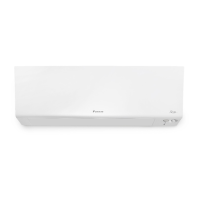
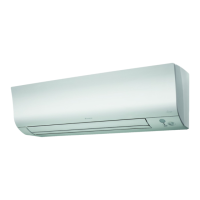
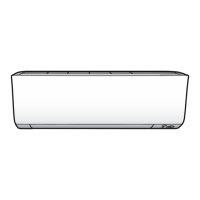
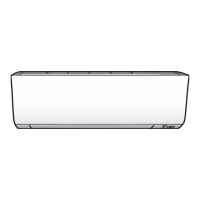
The Daikin room air conditioner is designed to provide heating and cooling for indoor spaces. It operates by circulating refrigerant between an indoor unit and an outdoor unit, transferring heat to or from the room to maintain desired temperatures. The system is equipped with an inverter, which allows for variable compressor speed, leading to improved energy efficiency and more precise temperature control. Some models include a wireless LAN adapter for remote control and monitoring via the Daikin Online Controller application. The units are designed for various installation types, including ceiling-mounted, wall-mounted, and floor-standing, with specific requirements for each to ensure safe and efficient operation.
Important Technical Specifications:
- Refrigerant: The units use R32 refrigerant, which is a fluorinated greenhouse gas. Specific precautions regarding its handling and installation are detailed, including minimum floor area requirements for rooms where R32 appliances are installed, operated, and stored, especially for units without a refrigerant leakage sensor.
- Refrigerant Charge: The total refrigerant charge in the system is determined by the factory charge plus any additional refrigerant amount charged during installation. Minimum floor area requirements are provided in tables and graphs based on the total charge and installation type (ceiling-mounted, wall-mounted, or floor-standing).
- Piping Material: Phosphoric acid deoxidised seamless copper is required for refrigerant piping, with annealed material for flare connections.
- Piping Dimensions: Specific outer diameters for liquid and gas piping are provided for different unit classes (15~35, 42~60, 71), along with recommended insulation inner diameters and thicknesses (minimum 10 mm, polyethylene foam) to prevent condensation.
- Electrical Wiring: Only copper wires are to be used. Field wiring must comply with applicable legislation and the provided wiring diagram. Multicore cables are specified for power supply. Interconnection cables are 4-core, ≥1.5 mm², and applicable for 220~240 V (H05RN-F, 60245 IEC 57).
- Wireless LAN Adapter (if applicable):
- Frequency Range: 2400 MHz~2483.5 MHz
- Radio Protocol: IEEE 802.11b/g/n
- Radio Frequency Channel: 1~11
- Output Power: 0 dBm-18 dBm
- Effective Radiated Power: 17 dBm (11b) / 13 dBm (11g) / 12 dBm (11n)
- Power Supply: DC 14 V / 100 mA
- Operation Range:
- Outdoor Unit RZAG: Cooling/Drying: -20~52°C DB; Heating: -20~24°C DB. Indoor: 17~38°C DB, 12~28°C WB; Humidity: ≤80%.
- Outdoor Units RXM71N, 2MXM, 2AMXM, 3MXM, 3AMXM, 4MXM, 5MXM: Cooling/Drying: -10~46°C DB; Heating: -15~24°C DB. Indoor: 18~37°C DB, 14~28°C WB; Humidity: ≤80%.
- Other Outdoor Units: Cooling/Drying: -10~50°C DB; Heating: -20~24°C DB. Indoor: 18~37°C DB, 14~28°C WB; Humidity: ≤80%.
Usage Features:
- User Interface: The system is controlled via a user interface (remote controller). Instructions are provided for setting different addresses for multiple indoor units in one room, and for performing a test run using the user interface.
- Daikin Online Controller Application: For models with a wireless LAN adapter, users can install the Daikin Online Controller application on Android or iOS devices to remotely control and monitor the unit.
- Air Filters: The indoor units are equipped with air filters, including Titanium apatite deodorizing filters (Class 15~42 without frame, Class 50~71 with frame), which contribute to air quality.
- Intelligent Eye Sensor: Some models include an intelligent eye sensor, which can detect human presence and adjust operation for energy saving.
Maintenance Features:
- Documentation: The installer reference guide emphasizes the importance of providing the user with the operation manual and other relevant documentation for future reference and maintenance.
- Cleaning: The guide recommends regular cleaning of the equipment, using only methods recommended by the manufacturer.
- Refrigerant System Maintenance: All maintenance, servicing, and repair of the refrigerant system must be performed by authorized persons in compliance with Daikin instructions and applicable legislation. This includes proper recovery of refrigerant, leak detection using nitrogen, and correct charging procedures.
- Electrical System Checks: Regular checks of electrical components and terminals are implied by the installation instructions, ensuring secure connections and proper earthing.
- Filter Removal: Instructions are provided for removing the front panel and front grille to access and maintain the air filters.
- Drainage System: The installation guide details how to ensure proper drainage and prevent water leaks, which is crucial for long-term maintenance.
- Logbook: In Europe, EN378 provides guidance for a logbook containing information on maintenance, repair work, test results, and stand-by periods.

 Need help?
 General

 To Next Page
