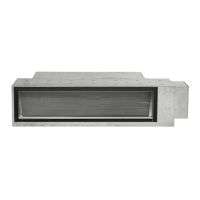
This document is an operation manual for Daikin split system air conditioners, covering various models including FDYP, FDQ, FBQ, FCQ, and FCQH series. It provides essential information for safe and optimal use, maintenance, and troubleshooting.
Function Description
These Daikin split system air conditioners are designed for cooling and, in the case of heat pump types, heating, automatic, and fan operation modes. Straight cooling types offer cooling and fan operation modes. The systems are controlled via a remote controller, with options for individual control, group control (one remote controller for up to 16 indoor units), or two remote controller control (two remote controllers for one indoor unit or one group of indoor units). The units are designed to provide comfortable indoor environments by adjusting room temperature and airflow.
Important Technical Specifications
The manual lists several models and their corresponding refrigerant types and Global Warming Potential (GWP) values:
- Refrigerant type R407C: GWP value of 1773.85
- Refrigerant type R410A: GWP value of 2087.5
The setting temperature range for the remote controller is 16°C-32°C.
Operation ranges are specified for various models under different conditions (DB=dry bulb, WB=wet bulb, cooling, heating, indoor, outdoor, temperature, humidity). For example:
- RR71-100-125 (R407C): Indoor DB 18-35°C, WB 14-25°C (≤80% humidity); Outdoor -15~46°C.
- RP200-250 (R407C): Indoor DB 18-35°C, WB 14-24°C; Outdoor -5~43°C.
- RQ71-100-125 (R407C): Indoor DB 18-35°C, WB 12-25°C (≤80% humidity); Outdoor -5~46°C.
- RS50-60, RKS35-50-60, RXS35-50-60 (R407C): Indoor DB 21-32°C, WB 14-23°C (≤80% humidity); Outdoor -10~46°C.
- 3MKS50, 4MKS58-75-90, 3MXS52, 4MXS68-80 (R407C): Indoor DB 21-32°C, WB 14-23°C (≤80% humidity); Outdoor -10~46°C.
- RZQ(G)71-100-125-140 (R410A): Indoor DB 18-35°C, WB 12-28°C (≤80% humidity); Outdoor -15~50°C.
- RZQS(G)71-100-125-140 (R410A): Indoor DB 18-35°C, WB 14-28°C (≤80% humidity); Outdoor -5~46°C.
- RZQ200-250 (R410A): Indoor DB 18-35°C, WB 14-28°C (≤80% humidity); Outdoor -5~46°C.
For outdoor cooling operation, the manual specifies:
- RQ71-100-125: DB 15-24°C; Outdoor DB -9~21°C, WB -10~15°C.
- RYP200-250: DB 15-24°C; Outdoor DB -9~21°C, WB -10~15.5°C.
- RXS35-50-60: DB 10-30°C; Outdoor DB -14~24°C, WB -15~18°C.
- 3MXS52, 4MXS68-80: DB 10-30°C; Outdoor DB -14~21°C, WB -15~15.5°C.
- RZQ(G)71-100-125-140: DB 10-27°C; Outdoor DB -13~21°C, WB -20~15.5°C.
- RZQS(G)71-100-125-140: DB 10-27°C; Outdoor DB -9~21°C, WB -10~15.5°C.
- RZQ200-250: DB 10-27°C; Outdoor DB -14~21°C, WB -15~15°C.
Usage Features
- Remote Control: The units are primarily controlled via a remote controller. Users are advised to refer to the remote controller's manual for detailed instructions.
- Airflow Direction Adjustment: Users can adjust the airflow direction for optimal comfort. For cooling or dry operation, it's recommended to set airflow parallel to the ceiling. For heating, airflow should be directed downwards. Direct airflow to room inhabitants should be avoided.
- Temperature Setting: Adjust the room temperature for a comfortable environment, avoiding excessive heating or cooling. The system may take time to reach the set temperature, so using timer settings is recommended.
- Ventilation: Regular room ventilation is advised, especially during long periods of unit operation.
- Multi-Split System Behavior: In multi-split models, the microcomputer controls operation based on other indoor units. If the operation mode of one unit differs from others, it may enter a waiting condition (fan stop, horizontal flap in horizontal position). If the total cooling capacity of all operating indoor units exceeds the outdoor unit's limit, some indoor units may enter a waiting condition.
- Fan Speed Control: In certain multi-split scenarios, the fan speed may differ from the setting and cannot be changed by the fan speed control button.
- Defrost Operation: During heating, if the room temperature reaches the set temperature, the outdoor unit may stop capacity supply, and the indoor unit will operate in fan-only mode (L tab) to prevent cool air from being blown directly.
Maintenance Features
- Air Filter Cleaning: The manual provides detailed instructions for cleaning the air filter, which should be done when the "TIME TO CLEAN AIR FILTER" display appears. The frequency of cleaning should increase in highly contaminated rooms.
- For FCQ and FCQH units: Open the suction grille, remove the air filter by pulling clips, clean with a vacuum cleaner or water (soft brush and neutral detergent for very dirty filters), dry in the shade, and reinstall.
- For FDYP and FDQ200+250B8V3B units: Remove screws from the filter frame, remove the frame, clean the air filter (using compressed air, soft brush, neutral detergent, or warm water), dry in the shade, and reattach the frame and screws.
- For FBQ and FDQ125C5VEB units: Open the suction grille by sliding knobs, remove air filters by pulling cloth upward/backward, clean, dry in the shade, and fix the air filter by aligning hanger brackets and pushing clips.
- After cleaning, press the FILTER SIGN RESET button.
- Suction Grille Cleaning (FCQ and FCQH units only): Open the suction grille, detach it by unhooking from the decoration panel, clean with a soft bristle brush and neutral detergent or water (kitchen cleaner for very dirty grilles), dry thoroughly, and reattach.
- Air Outlet and Outside Panels Cleaning: Clean with a soft cloth. For stubborn stains, use water or neutral detergent. Avoid gasoline, benzene, thinner, polishing powder, liquid insecticide, or water/air above 50°C.
- Drain Socket Maintenance: Do not remove the drain pipe plug unless for maintenance or if the drain pump is not used. Gently pull out and push in the drain plug to avoid deforming the drain socket.
- Long-Term Stop: Before stopping the system for a long period, run FAN OPERATION for half a day to dry the unit, then cut off the power supply and clean the air filter and exterior.
- Start-Up After Long Stop: Before starting after a long stop, check for blocked air inlets/outlets, earth connection, and turn on the main power switch 6 hours prior to operation to protect the unit.
Safety Considerations
The manual emphasizes several safety precautions classified as WARNING (potential for serious casualties) and CAUTION (potential for injury or equipment damage):
- WARNING:
- Avoid prolonged, direct exposure to cool or warm air.
- If malfunctioning (burning odor), turn off power and contact the dealer.
- Do not attempt self-installation or repair; contact qualified personnel.
- Do not insert objects into air inlet/outlet due to high-speed fan blades.
- Consult the dealer regarding refrigerant leakage, especially in small rooms, to prevent oxygen depletion.
- Use only manufacturer-specified accessories and professional installation.
- Consult the dealer for relocation/reinstallation.
- Beware of fire in case of refrigerant leakage.
- If the air conditioner is in abnormal conditions (burning smell, etc.), unplug the power cord and contact your dealer to prevent failure, electric shock, and fire.
- CAUTION:
- Use correct ampere fuses; do not use improper substitutes.
- Do not use the air conditioner for purposes other than its intended use (e.g., cooling precision instruments, food, plants, animals, or artwork).
- Do not remove the outdoor unit's fan guard.
- Ensure adequate ventilation if burners are used simultaneously.
- Check unit stand and mounts for damage after prolonged use.
- Do not place flammable sprays or operate spray containers near the unit.
- Before cleaning, stop operation, turn off the breaker, and remove the power cord.
- Do not operate with wet hands.
- Do not place objects susceptible to moisture directly beneath units to avoid dripping from condensation or drain blockage.
- Do not place burners or heaters in the unit's airflow.
- Do not allow children to climb on the outdoor unit or place objects on it.
- Do not expose plants or animals directly to airflow.
- Do not wash the air conditioner with water.
- This appliance is not intended for use by persons with reduced physical, sensory, or mental capabilities, or lack of experience and knowledge, unless supervised. Children should be supervised to ensure they do not play with the appliance or remote controller.
- Consult the dealer for internal cleaning to avoid damage and electric shocks.
- Do not touch the air inlet or aluminum fins.
- Do not place objects near the outdoor unit or allow leaves/debris to accumulate around it, as this can attract small animals causing malfunctions or fire.
- Only qualified service personnel should perform maintenance.
- Before accessing terminal devices, interrupt all power supply circuits.
- Be careful with scaffoldings and working in high places.
- After long use, check the unit stand and fitting for damage.
- Do not touch heat exchanger fins as they are sharp.
- When cleaning the heat exchanger, remove control box, fan motor, drain pump, and float switch to prevent insulation deterioration.
Troubleshooting
The manual lists several symptoms that are NOT malfunctions:
- System does not restart immediately: This is due to safety devices preventing overload or the microcomputer preparing for operation. It will restart automatically after a few minutes or one minute after power supply is turned on.
- Outdoor unit has stopped: This occurs when the room temperature reaches the set temperature, and the unit switches to fan operation.
- "*" (EXTERNAL CONTROL ICON) displayed: Indicates the system is controlled by another controller with higher priority.
- Fan speed is different from setting: This can occur in multi-split systems.
- White mist comes out of a unit: This can happen during high humidity cooling, if the indoor unit is contaminated, or after DEFROST OPERATION.
- Noise of air conditioners: "Ringing" sound (temperature regulator), "hissing" sound (refrigerant gas flow), "squeaking" sound (plastic expansion/contraction), "swishing" sound (drain pump).
- Dust from the units: Dust may blow out after long resting time.
- Units give off odors: The unit absorbs room smells.
- "88" on remote controller: Normal condition, temporary display.
For actual malfunctions, users are advised to contact their dealer if:
- A safety device (fuse, breaker) frequently actuates, or ON/OFF switch does not work.
- Water leaks from the unit.
- The display shows "" (INSPECTION), "UNIT No.", and the OPERATION lamp flashes with a "MALFUNCTION CODE".
If the system does not operate at all, check for power failure, blown fuses, or tripped breakers. If the system stops operating after completion, check for blocked air inlets/outlets or clogged air filters.
Disposal Requirements
Dismantling, refrigerant treatment, oil, and other parts must be done according to local and national legislation by a qualified installer. Air conditioners must be treated at a specialized facility for re-use, recycling, and recovery. Batteries from the remote controller must be disposed of separately.

 Need help?
 General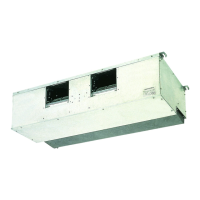

 To Next Page