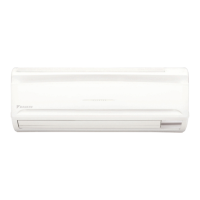
This document is an operation manual for DAIKIN VRV SYSTEM Inverter Air Conditioners, specifically for wall-mounted models. It covers models FXAQ07MVJU, FXAQ09MVJU, FXAQ12MVJU, FXAQ18MVJU, and FXAQ24MVJU. The manual emphasizes safety, proper usage, and maintenance to ensure the longevity and efficient operation of the indoor unit. It is intended to be used in conjunction with the operation manual for the outdoor unit.
Function Description:
The DAIKIN VRV SYSTEM Inverter Air Conditioners are designed to provide climate control for indoor spaces. As "Inverter Air Conditioners," they utilize inverter technology, which allows for variable compressor speed. This enables the unit to adjust its cooling or heating output precisely to match the room's requirements, leading to improved energy efficiency, more consistent temperature control, and quieter operation compared to traditional fixed-speed systems. The specific models listed are "Wall-mounted type," indicating their installation method, which typically involves mounting the indoor unit high on a wall to distribute conditioned air effectively. The system is part of the "VRV SYSTEM," which stands for Variable Refrigerant Volume. VRV systems are advanced multi-split type air conditioners for commercial and large residential buildings that use a variable flow of refrigerant to multiple indoor units, allowing individual control of each zone.
Important Technical Specifications (Inferred from the manual's content and general knowledge of such devices):
- Model Numbers: FXAQ07MVJU, FXAQ09MVJU, FXAQ12MVJU, FXAQ18MVJU, FXAQ24MVJU. These model numbers likely correspond to different cooling/heating capacities, with higher numbers generally indicating greater capacity. For example, '07', '09', '12', '18', and '24' might refer to nominal capacities in thousands of BTUs per hour (e.g., 7,000 BTU/h, 9,000 BTU/h, etc.) or a similar capacity metric.
- Unit Type: Wall-mounted indoor unit.
- System Type: VRV SYSTEM Inverter Air Conditioner.
- Refrigerant: The manual mentions "refrigerant gas" and "refrigerant pipe," indicating the use of a refrigerant for the cooling/heating cycle. The specific type of refrigerant (e.g., R-410A, R-32) is not explicitly stated but is crucial for system performance and environmental impact.
- Electrical Requirements: The manual stresses the importance of an "earth leakage breaker" and proper grounding ("Ground wire") to prevent electric shock, implying specific electrical installation requirements.
- Airflow Adjustment: Features include "Louver" (adjustment flaps for air outlet direction to the right and left) and "Horizontal flaps" (adjustment flaps for air outlet direction up and down), allowing users to customize airflow.
- Components: Key components mentioned or depicted include the air inlet, air filter, front panel, air outlet, name plate, refrigerant pipe, transmission wire, drain pipe, remote controller, and ground wire.
Usage Features:
- Remote Controller Operation: The system is operated via a remote controller. The manual warns against using hard, pointed objects on the controller buttons and against pulling or twisting its electric wire to prevent damage or malfunction.
- Air Direction Adjustment: Users can manually adjust the horizontal air direction by holding and moving the tabs on the edge louvers. The horizontal flaps (up and down) can also be adjusted.
- Safety Precautions: The manual provides extensive safety guidelines, categorized as DANGER, WARNING, CAUTION, and NOTE. These cover:
- Installation: Emphasizing professional installation to prevent water leakage, electric shock, and fire.
- Flammable Materials: Warning against installation in areas with flammable materials and using flammable sprays near the unit.
- Refrigerant Leakage: Advising consultation with a dealer for leaks due to asphyxiation hazard.
- Ventilation: Stressing sufficient room ventilation when using equipment with a burner to avoid oxygen deficiency.
- Physical Contact: Warning against touching internal parts, fan guards, or heat exchanger fins (which are sharp). Also, cautioning against putting fingers or objects into air inlets/outlets or touching swing flaps during operation.
- Water/Liquids: Prohibiting getting the indoor unit or remote controller wet, or placing liquid containers on the unit, to prevent electric shock or fire.
- Children Safety: Advising against children playing on or around the unit and ensuring the remote controller is installed out of their reach.
- Unit Movement/Repair: Recommending professional assistance for moving, repairing, or maintaining the unit.
- Power Off: Advising to wait at least five minutes after stopping operation before turning off the power to prevent water leakage or trouble.
- Chemicals: Warning against using room fumigation-type insecticides while the unit is operating and against wiping the controller with benzine, thinner, or chemical dustcloths.
- Purpose of Use: Stating that the unit should not be used for cooling precision instruments, food, plants, animals, or works of art to avoid quality deterioration.
- Outdoor Unit Environment: Cautioning against placing objects in direct proximity to the outdoor unit and preventing leaves/debris accumulation, which can attract small animals and cause malfunctions or fire.
Maintenance Features:
- Air Filter Cleaning:
- Indicator: The display shows "CLEAN AIR FILTER" (or a specific symbol) when cleaning is required.
- Frequency: Cleaning frequency should increase in highly contaminated rooms.
- Procedure:
- Open the front panel by placing fingers on the protrusions and opening until it stops.
- Pull out the air filter by pushing up the tab in the center and pulling it downwards.
- Clean the filter using a vacuum cleaner or by washing it with water. If washing, use a soft brush and neutral detergent, then remove water and dry in the shade. Do not use hot water (over 120°F) or expose to fire.
- Attach the air filter back in place.
- Press the "FILTER SIGN RESET" button on the remote controller to clear the indicator.
- Front Panel Cleaning:
- Procedure:
- Open the front panel as described for filter cleaning.
- Remove the front panel by pushing the axes on either side towards the center and sliding the panel left or right, then pulling it forward.
- Clean the panel gently with a soft wet cloth and neutral cleaning agents. After washing, wipe off excess water and dry in the shade. Do not use water over 120°F, benzine, gasoline, thinner, polishing powder, or hard scrub brushes.
- Attach the front panel by setting its keys into the slots and pushing them in, then slowly closing the panel.
- Air Outlet and Exterior Cleaning:
- Clean with a soft cloth.
- For difficult stains, use water and neutral detergent.
- Warning: Do not let the indoor unit get wet to avoid electric shock or fire.
- Note: Do not use gasoline, benzene, thinner, polishing powder, liquid insecticide, or water/air of 120°F or higher for cleaning, as this can cause discoloration, warping, or damage.
- Professional Cleaning: The manual advises consulting an installation contractor for cleaning the inside of the air conditioner, as improper cleaning can lead to broken plastic parts, water leakage, or electric shock.
- Heat Exchanger Fins: Users are warned that the fins are sharp and should wear gloves or cover them when working around them to avoid injury.
- Disposal: Disposal of the unit, refrigerant, oil, and other parts must be done in accordance with relevant local and national regulations.

 Need help?
 General

 To Next Page