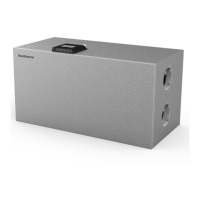
The Dantherm HCH 5 MKII is a residential ventilation unit designed to supply homes with fresh, filtered air while recovering heat from the exhaust air. This system ensures energy-efficient ventilation with minimal heat energy loss. The unit is designed for indoor installation in environments with temperatures ranging from -12°C to 45°C, making it suitable for utility rooms or attics due to its compact design.
Function Description
The HCH 5 MKII operates by drawing outside air (T1) into the unit, where it is filtered and then heated by the extract air from the house (T3) through a counterflow heat exchanger. This warmed supply air (T2) is then delivered into the home. Simultaneously, stale and humid air from the house (T3) is extracted, passes through the heat exchanger to transfer its heat, and is then exhausted outside (T4). This process ensures continuous fresh air supply and heat recovery.
The unit features an electronic control system, with the main control system located on the main PCB. The control panel with an LED display is connected to the main PCB via a flat cable. The system allows for various operating modes and can be controlled via the unit's control panel, a handheld remote control (HRC 3), a wired remote control (HCP 11), a PC tool, or a smartphone app.
Operating Modes and Features:
- Manual Operation: Allows users to manually select fan speeds from level 0 (off) to level 4 (boost). The unit will run at the selected speed until manually changed. A safety feature automatically returns the unit to level 3 (nominal mode) after four hours if running at level 0 or 4. Level 0 can be locked via PC Tool, causing the fan speed to jump from level 4 to 1 when increasing.
- Week Program: Automatically adjusts ventilation speed according to a predefined weekly schedule. Users can activate this mode via the control panel, but specific week programs are selected via the Dantherm app, HRC3 remote control, or PC Tool.
- Demand-Controlled Operation: Automatically controls indoor air quality based on readings from VOC, RH, and/or CO2 sensors. Associated sensors must be connected for this mode to function. This mode aims to provide the correct ventilation level with the lowest possible power consumption.
- Bypass Mode (Free Cooling): Used to cool down the house by directing cold outside air around the heat exchanger, bypassing heat recovery. This can be activated automatically or manually.
- Automatic Bypass: Opens/closes the bypass damper automatically when conditions are met (outdoor air at least 2°C lower than exhaust air, outdoor air higher than Tmin (default 15°C), and exhaust air higher than Tmax (default 24°C)).
- Manual Bypass: Can be activated if bypass/cooling is desired and automatic bypass is not active. It opens the bypass damper for a defined period (default six hours) if manual bypass conditions are met (outdoor air at least 2°C lower than exhaust air, and outdoor air higher than 9°C).
- Summer Mode: Stops the supply air fan, leaving only the extract air fan in operation. This allows for fresh air supply by opening windows or doors. It deactivates automatically if the outdoor temperature drops below 14°C.
- Fireplace Mode: Activates positive pressure for seven minutes to prevent smoke in the living room when lighting a stove. It automatically stops after seven minutes if not manually deactivated. This mode is only active if the supply air temperature is above 9°C.
- Defrosting Mode: A safety mode activated in cold conditions (T1 outdoor air below -3°C) to prevent ice buildup in the heat exchanger. During defrost, the unit cannot switch to other operating modes. Two strategies are available:
- No Fireplace in House (Default): Supply air fan speed slowly decreases to minimum RPM, then stops completely for 10 seconds while the extract air fan continues to run to remove ice. After defrost, fans restart at minimum RPM and gradually increase to the original speed.
- Fireplace in House: Both supply and exhaust air fan speeds slowly decrease to minimum RPM, then both fans stop completely for four hours. After defrost, fans restart at minimum RPM and gradually increase to the original speed.
- Preheating (Optional): An electrical preheating element can be installed to preheat incoming outdoor air, reducing defrosting situations and increasing supply air temperature. It is controlled by a complex algorithm that minimizes energy consumption while maintaining airflow and preventing frost.
Important Technical Specifications (HCH 5 MKII):
- Max. recommended flow at 100Pa: 360 m³/h
- Max. rated flow at 100Pa: 300 m³/h
- Operating range Passivhaus at 100Pa: 99-220 m³/h
- EN 13141-7 reference flow at 50Pa: 210 m³/h
- Thermal efficiency (EN13141-7): 88%
- Leakage (external and internal) (EN 13141-7): <2% (Class A1)
- Filters (ISO16890): ISO Coarse 75% (standard), ePM1>50% (pollen filter, optional on supply)
- Filters (EN779:2012): G4 (standard), F7 (optional on supply)
- Installation surrounding temperature: -12 to +45°C
- Outdoor temperature without preheater installed: -12* to +45°C (*Use of preheating coil recommended below -3°C)
- Outdoor temperature with preheater installed: -20 to +45°C
- Maximum absolute humidity of extract air: 10 g/kg
- Dimensions (with wall bracket, w x h x d): 1180 x 633 x 580 mm
- Spigots/ducts connections: Ø160 - female
- Weight: 52 kg
- Voltage: 230 V
- Max. power consumption (without/with preheater): 170/1570 W
- Frequency: 50 Hz
- Protection class: IP20
Maintenance Features:
Preventive maintenance is crucial for efficient operation, optimal performance, and a long service life (at least 10 years). Intervals for maintenance may vary based on the environment.
- Filter Inspection and Replacement (6 months - 1 year):
- Check filters every six months; replace if necessary.
- Change filters annually.
- The unit has a built-in filter alarm timer (default six months). A buzzer sounds and an orange "!" LED lights up when the timer expires. The alarm can be reset by pressing the alarm button for 5 seconds.
- Filters remove dust and impurities, protecting the heat exchanger and fans. G4 filters are standard; F7 pollen filters are available as accessories for supply air.
- Always ensure filters are inserted correctly, with arrows pointing in the right direction.
- Cleaning:
- Keep the unit clean for perfect operation and hygiene. Clean soiled areas with a firmly wrung dishcloth with tepid water and detergent. Chemical solvents are not allowed.
- Professional Inspection (every two years):
- Fans: Inspect and clean. Be cautious of sharp edges and wear protective gloves. Check for buzzing sounds from bearings, which may indicate a need for replacement.
- Electrical Preheater (if installed): Inspect and clean. Ensure it is completely cooled down before cleaning (disconnect power and wait 10 minutes).
- Heat Exchanger: Remove and clean with a soft brush and vacuum cleaner at all four inlets. In cases of accumulated dirty condensate, clean with soapy water (max. 40°C) outside the unit. Ensure it is completely dry before reinstalling.
- Internal Cleaning: Visually inspect ducts and internal surfaces for dirt. Clean with a wet cloth, brush, or vacuum cleaner.
- Drip Tray, Drain, and Drain Hose: Inspect for blockages and damage. Clean the drip tray with soapy water. Ensure the water hose has a minimum fall of 1% towards the drain and is protected against frost. Regularly check and fill the siphon with water.
- Bypass: Inspect and clean. Check functionality by manually opening/closing the damper with a magnet.
- Warranty: The factory warranty is only valid with documented preventive maintenance carried out at a minimum interval of six months. Documentation should be a written log/journal.
- Safety Precautions: Installation and repair must be carried out by qualified personnel. Always disconnect mains power before accessing internal components or performing maintenance to prevent electric shock. The unit must be earthed. Never turn off the ventilation unit to save energy, as this can cause condensation and water damage. The unit should not be used to dry newly built houses. Ducts must be clean and dry before connection to prevent dust and condensed water from depositing.
Accessories:
The HCH 5 MKII supports various accessories for enhanced functionality:
- Water trap: Ensures a safe drain connection.
- Heater cable: 3m, 230V, with thermostat (approx. 10W/meter) for frost protection of the drain pipe.
- Reheating coil (water): Available in Ø125, Ø160, and Ø250mm, controlled by HAC 1.
- Transformer: 230/240V, complete set.
- Pre/re heating kit (electrical): Available in 900W (Ø125mm), 1200W (Ø160mm), and 1800W (Ø250mm) versions, either 0-10V controlled (via HAC 1) or standalone.
- Handheld remote control (HRC 3): Adjusts ventilation, humidity, and temperature via a large LCD screen. Activates cooling/bypass, manual ventilation steps, weekly programs, or automatic control. Communicates wirelessly up to 30 meters.
- Wired remote control (HCP 11): Provides the same functionality as the control panel, connectable if the unit's control panel is hard to reach.
- Optional control unit (HAC 2): Allows connection of additional accessories.
- VOC, humidity, and CO2 sensor: Enables demand-controlled operation by continuously monitoring extract air quality and adjusting airflow for optimal ventilation and lowest electricity consumption.
- Filters: G4 filter sets (standard) and F7 pollen filter sets (superfine filters) are available.
The unit's design allows for electronic reversal of airflow direction, enabling ducts to be routed from either the right or left side.

 Need help?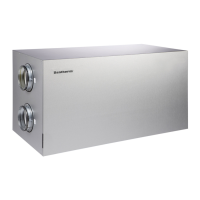


 To Next Page
 General