6
1.0 APPLICATIONS
1.1 PURPOSE: DBI-SALA ExoFit and ExoFit XP full body harnesses are
to be used as components in personal fall arrest, restraint, work
positioning, climbing, or rescue systems. See Figures 1 and 2 for
harness styles.
Harnesses included in this manual are full body harnesses and
meet ANSI Z359.1 and OSHA requirements. See Figure 3 for
application illustrations.
WARNING: Working at height has inherent risks. Some risks are
noted here but are not limited to the following: falling, suspension/
prolonged suspension, striking objects, and unconsciousness. In the
event of a fall arrest and/or subsequent rescue (emergency) situation,
some personal medical conditions may affect your safety. Medical
conditions identied as risky for this type of activity include but are not
limited to the following: heart disease, high blood pressure, vertigo,
epilepsy, drug or alcohol dependence, psychiatric illness, impaired
limb function and balance issues. We recommend that your employer/
physician determine if you are t to handle normal and emergency use
of this equipment.
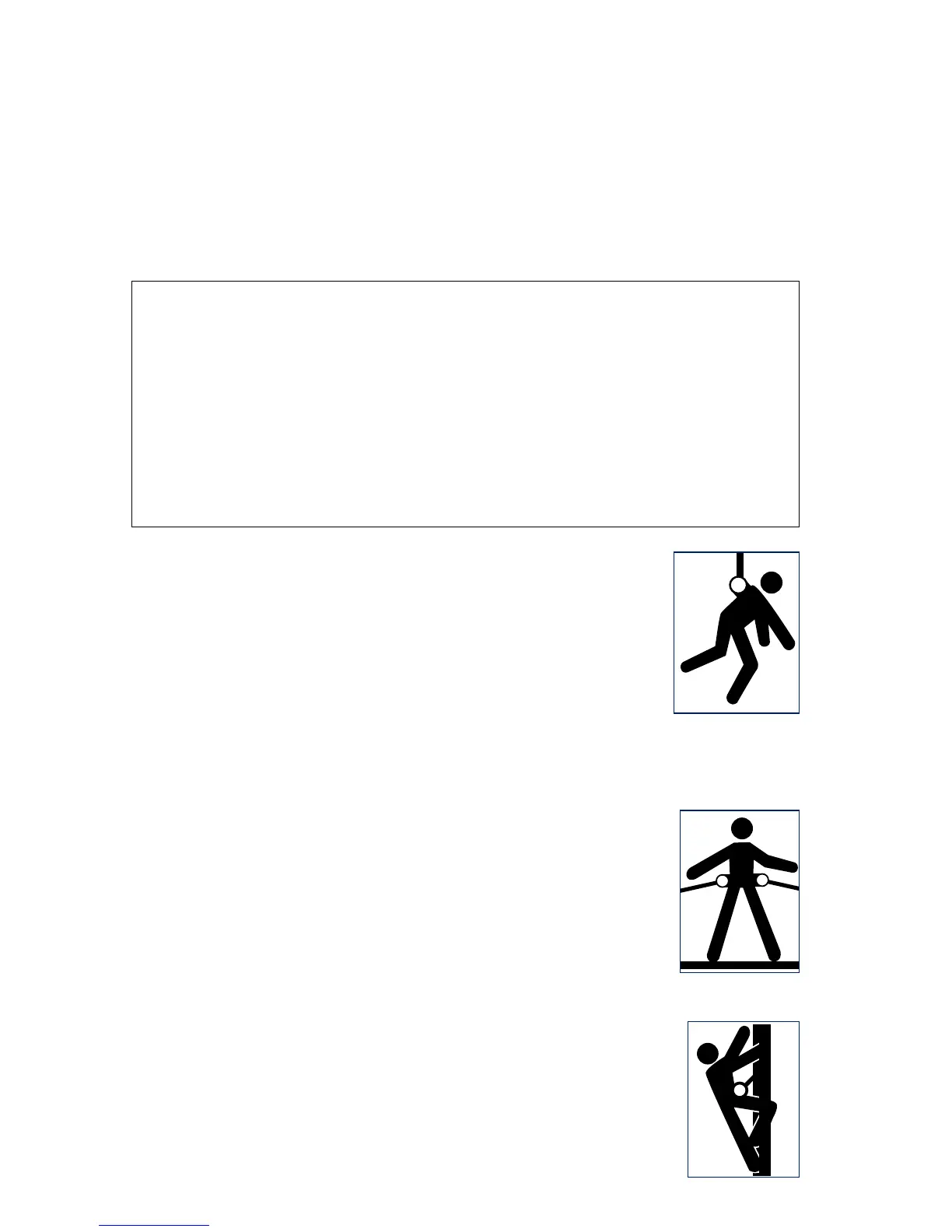
A. PERSONAL FALL ARREST: The full body
harness is used as a component of a personal
fall arrest system. Personal fall arrest systems
typically include a full body harness and a
connecting subsystem (energy absorbing
lanyard). Maximum arresting force must not
exceed 1,800 lbs (8 kN).For fall protection
applications connect the fall arrest subsystem
(example: lanyard, SRL, energy absorber, etc.)
to the D-ring or attachment element on your back, between
your shoulder blades.
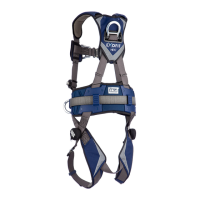
B. WORK POSITIONING: The full body harness
is used as a component of a work positioning
system to support the user at a work position.
Work positioning systems typically include a full
body harness, positioning lanyard, and a back-up
personal fall arrest system. For work positioning
applications, connect the work positioning
subsystem (example: lanyard, Y-lanyard, etc.) to
the lower (hip level) side or belt mounted work
positioning attachment anchorage elements (D-rings). Never
use these connection points for fall arrest.
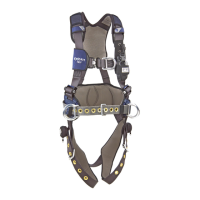
C. LADDER CLIMBING: The full body harness
is used as a component of a climbing system
to prevent the user from falling when climbing
a ladder or other climbing structure. Climbing
systems typically include a full body harness,


 To Next Page