7
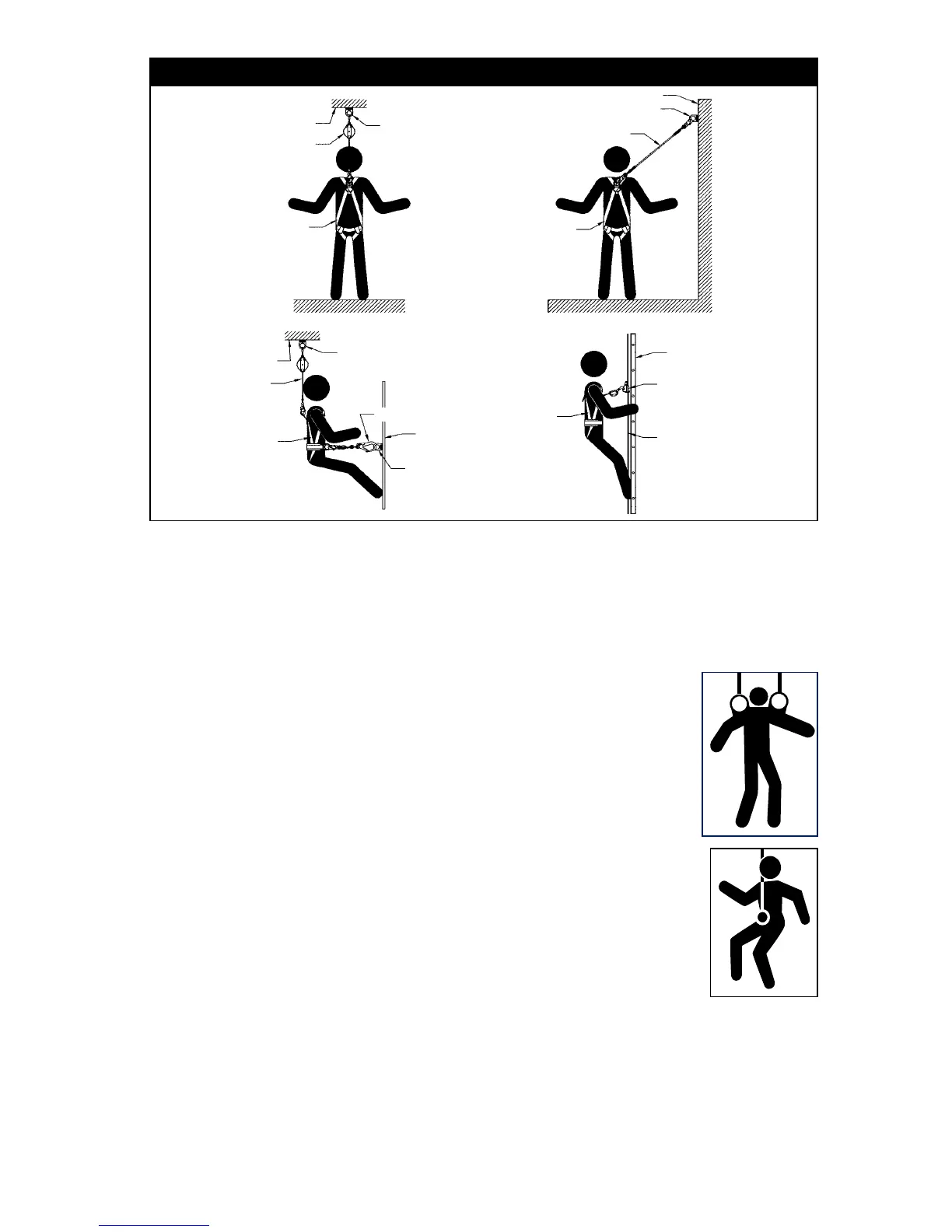
vertical cable or rail attached to the structure, and climbing
sleeve.For ladder climbing applications, harnesses equipped
with a frontal D-ring in the sternal location may be used
for fall arrest on xed ladder climbing systems. These are
dened in ANSI A14.3.
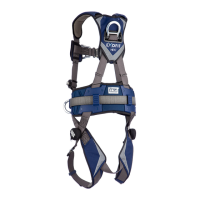
D. RESCUE: The full body harness is used as a
component of a rescue system. Rescue systems
are configured depending on the type of rescue.
For limited access (conned space) applications,
harnesses equipped with D-rings on the shoulders
may be used for entry and egress into conned
spaces where worker prole is an issue.
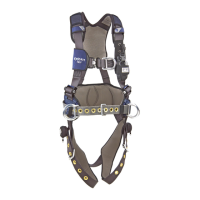
E. CONTROLLED DESCENT: For controlled descent
applications, harnesses equipped with a single
sternal level D-ring, one or two frontal mounted
D-rings, or a pair of connectors originating below
the waist (such as a seat sling) may be used for
connection to a descender or evacuation system.
E. RESTRAINT: The full body harness is used as a
component of a restraint system to prevent the
user from reaching a fall hazard. Restraint systems typically
include a full body harness and a lanyard or restraint line.
1.2 LIMITATIONS: Consider the following application limitations
before using this equipment:
Figure 3 - Applications
Anchorage
Anchorage
Anchorage Connector
Restraint Lanyard
Anchorage Connector
Connecting Subsystem
(Self Retracting
Lifeline Shown)
Full Body Harness
Full Body Harness
Fall Arrest
Restraint
Work Positioning
Anchorage
Anchorage
Connector
Back-up
Fall Arrest
System
Full Body
Harness
Restraint Lanyard
Anchorage
Anchorage
Connector
Ladder
Cable Sleeve
Cable
Cross-over
Full Body
Harness
Ladder Climbing


 To Next Page