User Manual Floormate – V. 2.7 B/C
- 7 -
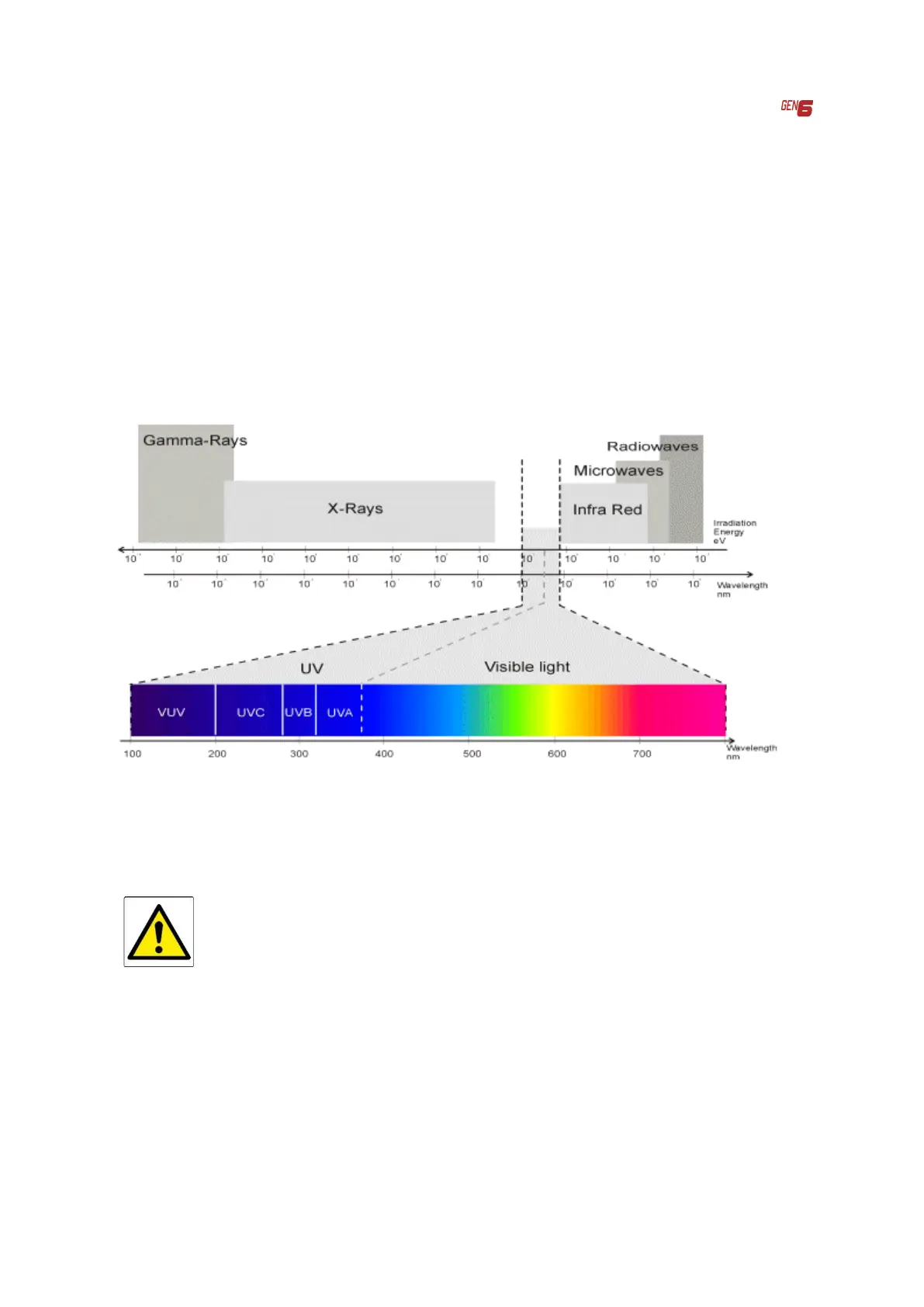
2.7 Risks of UV Radiation
Both UVA and UVB can damage cells and genetic material, thus leading to skin cancer.
UVB poses the greater risk here. Even though scientists used to think that UVA was not
harmful, newer research has proven that UVA contributes 10 to 20 percent to the cancer
risk.
In order to protect itself against damage to genetic material, the skin tries to thicken itself
(after UVB exposure). Pigment cells create the substance melanin, which gives the skin a
brown colour. This means that when the skin tans, it has already been damaged.
Because the ozone layer is becoming increasingly thinner due to environmental pollution,
less UV radiation is absorbed, thus leading to an increase of skin cancer occurrences.
In addition, the skin can burn under influence of UVA and UVB radiation. Burning is
accompanied by redness and in serious cases tremors, blisters, nausea and fever. In the
long term the skin will lose its elasticity, suffer from accelerated aging and will remain
sensitive for itching, pimples, etc.
Ultraviolet light can damage skin and eyes.
Wear the facial shield, protective clothes and gloves.
As a user, never look directly into a switched-on lamp.
Certain types of medication and cosmetics can increase sensitivity.



 To Next Page