March 2013 Dell EqualLogic Configuration Guide v14.1 9-101
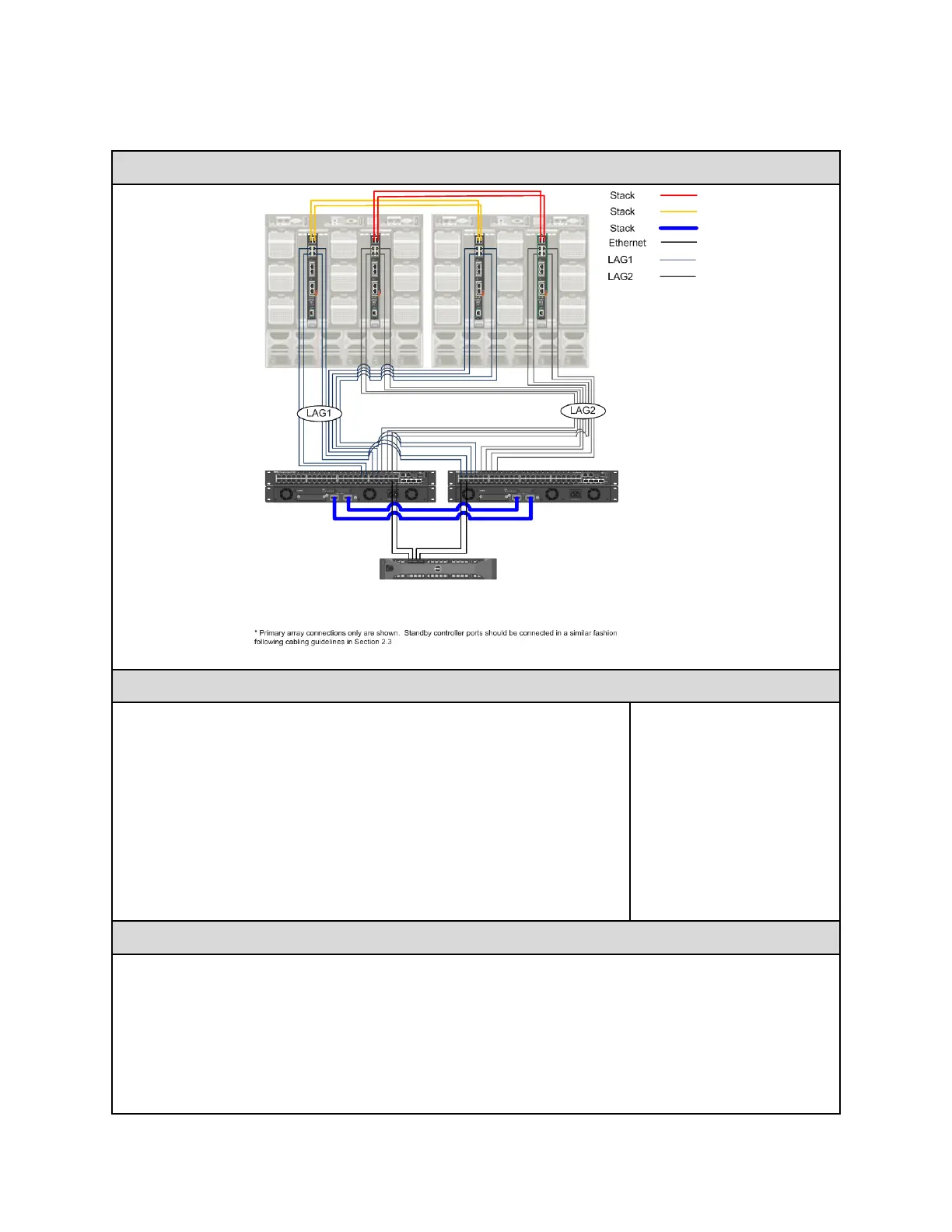
Table 43 Dual M-Series Stacks to Stacked external switch infrastructure
M-Series I/O module Stack(s) to Stacked external switch infrastructure
Advantages Concerns
Each M-Series I/O module stack can be updated independently
without bringing SAN down.
• SAN Array-to-array traffic is isolated outside of the M1000e
enclosures
• Fixed hops between hosts and array volumes regardless of
number of M1000e enclosures
• Supports ability to scale arrays
• Supports ability to scale host.
• Supports sharing SAN with non-M1000e servers.
• Fewer “switches” to manage since each stack is managed as a
Firmware updates on
external stack requires
scheduled downtime
• Limited scalability of
LAG bandwidth.
• Spanning Tree may
block some links if a
loop is created.
Other Notes
If available, use 10Gb links between M-series I/O modules and external switches
• M-series I/O module stacks do not need to be interconnected since no arrays are attached
directly to M-series I/O modules.
• Additional M1000e enclosures are added in similar fashion to diagram above. Enclosure
scalability is greater if 10Gb links are used between M-series I/O module stacks and the external
stack
• This strategy works for a single fabric or dual fabric M-Series I/O module configuration (See




 To Next Page