
 Need help?
Do you have a question about the Diamond Aircraft DA 40 Series and is the answer not in the manual?
Instructions for inserting and filing this temporary revision into the Aircraft Maintenance Manual.
Inspects the front fuselage surface, paint, and air inlets for damage and blockages.
Procedure for inspecting the aircraft structure after a hard landing or unusual ground loads.
Steps to adjust nose wheel steering friction for proper castor and to prevent shimmy.
Steps for safely removing and installing the NLG fork assembly, including pre-load and friction checks.
This document describes a temporary revision for the Diamond DA 40 Series Aircraft Maintenance Manual (AMM), specifically addressing the Nose Landing Gear (NLG) Inspection & Maintenance. This revision, identified as AMM-TR-MÄM 40-1037, is approved in conjunction with Mandatory Design Change Advisory MÄM 40-1037 and remains valid until its information is incorporated into the main AMM. It provides supplementary and, in cases of conflict, superseding information to the existing manual.
The temporary revision outlines filing instructions, specifying that it should be printed single-sided on 8.5 x 11 inch yellow paper. The cover pages of this revision are to be inserted as the first pages of the AMM. Subsequent pages of the temporary revision are to be inserted in front of specific corresponding pages in the basic AMM, as detailed in a table. The incorporation of this temporary revision must be recorded on the yellow RECORD OF REVISIONS sheet at the front of the AMM, and the temporary revision itself should be retained until its information is fully integrated into the DA 40 AMM.
The document includes updates to Section 05-28-50, "Maintenance Checklist Airframe," which details various inspection items for the aircraft's airframe. These items are categorized by inspection intervals (100 hr, 200 hr, 1000 hr, 2000 hr) and indicate whether they apply to US-registered airplanes only (marked with X*).
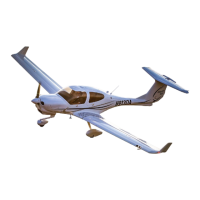
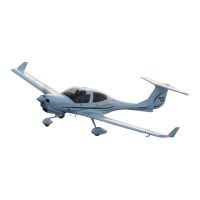
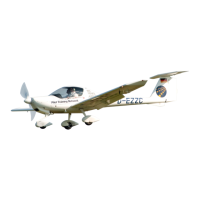
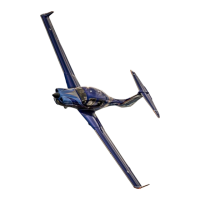
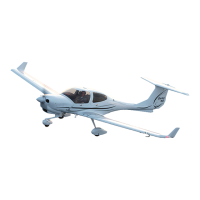
The DA 40 Series aircraft is a light aircraft, and this manual focuses on the maintenance of its Nose Landing Gear (NLG) and related airframe components. The NLG is crucial for ground operations, including taxiing, takeoff, and landing, providing steering and absorbing landing loads. The maintenance procedures described ensure the continued airworthiness and safe operation of the aircraft by identifying and addressing potential issues with structural integrity, mechanical components, and systems.
The aircraft is designed for flight operations, and its maintenance manual provides the necessary instructions to keep it in optimal condition. The "Maintenance Checklist Airframe" (Section 05-28-50) is a key usage feature for maintenance personnel, guiding them through routine inspections. These inspections cover various parts of the aircraft, including the front fuselage, canopy, doors, antennas, wheels, brakes, landing gear, and structural components. The checklist ensures a systematic approach to maintenance, covering visual inspections for damage, wear, corrosion, and proper operation of mechanisms. For example, it includes examining the complete surface of the front fuselage for dents, cracks, holes, and delamination, as well as checking the paint coat. It also covers functional checks, such as ensuring the canopy lock mechanism operates correctly and testing the door unlocked warning light system.
The "Unscheduled Maintenance Checks" (Section 05-50-00) are another critical usage feature, providing guidance for inspections after specific incidents, such as a hard landing or when unusual loads are applied during ground handling. This section details the equipment required (e.g., slide sheets) and a step-by-step procedure for inspecting various components, including landing gear fittings, fuselage structure, landing gear struts, tires, wheel rims, brake discs, and the nose-gear assembly. Special attention is given to areas that transmit loads, with a caution to contact the aircraft manufacturer for advice if damage is suspected in such areas. The procedures involve removing access panels, using mirrors and flashlights for detailed inspections, and performing tests like wheel tracking.
The "Adjust the Nose Wheel Steering Friction" (Section 32-20-00) procedure is a specific operational adjustment. It ensures that the nose wheel steering friction is set correctly to prevent nose wheel shimmy during ground operations. This involves using specialized equipment like a padded trestle, weights, and a spring balance to adjust the nose wheel fork pivot nut until a specific force range is achieved for castor.
The manual is primarily a maintenance tool, providing detailed instructions for various tasks.
The temporary revision ensures that maintenance personnel have the most current and accurate information to maintain the DA 40 Series aircraft, particularly concerning the critical nose landing gear system and associated airframe components, thereby contributing to the overall safety and reliability of the aircraft.
 General
| Wingspan | 11.94 m (39 ft 2 in) |
|---|---|
| Engine | Lycoming IO-360-M1A |
| Service ceiling | 5, 000 m (16, 400 ft) |
| Seating Capacity | 4 |
| Crew | 1 |
| Capacity | 3 passengers |
| Type | Light aircraft |
| Height | 1.97 m (6 ft 6 in) |
| Powerplant | Lycoming IO-360-M1A |
| Power | 180 hp (134 kW) |
| Manufacturer | Diamond Aircraft |


 To Next Page