EasyManua.ls Logo

Digigram IQOYA X/LINK Series - User Manual

Digigram IQOYA X/LINK Series
153 pages
Print Icon
To Next Page IconTo Next Page
Loading...
IQOYA X/LINK range user manual
IQOYA X/LINK range
IP audio codecs
User manual for:
IQOYA X/LINK-LE, -ST, -DUAL, -AES67
Applies from firmware version 3.12, February 2023
Date
Changes
Document Status
June, 4, 2020
Appendix A,GPIO description: N.C and N.O pins were inverted.
Released
November 2020
New settings for DVB information tables in MPEG-TS streams (Send section).
Released
January 2021
HLS multi bitrate encoding and streaming
Released
March 2021
Added insertion of data associated to an audio program in a TS stream.
In contribution, mono is sent to left and right for encoding and decoding; and stereo is mixed down to mono for
encoding / decoding.
Released
November 2021
Documentation update for EMC standards and safety rules.
Released
January 2022
Support for Akamai MSL4 CDN (HTTP with and without authentication - Digest SHA-256 & MD5).
Icecast/Shoutcast decoding, added support of the permanent redirection error code (301)
Released
July 2022
Possibility to set the WEB Service API protocol to HTTPS (default mode) or HTTP (less security).
Released
December 2022
Configuration of the duplication of the output signal to analog and AES3 outputs Required transcoding channels. This
feature is available for all X/LINK flavours with the exception of X/LINK-AES67.
Released
January 2023
Improvement of the management of the front panel vu-metres when importing a configuration with mono channels made
from a previous firmware from version 3.05 (audio configuration or full configuration).
MPEG-TS streams are now generated by default with the “Maximum_Bitrate_Descriptor” in the PMT, and the
“ES_Rate_flag” in the PES.
Released
February 2023
GPIO connectors were inverted in previous manual versions. Fxed
Released
1

Table of Contents

Question and Answer IconNeed help?

Do you have a question about the Digigram IQOYA X/LINK Series and is the answer not in the manual?

Summary

Information for the User

Key Hardware Features

IQOYA X;LINK Models

Details hardware specifications for IQOYA X/LINK-LE, -ST, -DUAL, and -AES67 models.

Supported audio algorithms

Lists the audio algorithms supported by the IQOYA X/LINK devices.

Key Software Features

Supported I;O channels

Describes the input/output channel capabilities for different IQOYA X/LINK models.

Standard and Optional Features

Outlines standard and optional software functionalities of the IQOYA X/LINK.

Physical Interfaces

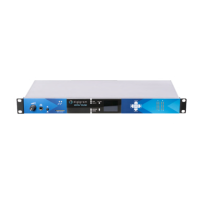
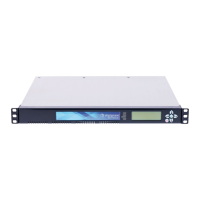
Front Panel Overview

Describes the front panel components including LEDs and displays for different models.

Back Panel Connectors

Details the back panel connectors for IQOYA X/LINK models.

Working Principles

Program Distribution Mode

Explains IQOYA X/LINK operation in Program Distribution mode.

Remote Broadcasting Mode

Explains IQOYA X/LINK operation in Remote Broadcasting mode.

Installation

Initial Setup and Configuration

Covers grounding, network connection, powering up, and mode configuration.

Accessing and Configuring WEB Pages

Accessing WEB Pages

Guides on how to access the IQOYA X/LINK web interface via browser.

Configuration Steps

Details the process of configuring the device through its web pages.

WEB Pages Organization

Program Distribution Mode Pages

Describes web page organization in Program Distribution mode, focusing on Preferences.

Preferences Menu Navigation

System Settings

Covers system properties, audio clock, alarms, logs, and firmware updates.

Services Configuration

Manages network services like NTP, FTP, SSH, SNMP, HTTPS, and Publish/Discover.

Network Settings

Configures network ports, VLANs, IP routing, and HTTP proxy.

Auxiliary Data Settings

Manages serial port, GPIO, and UDP settings for data tunneling.

Audio I;Os Configuration

Input Settings

Configures audio inputs, including VU meters and signal settings.

Output Settings

Configures audio outputs, including VU meters and stream settings.

Audio Bus Configuration

Details audio bus settings for transcoding and mixing.

Send and Receive Operations

Sending Programs and IP Services

Guides on defining programs and IP services for streaming.

Receiving IP Services and Programs

Explains how to define IP services and output programs for reception.

Remote Broadcasting Web Pages

Operations Page

Presents call windows for active codec instances in Remote Broadcasting mode.

Connections and Advanced Settings

Network Configuration

Configures network ports, VLANs, IP routing, and HTTP proxy.

IP Codecs Configuration

Manages IP codec instances, SIP accounts, and call profiles.

Advanced System Settings

Covers system properties, audio clock, logs, and firmware updates.

Specifications

Model Configurations and Connectivity

Details specifications for models, connectivity, and interfaces.

Audio Interfaces and Performances

Lists technical specs for analog, AES3, AES67, Livewire, and audio performances.

Appendices

GPIO Connectors and Serial Port

Details GPIO connector pinouts and RS232 serial port specifications.

Latency, AAC Settings, and FEC

Provides latency values, AAC settings, and available FEC options.

Redundancy and MPEG-TS Data

Explains redundant dual streaming and MPEG-TS auxiliary data.

Configuration File Modifications

Guides on modifying configuration files for bitrate descriptors and ES_Rate_flag.

Digigram IQOYA X/LINK Series Specifications

General IconGeneral
Audio Bit Depth16-bit, 24-bit
Audio Sample Rate32 kHz, 44.1 kHz, 48 kHz
Audio InputsAES/EBU
Audio OutputsAES/EBU
Network InterfaceEthernet
Form Factor1U rack-mountable
AoIP ProtocolsLivewire, Ravenna
Redundancydual power supplies
ControlWeb interface, SNMP
Supported ProtocolsTCP, UDP, RTP
Operating Temperature0°C to 40°C
Dimensions44 mm (1.73 in) x 482 mm (19 in)

Related product manuals