The Vehicle Identification Number (VIN) are unique identifying codes that have appeared on every vehicle sold on the
United States since 1981. A VIN is 17 characters long, consisting of numbers and letters.
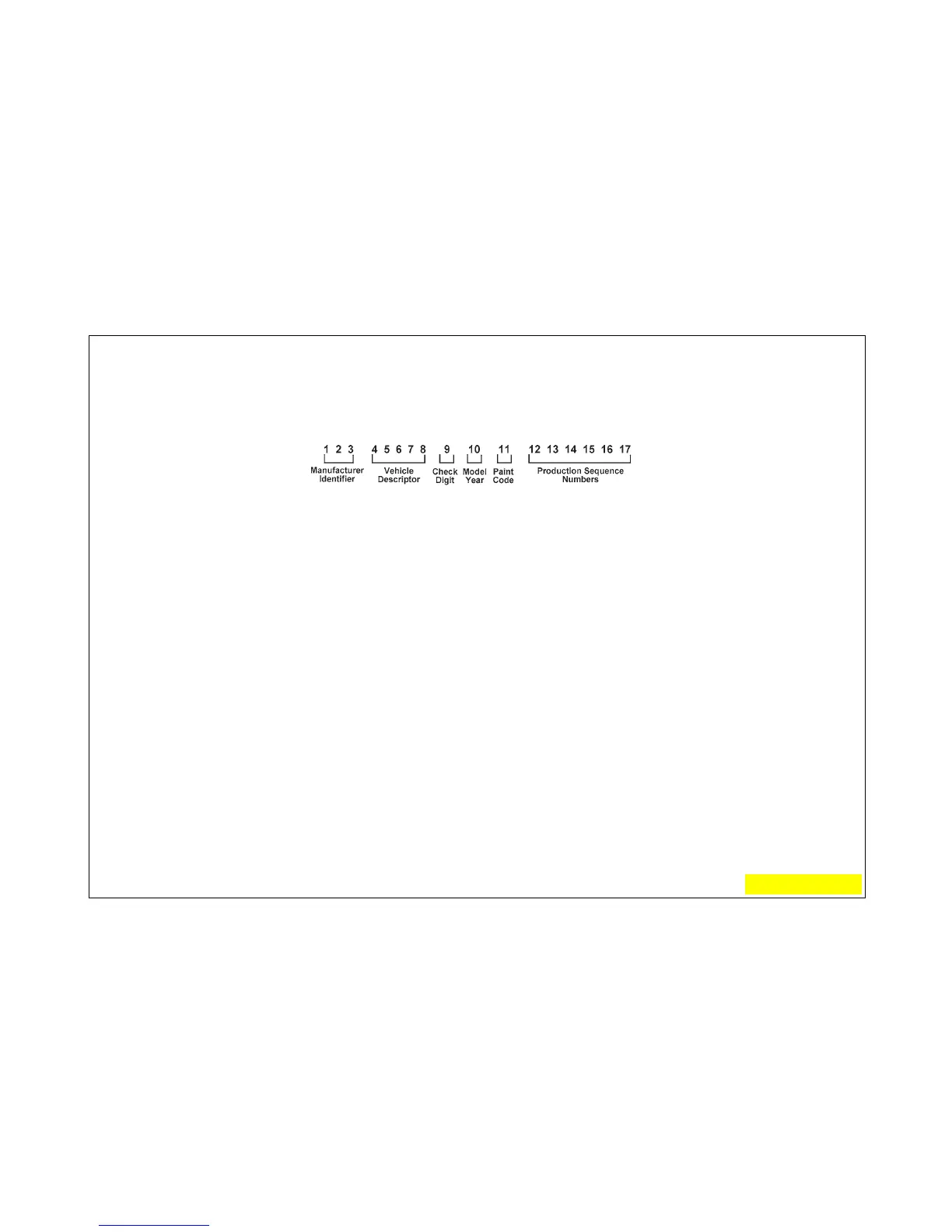
Each character in a VIN has a specific meaning, and the VIN is broken up into sections. The following image (courtesy
of howstuffworks.com) shows the 17 placeholders, described in detail below.
Position Meaning
1 Nation of origin (where assembled); larger nations are split into regions
2 Manufacturer
3 Division within manufacturer, or vehicle type
4 Vehicle weight and/or horsepower
5 Vehicle Platform
6 Specific model or other special code
7 Body type
8 Engine
9 Check digit
10 Model Year
11 Paint code (where assembled)
12-17 Production sequence numbers
Positions four through eight might also be coded for information on the transmission used, the grade of the car or other
features such as safety belts and sir bags. For the check digit, the other digits go through a series of calculations to
obtain the correct digit. This allows computers to tell immediately if there is an error in the VIN, which often happens
when someone transcribes a VIN or enters it into a computer.
The European Union has a similar regulation for VINs, but is less stringent than the North American rule. European
VINs are not required to include year, factory or vehicle attribute data. However, the two systems are compatible.
Did you know that two vehicles can have the same VIN? It’s possible, but two cars built within 30 years of each other
cannot have the same identifier.
Back to Index













 To Next Page