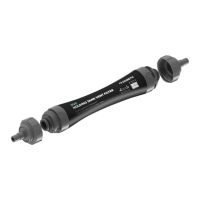
The Dometic DVF Holding Tank Vent Filter is an accessory designed to prevent the escape of unpleasant odors from waste holding tanks on boats. It is inserted into the vent hose of these tanks and works by filtering the air that is expelled when the toilet is flushed.
Function Description:
The primary function of the DVF Holding Tank Vent Filter is to provide effective odor control for marine waste holding tanks. It achieves this by filtering the air that is vented from the tank, ensuring that any odors are neutralized before being released into the environment. The filter is designed to be integrated into the existing vent hose system.
Important Technical Specifications:
The DVF Holding Tank Vent Filter is available in several models, each with specific part numbers and dimensions to accommodate various hose sizes and regional requirements.
Usage Features:
The DVF Holding Tank Vent Filter is designed for straightforward installation and use, with several key features:
- Installation Flexibility: The vent filter can be fitted at any angle, offering versatility in mounting locations. It comes with a holder that can be attached with screws.
- Adapter System: The filter utilizes a system of interchangeable adapters (5a, 5b, 5c) to connect to various hose sizes, including 3/4" (19mm) ID threaded hoses, 5/8" (16mm) – 3/4" (19mm) ID hoses, and 1" (25mm) – 1-1/2" (38mm) ID hoses. This ensures compatibility with a wide range of existing vent hose systems.
- Connection Process:
- Before installation, red stoppers must be removed from the filter connectors.
- O-rings on each connector should be greased with liquid soap or silicone grease to ensure a proper seal.
- Hose adapters must be pushed completely over the O-rings before threading the retaining fastener to the filter.
- The selected adapter is then screwed together with the hose couplings onto the vent filter.
- Finally, the vent filter is inserted into its holder until it latches into place.
- Threaded Adapter Connection: When using threaded adapters, it's crucial to check for seals (not included in delivery) in the hose connectors. The vent hose from the tank and the vent hose to the hull vent pipes are connected to the filter. Connections are initially tightened by hand, then further tightened by 1/4 to 1/2 a turn using a tool.
- Threadless Hose Adapter Connection: For threadless hose adapters, the vent hose from the tank and the vent hose to the hull vent pipes are connected to the filter. Hose clips are used to secure the vent hoses on the adapters.
- Safety Precautions:
- The vent filter should not be used for on-board tanks with waste from wastewater systems that use chlorine or other strong oxidizing agents.
- It must not be inserted underneath or at the same height as the tank.
- It should not be installed near any heat sources such as engine blocks or lighting.
- If the on-board tank accidentally overflows, the vent filter must be replaced immediately.
Maintenance Features:
Regular maintenance is crucial for the optimal performance of the DVF Holding Tank Vent Filter:
- Replacement Schedule: For optimum odor control, the vent filter should be replaced at the beginning of each boating season. This ensures continuous effectiveness in preventing odors.
- Removing Used Filters:
- If the old vent filter is connected with 3/4" (19mm) threaded hose adapters, these adapters should remain attached to the vent hose.
- The old vent filter is removed from its holder, and its ends should be closed with tape.
- Used filters must be disposed of in the appropriate recycling waste according to local regulations.
Disposal:
Packaging materials should be placed in designated recycling waste bins. For the final disposal of the product itself, users should consult their local recycling center or specialist dealer for information on applicable disposal regulations.
The Dometic DVF Holding Tank Vent Filter is a practical and essential component for maintaining a pleasant environment on board, effectively managing odors from waste holding tanks through its robust design and straightforward maintenance requirements.

 Need help?
 General


 To Next Page