EasyManua.ls Logo

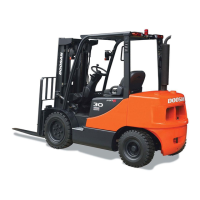
Doosan G25P-5 - Service Manual

Doosan G25P-5
264 pages
Print Icon
To Next Page IconTo Next Page
Loading...
SB2349E10
FORKLIFTS
D20S-5, D25S-5, D30S-5, D33S-5, D35C-5
FDA04, FDA05, FDA06, FDA07, FDA08 (Yanmar 3.3L/3.0L Tier-3)
G20E-5, G25E-5, G30E-5
FGA07, FGA08, FGA09 (HMC 2.4L Tier-3)
GC20E-5, GC25E-5, GC30E-5, GC33E-5
FGA0K, FGA0L, FGA0M, FGA0N (HMC 2.4L Tier-3)
G20P-5, G25P-5, G30P-5, G33P-5, G35C-5
FGA0A, FGA0B, FGA0C, FGA0D, FGA0E (MMC 2.4L Tier-3)
G20P-5 Plus, G25P-5 Plus,
G30P-5 Plus, G33P-5 Plus, G35C-5 Plus
FGB0H, FGB0J, FGB0K, FGB0L, FGB0M (GM 3.0L Tier-3)
GC20P-5, GC25P-5, GC30P-5, GC33P-5
FGA0P, FGA0R, FGA0S, FGA0T (MMC 2.4L Tier-3)
1703
Operation &
Maintenance Manual
Original Instruction

Table of Contents

Questions and Answers

  • M
    Megan AustinAug 4, 2025
    How to troubleshoot engine cranking but not starting in Doosan G25P-5 (Gas)?
    • M
      Michael SheltonAug 4, 2025
      If your Doosan Lifting Systems engine cranks but won't start, several issues could be the cause. First, ensure the fuel tank isn't empty and is at least ¼ full. Other potential causes include a clogged fuel filter (repair or replace as needed), a faulty vapor connection (check for holes, loose clamps, or kinks), an electric fuel pump malfunction (check electrical connections, relay, and fuse), a malfunctioning fuel pressure regulator (test its operation), a malfunctioning fuel injector (test its operation), incorrect air/fuel or ignition/spark control (see Advanced Diagnostics), or no VR Sensor signal (verify the VR signal is present).
  • D
    Dennis PowersAug 8, 2025
    Why is my Doosan G25P-5 difficult to start (Gas)?
    • L
      Lisa HullAug 8, 2025
      If your Doosan Lifting Systems experiences difficulty starting, it might be due to several reasons. Check if the fuel tank is almost empty, as this can cause fuel pump cavitations; ensure the tank is at least ¼ full. Other potential causes include a clogged fuel filter (repair or replace), an electric fuel pump malfunction (check connections, relay, and fuse, and verify the pump is operating), a malfunctioning pressure regulator (test its operation), a malfunctioning fuel injector (test its operation), or a clogged air filter (clean or replace as required). Also, incorrect air/fuel or ignition control could be the issue (see Advanced Diagnostics). For engine mechanical issues, consult the Engine Service Manual.
  • M
    michelle88Aug 16, 2025
    Why does my Doosan G25P-5 Lifting Systems not accelerate or hesitate during acceleration (Gas)?
    • C
      Carla JohnsonAug 17, 2025
      If your Doosan Lifting Systems will not accelerate, hesitates during acceleration, or the engine stalls, first isolate the gasoline system by running the lift truck on LPG. Verify the LPG cylinder is full and the valve is open. If the problem does not exist in LPG mode, proceed with the corrective action steps below; if the problem also exists in LPG mode, the root cause is most likely something other than the fuel system. Other potential causes include a fuel tank that's nearly empty (ensure it's at least ¼ full), a clogged fuel filter (repair or replace), a pressure regulator malfunction (test its operation), or a fuel injector malfunction (test its operation).
  • H
    Heather ClarkAug 20, 2025
    How to fix rough idle on Doosan G25P-5 (Gas)?
    • D
      Daniel OliverAug 21, 2025
      If your Doosan Lifting Systems has a rough idle, isolate the gasoline system by running the lift truck on LPG. Verify the LPG cylinder is full and the valve is open. If the problem does not exist in LPG mode, proceed with the corrective action steps below; if the problem also exists in LPG mode, the root cause is most likely something other than the fuel system. Other potential causes include a pressure regulator malfunction (test its operation), a clogged fuel filter (repair or replace), or a vacuum leak (check between mixer and throttle body, throttle body and intake manifold, and intake manifold and cylinder head).
  • C
    clarkeallisonAug 25, 2025
    What causes poor high speed performance in Doosan Lifting Systems (Gas)?
    • M
      matthew18Aug 26, 2025
      To address poor high-speed performance in your Doosan Lifting Systems, start by isolating the gasoline system by running the lift truck on LPG. Verify the LPG cylinder is full and the valve is open. If the problem does not exist in LPG mode, proceed with the corrective action steps below; if the problem also exists in LPG mode, the root cause is most likely something other than the fuel system. Also check for a clogged fuel filter (repair or replace), a plugged fuel line (remove obstruction), a clogged air filter (clean or replace), a faulty vapor connection (check for holes, tight clamps, and kinks), a pressure regulator malfunction (test its operation). For incorrect ignition control, see Advanced Diagnostics & Engine Service Manual.
  • W
    wstephensonAug 29, 2025
    How to decrease high idle speed on Doosan G25P-5 (Gas)?
    • J
      Julia SchwartzAug 30, 2025
      To troubleshoot high idle speed in your Doosan Lifting Systems, check the pedal return spring travel for binding. For incorrect idle speed control, see Advanced Diagnostics & Engine Service Manual.
  • R
    Regina GriffinNov 11, 2025
    What to do if Doosan Lifting Systems will not run continuously (Gas)?
    • M
      Mr. Shawn LewisNov 11, 2025
      If your Doosan Lifting Systems will not run continuously, begin by isolating the gasoline system by running the lift truck on LPG. Verify the LPG cylinder is full and the valve is open. If the problem does not exist in LPG mode, proceed with the corrective action steps below; if the problem also exists in LPG mode, the root cause is most likely something other than the fuel system. Other potential causes include a nearly empty fuel tank (ensure it's at least ¼ full), a clogged fuel filter (repair or replace), an electric fuel pump malfunction (check connections, relay, and fuse), a pressure regulator malfunction (test its operation), or a fuel injector malfunction (test its operation). For incorrect idle speed or ignition problems, see Advanced Diagnostics. For engine mechanical issues, co...

Summary

Foreword

Literature Information

Information on manual storage and content.

Safety Information

Basic safety precautions and warning labels.

Operation Procedures

Guidance on safe and efficient lift truck operation.

Safety Section

Important Safety Information

Critical safety rules and precautions to prevent accidents.

General Safety Warnings

Broad warnings covering operation, maintenance, and hazards.

Parking Brake Operation and Safety

Proper use and importance of the parking brake.

General Hazard Information

Information on potential hazards during operation.

Safe Operation Practices

Guidelines for safe travel, load handling, and tipover prevention.

Parking the Lift Truck Safely

Procedures for safely parking the lift truck.

Burn Prevention

Precautions related to hot fluids and components.

Fire and Explosion Prevention

Measures to prevent fires and explosions.

Operator Restraint System

Importance and use of the seat belt and restraint system.

Avoiding Lift Truck Tipover

Understanding stability and factors affecting tipover.

General Section

Specifications Overview

Detailed technical specifications for various lift truck models.

Declaration of Conformity

Statement of compliance with EU directives for machinery.

Model Capacity Charts

Load capacity charts for different models and mast types.

Serial Number Identification

Locations for identifying lift truck and component serial numbers.

Operators Warning and Identification Plates

Explains warning plates, identification plates, and mast abbreviations.

Operation Section

Operator Station and Monitoring Systems

Description of the instrument panel and indicators.

Electrical Disconnect Switch and Engine Compartment

Accessing and operating the electrical disconnect switch and engine bay.

Control Panel Switches and Indicators

Overview of various switches, lights, and gauges on the control panel.

Audio System Operation

How to use the AM/FM tuner, USB, and AUX player functions.

System Startup and Volume Control

Procedures for powering on, adjusting volume, and setting sound.

Radio Tuning and Station Saving

Steps for tuning radio stations and saving presets.

USB Media Player Operation

Guidelines for playing music files from a USB device.

Playback Control and Modes

Managing playback functions like skipping tracks and changing modes.

Seat Switch System (If Equipped)

How the seat switch system prevents unintended movement.

Lift Truck Controls Overview

Explanation of directional levers, inching pedal, and brake pedals.

Refueling Procedures

Safe steps for refueling gasoline, diesel, and LP tanks.

Pre-Start Walk-Around Inspection

Daily checks to ensure the lift truck is safe to operate.

Engine Starting Procedures

Step-by-step guide for starting gasoline, LP, and diesel engines.

Dual Fuel System Operation

Procedures for switching between gasoline and LP fuel modes.

Lift Truck Driving Techniques

Safe methods for traveling with loads, turning, and navigating.

Inching Operation

Proper use of the inching pedal for precise low-speed control.

Advanced Diagnostics and Fault Codes

Understanding the diagnostic system and interpreting trouble codes.

Mono-Ped Control System (Option)

Operation of the optional mono-ped control system for direction and speed.

Auto Shift Controller ASC-100

Functionality and adjustments for the auto shift controller.

Parking the Lift Truck Safely

Procedures for safely parking the lift truck.

Lift Fork Adjustment

Steps for adjusting fork spread and ensuring proper locking.

Towing Information and Procedures

Critical safety guidelines and procedures for towing a disabled lift truck.

Maintenance Section

Fork Inspection and Maintenance

Guidelines for inspecting, maintaining, and repairing lift truck forks.

Tire Inflation and Maintenance

Proper procedures for inflating and maintaining tires.

Torque Specifications

Recommended torque values for various fasteners and components.

Cooling System Specifications

Information on coolant specifications, checks, and system cleaning.

Fuel Specifications and Handling

Guidelines on recommended fuels and safe handling practices.

Lubricant Recommendations

Specifications for engine oil, hydraulic oil, and grease.

Maintenance Intervals Schedule

Comprehensive schedule of maintenance tasks based on service hours or time.

When Required Maintenance Tasks

Tasks required on an as-needed basis.

Fuses, Bulbs, and Circuit Breakers

Procedures for checking, replacing, and resetting electrical components.

Fuel System Priming Procedures (Diesel)

Steps to prime the diesel fuel system after maintenance.

Fuel Filter Water Separator Check and Fuel System Leak Testing

Procedures for checking the water separator and testing for fuel leaks.

10-Hour Service Interval Checks

Daily checks for engine fluid leaks, oil level, and pedal operation.

Coolant Level Check

Procedures for checking and maintaining engine coolant levels.

Transmission Oil Level Check and Parking Brake Inspection

Checking transmission oil and inspecting parking brake function.

Parking Brake Testing and Adjustment

Procedures for testing and adjusting the parking brake.

50-100 Hour Service: Engine Oil and Filter Change (Diesel)

Steps for changing engine oil and filter for diesel engines.

Transmission Oil, Filter, and Strainer Service

Procedures for servicing the transmission oil, filter, and strainer.

250-Hour Service: Engine Oil and Filter Change (LP;Gasoline)

Steps for changing engine oil and filter for LP/gasoline engines.

500-Hour Service: Air Intake System

Procedures for checking and cleaning the air intake system.

Filter Element Cleaning and Belt Adjustment

How to clean filter elements and adjust drive belts.

Mast Component Lubrication and Cylinder Adjustment

Lubricating mast hinge pins and adjusting tilt cylinders.

Mast, Carriage, Chain Inspection & Lubrication

Inspecting and lubricating mast, carriage, and lift chains.

Transmission Filter Change and Control Shaft Lubrication

Procedures for changing transmission filter and lubricating controls.

Steering System Inspection and Lubrication

Inspecting steering components and lubricating.

Wheel Bolt and Nut Tightness Inspection

Procedures for checking wheel bolt and nut tightness.

Engine Oil and Fuel Filter Change (Diesel)

Steps for changing engine oil and fuel filter for diesel engines.

Governor Lever and Engine Speed Control Adjustment

Procedures for checking and adjusting engine speed control.

1000-Hour Service Interval Tasks

Key maintenance tasks to be performed every 1000 service hours.

Transmission Oil Service and Lift Chain Testing

Servicing transmission oil and testing lift chain wear.

Chain Adjustments (Carriage and Mast)

Procedures for adjusting carriage and mast chain tension.

Universal Joint Inspection and Air Intake System Change

Inspecting universal joints and changing air intake filters.

Coolant Hose and Fuel System Component Inspection

Inspecting coolant hoses and fuel system components.

Mixer, Throttle, and Engine Valve Lash Procedures

Inspecting mixer, throttle, and adjusting engine valve lash.

1500-Hour Service: Ignition System and Spark Plugs

Tasks related to inspecting the ignition system and replacing spark plugs.

LP Fuel Filter Replacement and Lock-off Test

Procedures for replacing LP fuel filter and testing lock-off.

Fuel Injector Inspection and Testing

Steps for inspecting, cleaning, and testing diesel fuel injectors.

2000-Hour Service: Engine Valve Lash and Steer Wheel Bearings

Tasks for engine valve lash and steer wheel bearing service.

Drive Wheel Bearing Service

Procedures for greasing and reassembling drive wheel bearings.

Cooling System Cleaning and Changing

Steps for draining, cleaning, and refilling the cooling system.

Fork Inspection Procedures

Detailed steps for inspecting forks for wear and damage.

2500-Hour Service: Hydraulic Oil and Battery System

Checks and changes for hydraulic oil and battery system.

Oxygen Sensor Replacement

Procedure for replacing oxygen sensors on G424I(E)/G430FE/G424P(E) engines.

Spark Plug Replacement (G424 I(E) Engine)

Steps for replacing spark plugs on the G424I(E) engine.

TMAP Sensor and Intake Leak Inspection

Checking TMAP sensor mounting and inspecting for intake leaks.

8000-Hour Service: Timing Belt Change

Procedure for changing the timing belt on G424P(E) LP/Dual Fuel engines.

Environment Protection Section

Environmental Protection Guidelines

Proper procedures for handling waste materials during servicing.

Doosan G25P-5 Specifications

General IconGeneral
Load Capacity2500 kg
Tire TypePneumatic
ModelG25P-5
CategoryLifting Systems
Fork Length1070 mm
Lift Speed (full load)480 mm/s
Battery Voltage12 V
Power SourceLPG
Overall Width1170 mm
Travel Speed (full load)18 km/h
Travel Speed (no load)19 km/h
Turning Radius2170 mm

Related product manuals