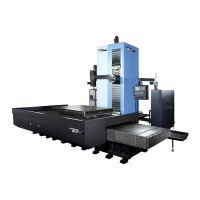
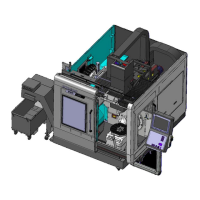
This document, "ATC Troubleshooting (MX 2000/2500/3000)," is a guide for troubleshooting issues with the Automatic Tool Changer (ATC) on Doosan Infracore Machine Tools, specifically for the MX 2000, MX 2500, and MX 3000 models. It outlines procedures for resolving common ATC problems, particularly when the changer arm becomes stuck during tool change operations.
Function Description
The document primarily serves as a troubleshooting manual for the Automatic Tool Changer (ATC) system on Doosan MX series machines. The ATC is a critical component that automates the process of changing tools in the machine spindle, enabling continuous and efficient machining operations. The manual focuses on scenarios where the ATC changer arm encounters a malfunction and becomes stuck, providing step-by-step instructions to manually restore the arm to its home position and identify the root cause of the problem. It addresses three main scenarios:
- Changer arm stuck while trying to pull out a tool from the spindle: This typically occurs after tool unclamping, leading to a "2103 M06 Command Over Time" alarm.
- Changer arm stuck in the spindle after changing a tool: This happens when the gripper is stuck on a tool after clamping, resulting in a "2023 M06 Command Overtime" alarm.
- Changer arm stopped operation irrelevantly to the spindle: This can be caused by an emergency stop or power failure during a tool change.
The procedures involve a combination of manual switch operations on the ATC manual operator panel and the main operator panel, as well as physical intervention to manipulate the changer arm and tools.
Important Technical Specifications
While the document does not explicitly list technical specifications like motor power or dimensions, it implicitly refers to several critical system components and parameters:
- Machine Models: MX 2000, MX 2500, MX 3000. These are likely CNC machining centers equipped with an ATC system.
- Alarms: "2103 M06 Command Over Time" and "2023 M06 Command Overtime." These are specific alarm codes generated by the machine's control system, indicating a failure in the ATC operation.
- Control System: The machine utilizes a control system that generates alarms and allows for manual mode operations (JOG, MDI, REF. RTN., MEM, TAPE, EDIT).
- Operator Panels:
- Main OP: Features buttons for "NC ON," "NC OFF," "MACHINE READY," "EDIT," "MEM," "TAPE," "MDI," "REF. RTN.," and "JOG."
- ATC Manual OP: Includes a mode selection switch with options like "AUTO," "MANUAL," "SPINDLE ORIENTATION," "ATC DOOR CLOSE," "ATC DOOR OPEN," "SHIFTER W-POS.," "SHIFTER M-POS.," "SHIFTER RETREAT," "SHIFTER ADVANCE," "MOTOR BRAKE RELEASE," "ATC STEP FOR.," "ATC STEP REV.," "ATC 1-CYCLE," "GRIPPER IN," "GRIPPER OUT," "GRIPPER W-POS.," "GRIPPER M-POS.," "GRIPPER H-POS." It also has a "START" button.
- Spindle Tool Clamp/Unclamp Switch: A manual switch on the milling spindle for controlling tool clamping.
- PMC Data: The document refers to "PMC DATA > G.DATA" for checking and correcting tool numbers (D450 for spindle, D448 for waiting pot). This indicates the use of a Programmable Machine Controller (PMC) for managing machine logic and data.
- Sensors/Positions: "Waiting Pot Spindle Side (X10.5)" and "ATC Main Changer Home Position (X8.2)" are mentioned as conditions for "Tool Change 1 Cycle" operation, implying the presence of sensors or encoders to detect these positions.
- Mechanical Components: Changer arm, gripper, spindle, collet, tapering side of the spindle/tool, locking pin of the changer arm.
Usage Features
The troubleshooting guide emphasizes a methodical approach to resolving ATC issues:
- Manual Intervention: The core of the troubleshooting involves manually operating the ATC through specific modes and buttons on the operator panels. This includes selecting "JOG" mode on the main OP, and "MANUAL," "ATC STEP REV.," or "ATC 1-CYCLE" on the ATC manual OP.
- Step-by-Step Procedures: Each scenario is broken down into clear, numbered steps, guiding the user through the process of restoring the changer arm and identifying the problem.
- Safety First: The initial step for any emergency stop or power failure scenario is to take appropriate measures to solve the problem and turn the power back on, ensuring the machine is in "Machine Ready" state.
- Diagnostic Checks: The guide instructs users to check specific conditions, such as the "Tool Change 1 Cycle" conditions (Waiting Pot Spindle Side, ATC Main Changer Home Position) and tool numbers in the PMC data (D450, D448).
- Physical Manipulation: In some cases, physical force (e.g., gently impacting the tool with a hammer, pressing the locking pin) is required to free a stuck tool or arm.
- Alarm Release: Successful completion of the troubleshooting steps should lead to the release of the alarm (e.g., 2103) and the restoration of the ATC home position.
- Tool Number Verification: After restoring the ATC, it is crucial to verify and correct tool numbers in the PMC data to ensure consistency between the machine's record and the actual tools.
Maintenance Features
The document implicitly highlights several aspects related to machine maintenance:
- Preventive Measures: By guiding users to identify the "exact cause" of the trouble (e.g., tool kick distance, unclamp cylinder state, collet condition, spindle/tool tapering side), the manual encourages a diagnostic approach that can lead to preventive maintenance. Understanding why the arm got stuck can help prevent future occurrences.
- Component Inspection: The troubleshooting process involves inspecting various components like the collet, unclamp cylinder, and the tapering side of the spindle or tool. This suggests that regular inspection of these parts is important for smooth ATC operation.
- Data Integrity: The emphasis on checking and correcting tool numbers in the PMC data (D450, D448) underscores the importance of maintaining accurate machine data for proper ATC functionality. Inaccurate data can lead to operational errors.
- Manual Override Capability: The presence of manual modes ("ATC STEP REV.", "ATC 1-CYCLE", "MANUAL") and physical switches (Spindle Tool Clamp/Unclamp) is a crucial maintenance feature, allowing operators to recover from malfunctions without extensive technical support, provided they follow the instructions.
- System Reset: The final step of returning all axes to their home positions signifies a complete system reset after troubleshooting, ensuring the machine is ready for normal operation.
In summary, this document is an essential resource for operators and maintenance personnel of Doosan MX series machines, providing practical guidance for diagnosing and resolving common ATC malfunctions, thereby minimizing downtime and ensuring the continued efficiency of the machining process.

 Need help?

 To Next Page
 General