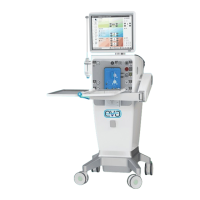
The D.O.R.C. Micro Diathermy System, Type 1100, is a mobile, compact source of radio frequency (RF) power designed primarily for retinal detachment procedures, including scleral diathermy and the release of subretinal fluid. It is also utilized in glaucoma procedures for cyclodiathermy and cauterization of sclerotomy lips, as well as for the destruction of skin and intraocular tumors, hemostasis, epilation, and trichiasis. The unit operates on line.
Function Description:
The system generates RF energy at a frequency of 13.56 MHz, controlled by a crystal-controlled solid-state oscillator. The energy intensity delivered to the electrode can be continuously varied from 0 watts up to approximately 12 watts. The output is regulated to maintain a constant RF current at the preselected value. This precise control allows surgeons to perform scleral marking for localizing retinal tears with greater accuracy and shorter application times. The RF LEVEL control knob is marked in increments of ten from 0 to 10. When the RF output section is activated, a blue LED on the front panel illuminates, and a constant buzzer tone is produced.
Diathermy in this system is used to produce a burn of the pigment epithelium through localized RF current applications on the sclera. The selection of 13.56 MHz is based on clinical tests indicating it produces optimal burns of the pigment epithelium with minimal damage to adjacent tissues like the sclera and choroid. High frequencies result in small, localized burns, unlike low frequencies which produce larger, less localized burns. High frequency also leads to less variation in scleral crust formation impedance, ensuring more consistent burns. The nominal scleral impedance is 600 ohms. The Micro Diathermy is designed to maintain an output level variation of less than ±10% at each RF LEVEL setting for scleral impedances ranging from 400 to 1000 ohms, further enhancing burn consistency. Lower impedance at high frequency reduces the voltage required to produce a given burn.
A burn is produced through three main factors: Joule's effect (resistive heating of tissues), dielectric losses in the capacitive part of tissues during high-frequency applications, and propagation of heat generated by crust formation under the electrode's tip.
Several factors influence the nature of a scleral diathermy burn:
- Voltage: Burn intensity is proportional to voltage. Insufficient reaction requires increasing the RF level. A scleral application over attached retina should produce a small grey-white spot.
- Time: For a given burn intensity, application duration is inversely related to voltage. Lower voltage requires longer application for an equivalent burn.
- Hydration: Wet sclera has lower impedance, which decreases voltage and reduces the burn. It also causes wider current dispersion, leading to less efficient burns.
- Location: The thickness and impedance of eye layers vary. The sclera is thicker and impedance lower in the posterior segment. Higher voltage or longer application is needed posteriorly. Consistent results are achieved at equal distances from the limbus.
- Pressure: Pressure does not significantly affect burn diameter but can increase intensity by drying the sclera and decreasing choroidal circulation.
Important Technical Specifications:
- Apparatus: MICRO DIATHERMY SYSTEM
- Type: Type 1100
- Weight: 5.5 Kg
- Dimensions: 13 x 22.5 x 29 cm
- Mains Supply: 100-110 VAC (50/60 Hz) or 230-240 VAC (50/60 Hz)
- Fuses: 2x at 100/110VAC (1 A slow-blow), 2x at 230/240VAC (500 mAT)
- Power Consumption: 45 VA
- RF Output Power: 0-10 Watt max.
- RF Frequency: 13.56 MHz, Crystal controlled.
- Operating Temperature: 15-40°C
- Humidity: 85% Max.
- Safety Standards: Complies with IEC601-1, Type BF, Class 1.
Usage Features:
The system includes an electrode handle with cable (1101) that connects to the "Instrument" connector on the front panel. Electrodes (1102-1111) are inserted into the handle by unscrewing the chuck cap, orienting the electrode, and then screwing the cap down with minimal finger pressure to avoid stripping threads. The cable should always be disconnected by grasping the connector, not by pulling the cable itself, to prevent damage. The cable and handle constitute an integral assembly and should not be separated. For coaxial electrodes (1113), the threaded electrode assembly is carefully removed and replaced.
Optional Accessories:
A wide range of electrodes and accessories are available:
- 1101: Electrode handle with cable (foot switch operated with D.O.R.C. unit).
- 1102: Electrode, buff, 2 mm fine tip (for perforation and subretinal fluid release).
- 1103: Electrode, black (for surface or partially penetrating diathermy).
- 1104: Electrode, green (for surface diathermy).
- 1105: Electrode, grey (for localization posterior to the equator).
- 1106: Electrode, brown (for localization at or anterior to the equator).
- 1107: Electrode, aqua, 3 mm fine tip (for tumor destruction).
- 1108: Electrode, pink, 4 mm fine tip (for tumor destruction).
- 1109: Electrode, brown, 5 mm fine tip (for tumor destruction).
- 1110: Electrode, buff, two stripes, 1.0 mm fine tip (for penetrating diathermy).
- 1111: Electrode, buff, three stripes, 1.5 mm fine tip (for penetrating diathermy).
- 1112: Electrode handle with fiber optics bundle, coaxial cable, and scleral transillumination electrode.
- 1113: Electrode handle with cable complete with straight coaxial electrode without infusion 20 gauge (0.9 mm).
- 1115: Bipolar coagulation forceps 12 cm angled blunt tips 0.5 mm with cable.
- 1115A: Diathermy cable for 1115 and 1116 forceps.
- 1116: Bipolar coagulation forceps, straight 12 cm blunt tips, 0.5 mm with cable.
- 1117: Sterilizable electrode holder.
- 1120: Reusable intra-ocular (coaxial diathermy electrode 0.9 mm (20 gauge) with handle for controlling retinal bleeders).
- 1120A: Diathermy cable for probes 1120, 1121, and 1122.
- 1121: Reusable coaxial probe 1.3 mm with handle (for precise hemostasis by gentle wiping motion).
- 1122: As 1121, but with 45° curved tip.
- 1124: Endodiathermy probe with tapered tip.
- 1281-D: Flute needle with retrograde flushing and endodiathermy capabilities (for aspiration of blood, coagulation of bleeding spots, and flushing back unwanted tissue).
Maintenance Features:
The device is provided non-sterile and requires sterilization before first use and between patient procedures. It can be sterilized using EtO or Steam. Flash sterilization is not recommended as the primary means.
Sterilization (Prior to First Use):
All components must be sterilized. Devices should be wrapped according to "AORN Recommended Practices for Selection and Use of Packaging Systems." Sterilizers should be loaded to allow exposure of all surfaces, and sterilization data must be recorded. For the 1269 probe, a protective cap should be placed over the shaft before sterilization.
Steam Sterilization Parameters:
- Gravity displacement:
- Wrapped items: 270°F to 275°F (132°C to 135°C) for 15 to 30 minutes.
- Unwrapped items ("flash sterilization"): 270°F (132°C) for 10 minutes.
- Prevacuum steam sterilization:
- Wrapped items: 270°F to 275°F (132°C to 135°C) for 3 to 4 minutes.
- Unwrapped items ("flash sterilization"): 270°F (132°C) for 4 minutes.
Recommended Guidelines for Steam Sterilization:
- Never use dry air sterilization for accessories.
- Handle accessories gently as they are precision instruments.
- Prevent accessories from touching other items during sterilization.
- Use only demineralized water for sterilization.
Ethylene Oxide Sterilization Parameters (100% EtO cycles):
- Concentration of EtO: 850 ±50 mg/l
- Temperature: 99°F to 117°F (37°C to 47°C)
- Exposure time: 3 to 4 hours
- Relative humidity: 70%
After EtO sterilization, illumination accessories must be aerated to remove residual EtO gas, with aeration time sufficient to reduce residues below maximum levels specified in the "USA Federal Register."
Decontamination of Reusable Accessories:
All reusable components must be thoroughly cleaned before resterilization. The effectiveness of sterilization methods not specified and the reliability of the sterilization process are affected by the number, type, and resistance of organisms. Soil and moisture inhibit sterilization and can produce toxic byproducts.
Disassembly and Cleaning Instructions:
Disassemble any device with removable parts and clean each part separately.
- Submerge and soak devices in enzymatic detergent solution for at least two minutes. Items that cannot be submerged should be wiped with enzymatic cleaner.
- For devices with internal lumens, flush enzymatic cleaner through the lumen using a cleaning syringe.
- Rinse under distilled running water to remove surface particles.
- Flush the lumen with distilled water.
- Perform a final rinse with distilled water.
- Dry the outside of devices and purge lumens with compressed air. Drying can also be done by rinsing or flushing with 70% alcohol.
- Inspect devices for cleanliness and damage; replace if necessary.
- Reassemble devices disassembled prior to sterilization. The useful life of surgical instruments depends on usage conditions; components should be discarded if there are signs of wear or damage.
Re-sterilization Instructions:
Re-sterilize devices using the instructions provided for "Sterilization (Prior to First Use)." Devices labeled "Single Use" are designed for one-time use only and should not be reprocessed.
Service Instructions:
- Replacing Fuses:
- Turn off the power switch and unplug the power cord.
- Fuses are located on the rear of the unit, inside the black box where the power cord attaches. Squeeze the two tabs on the fuse cover and pull out the assembly.
- Remove old fuses and replace with new ones of the same type (1 A slow-blow for 110/120VAC~, 0.5 A slow-blow for 230/240VAC~). Fuse type is also on the unit's rear label.
- Plug in the power cord and turn on the power switch. If new fuses fail quickly, contact the local distributor or D.O.R.C. International b.v.
- Recommended Spare Parts: Keep spare fuses (1 A slow-blow for 110/120VAC~ and 0.5 A slow-blow for 230/240VAC~) on hand for quick service.
- Periodical Instructions for Preventive Inspection and Maintenance: For optimum performance, periodic inspection of accessories and the circuit breaker is required. A service manual is available upon request.
- Returning the Unit for Service: Contact the D.O.R.C. International b.v. Service Department before returning the unit. Protect the unit during shipping, ideally using original packaging.
Warnings:
- Electric Shock Hazard: The unit contains high voltage circuits. Unplug the power cord before cleaning or servicing. Do not touch exposed wiring or conductive surfaces when energized. Never wear a grounding wrist strap when working on an energized unit. Do not perform testing or maintenance on medical instruments while monitoring a patient. Always turn off the unit before cleaning.
- Explosion Hazard: Never use the unit in the presence of flammable anesthetics.
- EMC: Install and use equipment according to instructions to prevent interference with other devices.
- Cautions: Electrostatic discharge can damage components. Handle circuit boards by non-conductive edges and use anti-static containers. Ground yourself and tools before servicing. Use hospital-grade grounded receptacles only. Servicing requires proper tools, test equipment, and a thorough understanding of the Service Manual. Do NOT apply tension on the power cord. Check rear panel voltage setting before connecting to AC main power. NEVER IMMERSE THIS UNIT IN LIQUID.
Warranty:
D.O.R.C. International b.v. warrants the quality of materials and manufacture. They are not liable for loss, damage, or expense from product abuse. If products are found defective at shipment, they will be replaced/repaired at no charge. All D.O.R.C. International b.v. equipment is covered by a full year warranty, excluding accessories. D.O.R.C. International b.v. does not assume or authorize additional liability or responsibility for its products.

 Need help?
 General

 To Next Page