Before each starting, check if the winch is not damaged.
Repair or replace any defective components.
Periodically check the winch mounting and make sure that
all screws are properly tightened.
The strength of the steel rope (cable) provided with the
winch is appropriate to the power and intended use of
each specic winch.
The diameter and length of the cable for the same winch
model may vary, maintaining constant strength and safety
parameters.
Before each use, check the condition of the cable. Any
frayed cable with broken wires should be replaced im-
mediately. Always replace the cable with the same or
equivalent type recommended by the manufacturer. The
equivalent types must have the same pull force, quality,
arrangement parameters and wire performance.
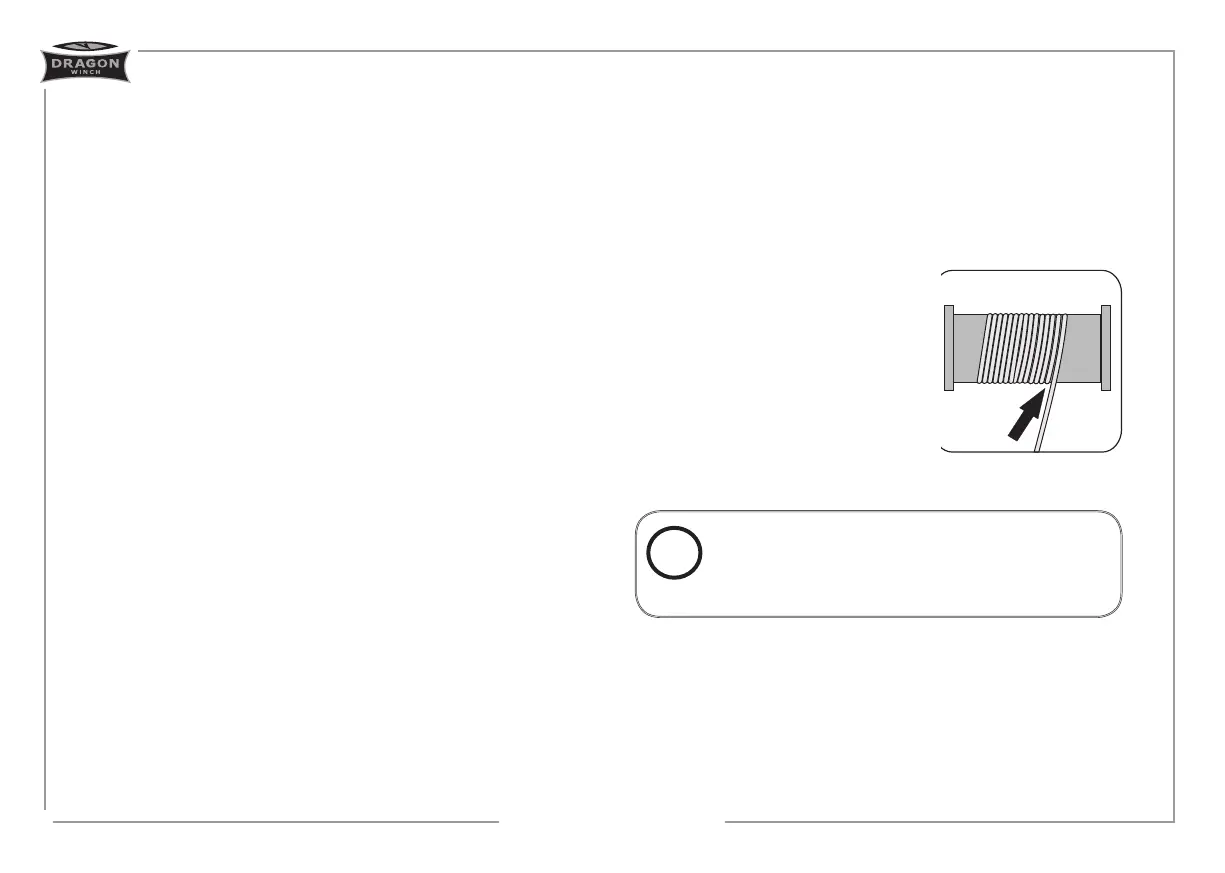
Pay attention to the correct direction of cable winding.
The cable must be wound on the underside of the winch
drum (between the mounting plate and the drum). Wrong
direction of cable winding may cause serious damage to
the winch.
The cable must be wound evenly, fake to fake, on the
winch drum in such a way that it does not cause the cable
to build up in one place or jam it between the lower lay-
ers. Improper winding of the cable signicantly reduces
the efciency of the winch and may lead to damaging
the equipment. In such cases, unwind the cable and start
winding it again.
After work, the cable should be
pulled (laid on the drum) with no
load. Hold the tightened cable in
one hand and the winch remote
controller the other.
For your own safety, during wind-
ing keep a minimum distance of
1.5 m from the winch.
The working life of the cable is directly dependent on how
it is used and stored.
It is not recommended to repair the cable. Any damaged
cable should be replaced with a new one.
ATTENTION
Do not use the winch cable as a tow-rope. Use
only the winch while pulling the load. Do not
“boost” the winch with the vehicle drive.
!


 To Next Page