
 Need help?
Do you have a question about the DrBrowns natural flow and is the answer not in the manual?
Instructions for initial cleaning and hygiene before first use of the bottle components.
Guidance on inspecting and cleaning the nipple/teat to ensure safety and prevent injury.
Details on how to clean Dr. Brown's bottles, including the vent system and dishwasher safety.
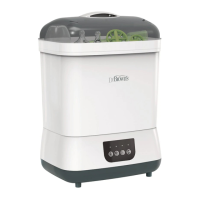
Methods for sterilizing feeding equipment using boiling, solutions, or electric/microwave sterilizers.
Critical warnings regarding tooth decay, food temperature, damage, choking, supervision, and material handling.
Advice on stopping feeding, preventing air swallowing, and consulting a physician for feeding issues.
Precautions for handling glass bottles, including inspection for damage and avoiding temperature shock.
Step-by-step guide for assembling the vent system and filling/warming the bottle.
Information on the flexibility of using Dr. Brown's bottles with or without the internal vent system.
Tips for proper bottle feeding angle, using correct nipples, and preventing leaks during transport.
Illustration and labeling of all individual parts of the Dr. Brown's bottle system.
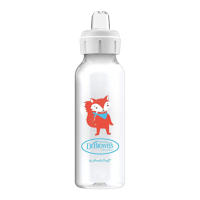
The Dr. Brown's Natural Flow Bottles are designed to provide a comfortable feeding experience for babies, aiming to reduce common feeding issues such as colic, spit-up, burping, and gas. The bottles feature a unique two-piece internal vent system that helps achieve this by preventing air from mixing with the milk or formula, thereby preserving essential nutrients and vitamins.
The primary function of Dr. Brown's Natural Flow Bottles is to facilitate bottle-feeding while minimizing air ingestion. The internal vent system works by creating a vacuum-free feeding environment, similar to breastfeeding. Air enters the bottle collar and is channeled through the vent system to the area above the liquid, bypassing the milk or formula. This design helps prevent air bubbles from forming in the liquid, which can contribute to digestive discomfort in infants. The bottles are suitable for feeding breast milk, formula, or other liquids to babies.
The bottles are designed for ease of use and adaptability. They can be used with or without the internal vent system, offering flexibility as a baby's feeding needs evolve. When the vent system is installed, it provides the full benefits of the Dr. Brown's design, including reduced air ingestion and preservation of nutrients. If a baby's feeding becomes more developed or if they no longer experience symptoms of colic, the vent assembly can be removed, and the bottle will function like a standard vented bottle.
Before first use, all components should be disassembled, cleaned, and sterilized by boiling for five minutes to ensure hygiene. Prior to each use, the nipple/teat should be inspected for any signs of wear or damage, such as cracks or changes in shape, especially when the child develops teeth. Damaged nipples/teats should be replaced immediately to prevent serious injury. The nipple/teat hole must be clean and free of obstructions.
When preparing a bottle, formula should be stirred gently rather than shaken to avoid creating bubbles and clogging the nipple/teat holes. The bottle should not be filled above the "FILL LINE WARNING" to prevent potential leaks. When assembling the internal vent system, the reservoir tube connects snugly to the insert, and the assembled system is placed into the bottle. The nipple/teat snaps into the collar, which then affixes to the bottle and is turned until closed, ensuring not to overtighten.
For proper feeding, the bottle should be held at approximately a 45° angle, ensuring the reservoir tube hole at the bottom of the bottle is not covered by liquid. Babies should be propped up during feeding rather than lying down. The product should always be used with adult supervision.
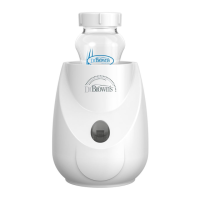
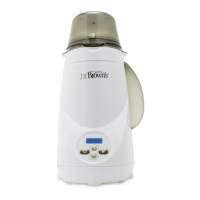
When warming a bottle, all bottle components should be removed, and a storage/travel cap should be used. The liquid should not be warmed beyond body temperature (98.6°F or 37°C). Microwave ovens should not be used to heat bottles, as they can create dangerous hotspots in the milk/formula and/or bottle components.
For transport, bottles should be kept upright, and a travel cap or disk should be used to prevent leaking. During air travel, internal parts should be removed and secured with a travel cap or disk to prevent leaks caused by air pressure changes.
Maintaining the Dr. Brown's bottles involves regular cleaning and inspection of all components. The bottles include a two-piece vent system that can be quickly and thoroughly cleaned using the wire brush provided with the bottle. This brush is specifically designed to access all openings on the insert and reservoir. It is crucial to remove the wire cleaning brush from the bottle before cleaning.
All parts of the bottle should be fully disassembled and washed thoroughly in hot water with detergent. After washing, parts should be rinsed thoroughly, ensuring the nipple/teat hole is clean and clear. A critical caution is not to use the wire cleaning brush to clean the nipple/teat, as this can cause it to tear.
All bottle components, including the vent system, are dishwasher safe (top rack only). They are also safe for use in an electric sterilizer, microwave sterilizer, or by boiling in water. When sterilizing by boiling on the stove or using any sterilizing equipment, caution should be exercised due to the risk of severe skin burns from steam. Hands should be washed thoroughly with soap and water before handling sterilized items, and unnecessary handling of sterilized items and equipment should be avoided. The wire cleaning brush should not be sterilized or microwaved.
Nipples/teats should be changed after approximately six weeks of use, or sooner if signs of wear or damage are visible. Intensive use and sterilization can cause nipples/teats to deteriorate after six weeks. The product should not be left in direct sunlight, heat, or disinfectant (sterilizing solution) for longer than recommended, as this can weaken the nipple/teat material. Only Dr. Brown's nipples/teats should be used with this bottle to ensure proper bottle and venting function, as other brands may lead to leaks or an incorrect flow rate.
The bottle components are not toys and should not be given to children to play with or suck on. Components not in use should be kept out of the reach of children. Never attach the bottle or its components to cords, ribbons, laces, or loose parts of clothing, as this poses a strangulation risk. Feeding nipples/teats should never be used as pacifiers or soothers.
 General
| Brand | Dr. Brown's |
|---|---|
| Model | Natural Flow |
| Category | Baby Accessories |
| Type | Baby Bottle |
| Nipple Material | Silicone |
| Anti-Colic | Yes |
| Material | Plastic or Glass (varies by model) |
| Capacity | Varies; typically 4 oz/120 ml or 8 oz/250 ml |
| Bottle Sizes | 4 oz, 8 oz |
| Vent System | Yes |
| Dishwasher Safe | Yes (top rack recommended) |





 To Next Page
