INSTRUCTIONS FOR INSTALLATION
20
Do not use any materials other than those supplied.
The supplied materials are incombustible and have been
manufactured specifically for this appliance.
Pebblestone set
The pebblestone set consists of naturally coloured
vermiculite, white carrara stones and a rack.
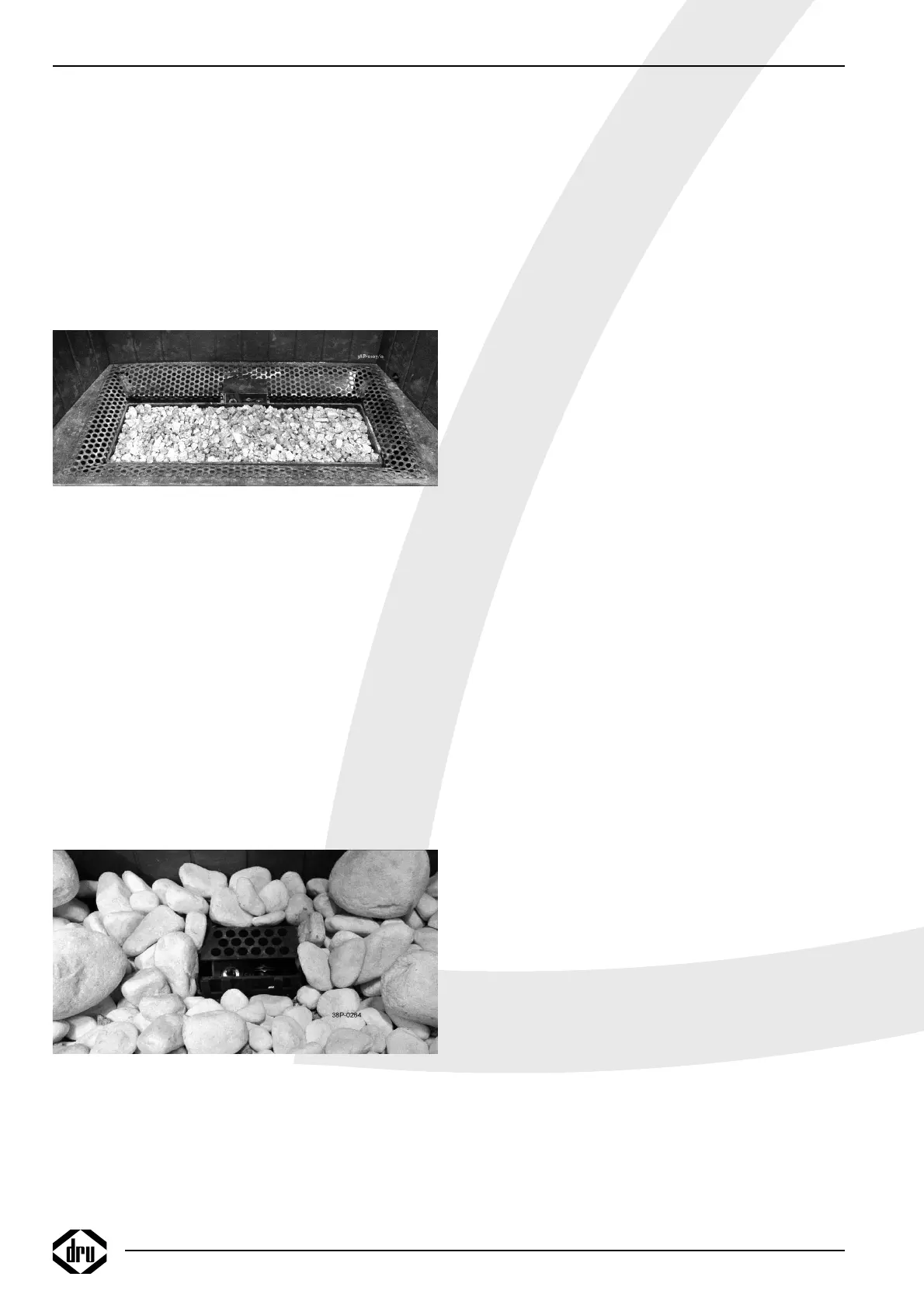
• Place the rack, see Photo (fig. 5);
• Fill the burner tray with vermiculite; equally spread the
vermiculite, see Photo (fig. 5).
NB: - You can influence the flame image by moving the
vermiculite, yet;
- the burner deck has to remain covered with
vermiculite in order to prevent that the life
expectancy of the burner is reduced
• Fill the burner tray and the tray surrounding the burner
with carrara stones;
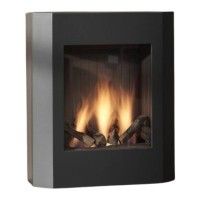
• Spread the carrara stones equally over one layer, see
Photo (fig. 6);
• Place the 12 big pebblestones on top of the small
pebblestones; see Photo (fig. 6);
• Make sure the pilot burner and the space around it are
kept free from objects; see Photo (fig. 6).
• For a proper and safe operation of the device only use
the accompanying wood/pebble set.
NB: Incorrect placement of the pebbles, e.g. on top of
each other or densely enclose the space around the pilot
burner, could have the following consequences:
- the device will no longer operate safely;
- the flame picture will be affected.
This appliance is fitted with a TTB
The TTB is a flue spillage sensor that reacts to flue gasses
flowing past the baffle in the heater back into the living room.
In the event of a flue spillage, the thermocouple is
interrupted by the TTB, shutting off the gas supply to the
burners.
This protective device will prevent flue gasses from
flowing into the home for any length of time. The device
will reset itself after a few minutes and the heater can
then be reignited.
Possible causes of the TTB being activated
include:
• There is little or no supply of fresh air into the home
(all draughts have been excluded and ventilation openings
sealed off).
• The outlet into the flue duct is partially or completely
blocked.
•
The chimney mouth was not constructed correctly, can
cause “fall winds” in the chimney duct being a possible
result.
Measures to prevent TTB activation
The heater can be reignited once the TTB has cooled
down.
If the safety device is activated again, open a window or
some other means of ventilation.
If this resolves the problem, it means that the home is
hermetically sealed and the heater is unable to discharge
all the combustion fumes through the chimney. Some
means of ventilation must be kept open or constructed.
If the safety device is still activated after that, examine the
other possible causes listed above and resolve accordingly.
The safety device may never be disconnected.
N.B.: If the flue spillage sensor is repeatedly activated, a
qualified gas installer should be contacted.
The TTB
The TTB safety device has several special components that
should also be incorporated in a replacement TTB. You
are strongly advised not to fit a “standard” thermocouple.
fig. 5
fig. 6



 To Next Page