
 Need help?
Do you have a question about the DUSTLESS BLASTING DB800 and is the answer not in the manual?
Crucial safety warnings for operating abrasive blast cleaning equipment, emphasizing PPE and air quality.
Highlights the severe risk of lung damage (Silicosis) from silica dust inhalation and the necessity of approved respirators.
Advises on maintaining equipment in good condition, inspecting parts, and grounding to prevent electrical shock.
Outlines MMLJ, Inc.'s limited warranty for defects in materials or workmanship under normal use.
Specifies the limited lifetime warranty for pressure vessels manufactured by MMLJ, Inc.
Instructions for handling warranty claims for parts not covered by MMLJ, Inc.
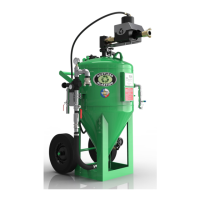
Provides a visual diagram of the DB800 model, identifying key components with numbered labels.
Details connecting the blast hose and twin line to the machine, ensuring safety pins are used.
Explains how to fill the blast pot with water, abrasive, and rust inhibitor using a fill funnel.
Guides on powering up the compressor and pressurizing the machine correctly before blasting.
Instructions on making adjustments, wearing PPE, and activating the blast hose to begin the blasting process.
Steps for servicing the control box valve when performance issues arise, including lubrication and gasket checks.
Guidance on lubricating the pressure regulator and maintaining the filter regulator for optimal performance.
A chart detailing water, abrasive, and rust inhibitor quantities for different blast times and models.
Instructions for regularly flushing the pot to prevent buildup and maintain system integrity.
Identifies wear parts requiring regular inspection and potential replacement based on usage hours.
Guide on rotating and inspecting the pinch hose, and procedures for attaching brass couplings.
Addresses media buildup inside the pot and how to adjust the vibrator valve for optimal performance.
Diagnoses problems with abrasive not flowing correctly, suggesting checks for media quality and clogging.
Provides steps to clear a clogged blast nozzle by using the blowdown position and inspecting for debris.
Offers troubleshooting steps for pinch valves not opening or closing, checking pressure, fittings, and air supply.
Covers methods for containing byproducts, masking sensitive areas, and cleaning up the work area.
Explains nozzle selection for blast patterns and preparation steps for switching to dry blasting.
Procedures for storing the machine for extended periods, including emptying and flushing.
Advises on precautions to prevent freezing damage, such as using antifreeze and heating.
Discusses how material type, coating, and distance affect blast pressure for optimal results.
Explains the method for easily adjusting blast pressure using a simple knob on the system.
Provides suggested blast pressures for common applications like Marine, Automotive, and Graffiti Removal.
Defines abrasive, types, shapes, and sizes, including their impact on surface preparation.
Details abrasive density, hardness, and guidance on adjusting abrasive supply for optimal results.
Links to websites for training, safety information, and replacement parts.
Directs users to the support website for tickets, safety data sheets, and warranty information.
 General
| Model | DB800 |
|---|---|
| Category | Industrial Equipment |
| Blast Pressure Range | 30-150 PSI |
| Working Pressure | 90-150 PSI |
| Hose Length | 50 ft |

 To Next Page