EasyManua.ls Logo

EAS Electric ECMV2 Series - User Manual

EAS Electric ECMV2 Series
276 pages
Go to English
Print Icon
To Next Page IconTo Next Page
Loading...
Serie
ECMV2
AIRE ACONDICIONADO
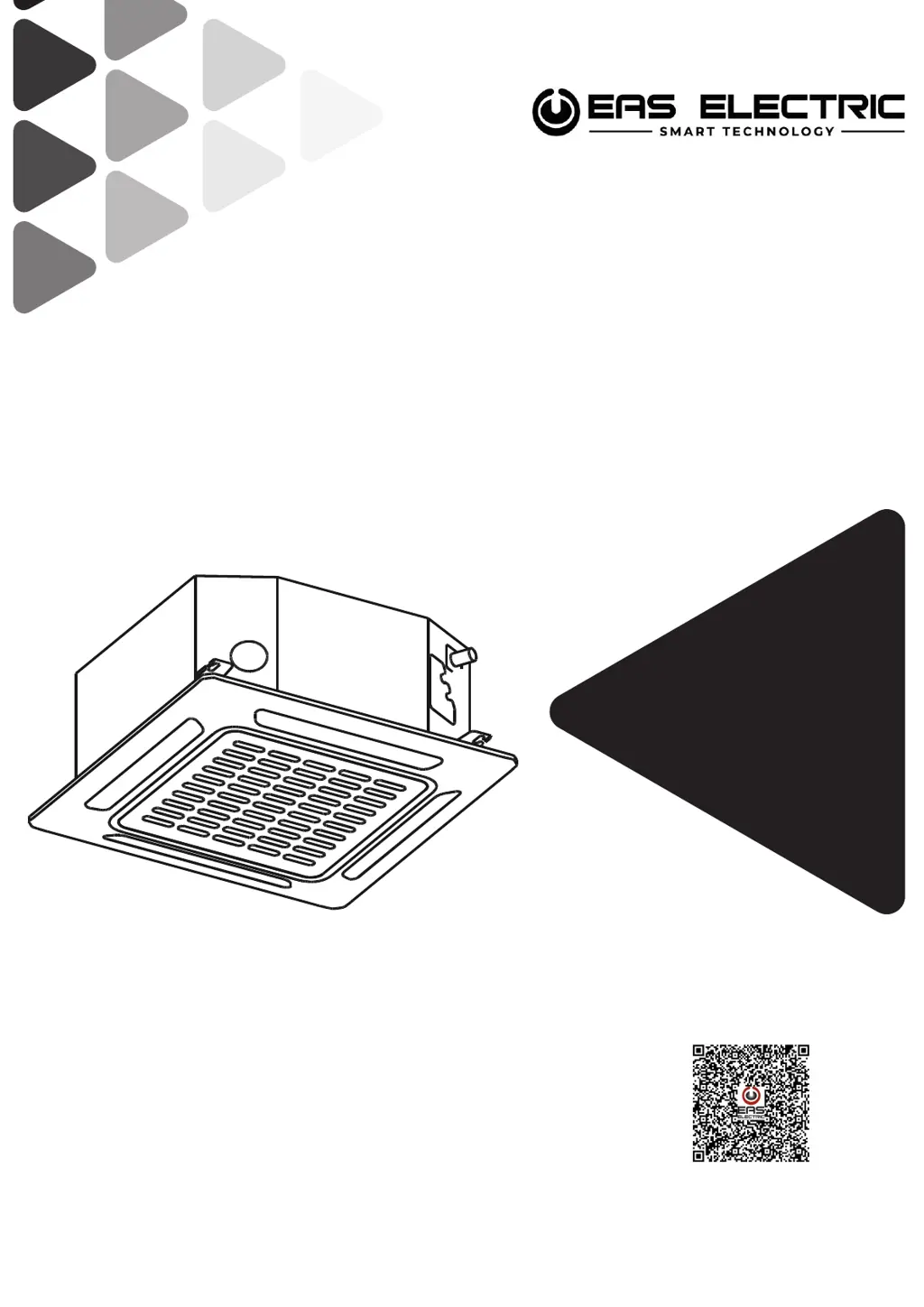
CASSETTE DE 4 VÍAS
4-WAY CASSETTE-TYPE AIR
CONDITIONING
V.2
MANUAL DE USUARIO
E INSTALACIÓN
OWNER AND
INSTALLATION MANUAL
Escanee para ver este manual en otros idiomas y actualizaciones
Scan for manual in other languages and further updates
Manuel dans d'autres langues et mis à jour
Manual em outras línguas e actualizações

Table of Contents

Questions and Answers

  • J
    Joseph NavarroAug 7, 2025
    Why is my EAS Electric Air Conditioner not cooling properly?
    • M
      Michelle BlackAug 7, 2025
      Poor cooling performance in your EAS Electric Air Conditioner can stem from several factors. The heat exchanger on either the indoor or outdoor unit might be dirty, requiring cleaning. Also, ensure the air filter is clean. Excessive heat from sunlight can also impact cooling, so close windows and curtains during peak heat. Too many heat sources in the room, such as electronics, can also be a cause. Finally, low refrigerant levels, possibly due to a leak, can lead to poor cooling. In this case, check for leaks, re-seal if necessary and top off refrigerant. Make sure that all doors and windows are closed while operating the unit.
  • J
    Jared GarciaAug 14, 2025
    What to do if my EAS Electric Air Conditioner is not working?
    • N
      nwalshAug 14, 2025
      If your EAS Electric Air Conditioner isn't working, there are several potential causes: * Check for a power failure and wait for the power to be restored. * Ensure the unit is turned on. * Replace the fuse if it's burned out. * Replace the remote control batteries if they are dead. * If the unit's 3-minute protection has been activated, wait three minutes after restarting. * Deactivate the timer if it's turned on.
  • R
    Robert NelsonAug 22, 2025
    Why does my EAS Electric Air Conditioner start and stop frequently?
    • M
      Michael LeAug 22, 2025
      Frequent starting and stopping of your EAS Electric Air Conditioner can be due to several reasons. There might be too much or too little refrigerant in the system, in which case you should check for leaks and recharge the system. Another cause might be incompressible gas or moisture in the system; if so, evacuate and recharge the system with refrigerant. A blocked system circuit could also be the culprit, requiring you to determine which circuit is blocked and replace the malfunctioning component. Alternatively, the compressor might be broken and need replacement. Lastly, voltage fluctuations could be the issue, necessitating the installation of a manostat to regulate the voltage.
  • N
    Nathaniel MuellerAug 29, 2025
    How to improve heating performance on my EAS Electric Air Conditioner?
    • B
      Barbara HernandezAug 29, 2025
      If your EAS Electric Air Conditioner's heating performance is poor, consider these factors. Extremely low outdoor temperatures can reduce heating effectiveness, so use an auxiliary heating device. Cold air entering through doors and windows can also impact performance, so ensure they are closed during use. Lastly, low refrigerant levels due to leaks or long-term use can be a cause; check for leaks, re-seal if necessary, and top off the refrigerant.

Summary

Safety Precautions

Warnings for Product Use

Safety guidelines for using the air conditioner to prevent injury or damage.

Warnings for Product Installation

Critical safety warnings and considerations for proper installation to avoid hazards.

Warning for Using R32;R290 Refrigerant

Safety instructions specific to the use of R32/R290 refrigerants.

Unit Specifications and Features

Indoor Unit Overview

Details and indicators for the indoor unit's display panel and controls.

Operating Temperature Ranges

Specifies the operational temperature limits for cooling, heating, and dry modes.

Other Features

Describes additional functionalities like auto-restart, protection features, and leak detection.

Care and Maintenance

Cleaning the Indoor Unit

Instructions on how to safely clean the indoor unit and its air filter.

Maintenance for Non-Use and Pre-Season

Guidelines for long-term storage and preparing the unit for seasonal use.

Troubleshooting

Common Issues and Causes

Identifies common problems, their possible causes, and solutions.

Performance Issues and Solutions

Addresses poor cooling performance and other operational problems with troubleshooting steps.

Accessories

Optional Accessories

Lists optional accessories like remote controls and connecting pipes.

Installation Summary

Unit Parts

Indoor Unit Installation

Selecting the Installation Location

Standards and restrictions for choosing a suitable location for the indoor unit.

Hanging the Indoor Unit

Detailed steps and dimensions for mounting the indoor unit in the ceiling.

Drilling Wall Holes and Connecting Drain Hose

Procedures for creating wall penetrations and connecting the drainpipe.

Outdoor Unit Installation

Selecting the Installation Location

Guidelines for choosing an appropriate location for the outdoor unit and special considerations.

Installing Drain Joint and Anchoring

Steps for installing the drain joint on the outdoor unit and securing its base.

Outdoor Unit Dimensions

Provides dimensions and installation spacing requirements for various outdoor unit models.

Refrigerant Piping Connection

Pipe Length and Oil Trap Requirements

Requirements for refrigerant pipe length, bends, drop height, and oil trap installation.

Cutting and Flaring Pipes

Instructions for preparing refrigerant pipes, including cutting, deburring, and flaring.

Connecting Pipes and Insulation

Steps for connecting refrigerant pipes, tightening flare nuts, and insulating.

Wiring

Electrical Regulations and Air Switch Notes

Safety regulations and notes regarding wiring, grounding, and air switches.

Outdoor Unit Wiring

Guidance on selecting the correct cable size and wiring the outdoor unit.

Indoor Unit Wiring

Instructions for wiring the indoor unit, connecting terminals, and managing cables.

Power Specifications

Details on required power supply, voltage, and circuit breaker/fuse ratings.

Air Evacuation

Preparations and Evacuation Instructions

Steps for preparing the system and performing air evacuation using a vacuum pump.

Note on Adding Refrigerant

Guidance on calculating and adding refrigerant based on pipe length and unit capacity.

Panel Installation

Removing Front Grille and Covers

Steps to remove the front grille and installation covers from the indoor unit panel.

Installing the Panel

Procedures for connecting louvers, attaching the decorative panel, and ensuring a proper fit.

Test Run

Pre-Test Run Checks

Essential checks to perform before starting the test run to ensure proper installation.

Indoor Unit Test Run

Procedures for testing indoor unit functions, controls, and indicators.

Outdoor Unit Test Run

Procedures for testing outdoor unit operation, noise, and environmental impact.

Drainage Test

Procedure for testing the drainpipe's flow and checking for leaks.

Warranty Conditions

Warranty Exclusions

Lists conditions and causes that void the product warranty.

EAS Electric ECMV2 Series Specifications

General IconGeneral
BrandEAS Electric
ModelECMV2 Series
CategoryAir Conditioner
LanguageEnglish

Related product manuals