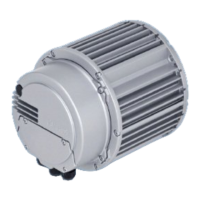
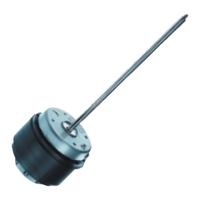
Need help?
Do you have a question about the ebm-papst M3G150-IF21-52 and is the answer not in the manual?
Explains the meaning of DANGER, WARNING, CAUTION, and NOTE hazard levels used in the document.
Specifies that only qualified, trained, and authorized technical staff may operate or maintain the device.
Outlines general safety practices to be observed when working on the device or in its vicinity.
Warns about electrical hazards, advising to check equipment regularly and replace faulty cables.
Discusses potential interference from electromagnetic radiation and user responsibilities for shielding.
Details hazards related to rotating parts, long hair, dangling items, and potential ejected parts.
Warns about high temperatures on the electronics housing and the risk of burns.
Provides precautions for transporting the motor, including safety gear and securing the device.
Gives guidelines for storing the device, emphasizing dry conditions and protection from environmental effects.
Lists specific conditions and applications that constitute the intended use of the device.
Details prohibited operations that could be hazardous or lead to misuse of the device.
Presents a detailed technical drawing of the motor with dimensions and component references.
Graph and table showing limits for impeller mass based on mounting distance from the motor flange.
Provides a table of technical specifications including phase, voltage, frequency, power, and temperature limits.
Details the motor's physical characteristics, protection class, insulation, and conformity with standards.
Specifies screw strength class and advises securing screws against loosening.
Details maximum permitted ambient temperatures for motor transport and storage.
Outlines EMC immunity and interference emission requirements and customer responsibilities.
Provides warnings and precautions for physically connecting the motor, including handling heavy loads and hot surfaces.
Covers crucial safety warnings, cable selection, protective earth, and requirements for connecting the device.
Lists checks for nameplate data, power supply match, cable sizing, and protective earth resistance.
Assigns supply cable cross-sections and required fuses for line protection.
Explains reactive currents due to EMC filters, even when the motor is at a standstill.
Advises on the type of residual current devices permissible and potential tripping issues.
Mentions potential increases in leakage current under specific conditions like phase failure.
States that starting current (LRA) is equal to or less than the nominal current (FLA) due to locked-rotor protection.
Guides on connecting wires to terminals, including safety precautions and cable routing.
Details stripping cables, ensuring gland seals, and strain relief for connections.
Step-by-step instructions for connecting wires to the terminal box, emphasizing protective earth first.
Provides recommendations for routing cables to prevent moisture penetration into the terminal box.
Lists the default factory settings for mode, address, PWM, and action parameters.
Presents detailed diagrams showing electrical connections for the customer circuit and terminal box.
Provides steps to ensure proper and safe electrical connections before operation.
Outlines prerequisites and steps for safely switching on the installed device.
Details procedures for switching off the device during operation and for maintenance.
Lists common malfunctions, their possible causes, and recommended remedies or troubleshooting steps.
Provides warnings and instructions for cleaning the device, advising against high-pressure cleaners or harsh agents.
Details periodic safety checks, including visual inspections of the device and cables, and frequency.
Offers recommendations for the ecological disposal of the product and its components, emphasizing legal requirements.
Stresses the importance of observing applicable country-specific legal regulations for product and waste disposal.
Advises that disassembly should be performed by qualified personnel and warns about heavy parts.
Lists categories for component recycling, including metals, plastics, and electronic scrap.

 To Next Page
 General