Need help?
Do you have a question about the Efka vario dc DA82GA3312 and is the answer not in the manual?
Compliance requirements for incorporating the drive into machinery and adhering to EC standards.
Details on optional accessories available for the control panel and system.
Explains the different access levels (operator, technician, supplier) and their authorization codes.
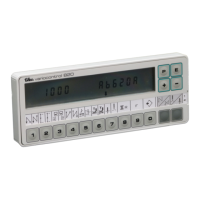
Guide to operating the V810 control panel, including code and parameter input.
Guide to operating the V820 control panel, including code and parameter input.
Details on how to display program numbers, modification index, and identification numbers.
Setting maximum speed limitation directly via control panel for application-specific needs.
Demonstrates using keys for background information (HIT) on the V820 control panel.
Guide to setting up and recalling sewing sequences with different stitch settings.
How to set and verify the motor's direction of rotation using parameter 161.
Procedure for selecting the correct machine series using parameter 280.
Actions and functions available when the machine select is invalid.
Configuration of needle positions and stop points for precise sewing.
Steps to set the reference position for accurate needle positioning.
Detailed guide for setting the reference position using the V810 control panel.
Detailed guide for setting the reference position using the V820 control panel.
Procedure to set various sewing positions (1, 2, 1A, 2A) on the V810 control panel.
Procedure to set various sewing positions (1, 2, 1A, 2A) on the V820 control panel.
Setting the speed for positioning operations using parameter 110.
Determining and setting the maximum operating speed based on machine and parameters.
Setting the overall maximum speed limit for the machine.
How to check and verify programmed positions using parameter 172.
Adjusting braking effect and parameters for stopping the motor.
Setting braking power to prevent unintended needle movement at standstill.
Adapting drive acceleration dynamics to the sewing machine's characteristics.
Information displayed regarding actual speed during operation and at stops.
Setting the first stitch behavior after power on to use positioning speed.
Configuration of softstart function for gradual speed increase at start.
Setting the speed for the softstart phase.
Defining the number of stitches used during the softstart phase.
Controls for automatic and manual sewing foot lifting, including delays and holding power.
Adjusting sewing foot pressure based on speed limitation and key functions.
Setup and configuration of the start backtack function.
Setting the specific speed for the start backtack operation.
Defining the number of stitches for forward and backward start backtacking.
Delay settings for releasing speed after start backtack.
Configuration for performing double start backtack sequences.
Configuration for performing single start backtack sequences.
Setup and configuration of the end backtack function.
Setting the specific speed for the end backtack operation.
Defining the number of stitches for backward and forward end backtacking.
Enabling or disabling the last stitch backward function.
Configuration for performing double end backtack sequences.
Configuration for performing single end backtack sequences.
Synchronizing backtack speed for start and end operations.
Compensating backtack inertia using switch-on/off delay parameters.
Setting up and configuring the start ornamental backtack function.
Setting up and configuring the end ornamental backtack function.
Configuration for repeating double start or end backtacking.
Enabling and configuring the catch backtacking function.
Enabling and controlling backtack operation anywhere in the seam.
Functionality to suppress or recall the next backtack operation.
Setting the duration of full power for the stitch regulator solenoid.
Configuration and operation of reverse motor rotation after trimming.
Configuration and operation of the machine run blockage safety function.
Details on machine start blockage preventing operation until deactivated.
Operation of Machine Run Blockage as a safety function with specific stop behavior.
Operation of Machine Run Blockage as a control function with positioning stop behavior.
Setup and operation of the thread monitoring system.
Description of input signals used to identify empty bobbins.
Disabling the thread monitor function.
Operation of thread monitor for Model 270 with specific stop and foot behavior.
Operation of thread monitor for Models 767/N291 with stop and foot up behavior.
Operation of thread monitor for Models 767/N291 with stop and foot down behavior.
Using thread monitor in conjunction with stitch counting.
Enabling and configuring the needle cooling system.
Setup and operation of the high lift feature for walking foot.
Manually setting speed limitations for high lift using a turn switch.
Enabling high lift using a key and setting speed limits.
Configuring high lift mode to not store settings (Pa. 138=OFF, Pa. 184=0).
Configuring high lift mode to store settings (Pa. 138=ON).
Configuring high lift mode with stored stitches (Pa. 138=OFF, Pa. 184>0).
Methods and parameters for limiting machine speed.
Setting speed limitations using DB2000 or DB3000 control inputs.
Limiting speed using analog voltage input from a potentiometer.
Configuring speed limitation based on sewing foot high lift levels.
Function and configuration of Jumper S1 on the circuit board.
Setting speed limits based on high lift using the V820 control panel.
Setting speed limits based on high lift using the V810 control panel.
Functionality to switch stitch length based on conditions or key presses.
Configuration and control of the roller function via sockets and parameters.
Enabling and configuring the thread clamp function with various parameters.
Setup and operation of the thread trimming and thread wiper functions.
Details on thread trimmer signal activation, stop times, and delays.
Configuration of the thread wiper function, including its active time.
Enabling thread tension release with time lags relative to the thread trimmer.
Configuration of the second thread tension release function.
Activating and configuring thread tension reduction.
Linking thread tension release with sewing foot lifting actions.
Linking thread tension reduction with high lift and speedomat.
Programming and operating seams using stitch counting.
Setting the number of stitches for a seam with stitch counting.
Setting the speed for stitch counting operations.
Configuration and operation of free seams and seams using a light barrier.
Setup and operation of the light barrier module for fabric sensing.
Setting the speed after the light barrier detects fabric.
Overview of general functions and parameters related to the light barrier.
Specific settings for the LSM001A reflection light barrier module.
Enabling automatic sewing start based on light barrier sensing.
Using a filter for the light barrier function with knitted fabrics.
Configuration of needle position control and single stitch functions.
Assigning functions to the F1 and F2 keys on the control panels.
Details on signal output for position 2, suitable for counters.
Details on signal output for handwheel rotation, suitable for counters.
Information on the actuator connected to the pedal or other sockets.
Configuration of acoustic signals for machine run blockage or thread monitor.
Procedure for resetting all parameters to factory default settings.
Performing input and output function tests using the control panels.
 General
| Brand | Efka |
|---|---|
| Model | vario dc DA82GA3312 |
| Category | Control Systems |
| Language | English |


 To Next Page