Supplier’s name or trade mark ELECTROLUX
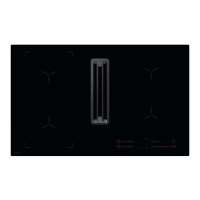
Model identifier DMSL8350UO
Annual Energy Consumption - AEChood 28.8 kWh / a
Energy Efficiency Class A +
Fluid Dynamic Efficiency - FDEhood 32.4
Fluid Dynamic Efficiency class A
Lighting Efficiency - LEhood - lux / W
Lighting Efficiency Class -
Grease Filtering Efficiency - GFEhood 85.1 %
Grease Filtering Efficiency class B
Minimum Air Flow in normal use 270.0 m3 / h
Maximum Air Flow in normal use 500.0 m3 / h
Air Flow at intensive/boost setting 630.0 m3 / h
A-weighted Sound Power Emissions at minimum speed 49 db(A) re 1pW
A-weighted Sound Power Emissions at maximum speed 64 db(A) re 1pW
A-weighted Sound Power Emissions at intensive or boost speed 70 db(A) re 1pW
Measured power consumption off mode - Po 0.49 W
Measured power consumption in standby mode - Ps - W
Additional Information according to (EU) No 66/2014
Time increase factor - f 0.8
Energy Efficiency Index - EEIhood 41.4
Measured air flow rate at best efficiency point - QBEP 259.2 m3 / h
Measured air pressure at best efficiency point - PBEP 444 Pa
Maximum air flow - Qmax 630.0 m3 / h
Measured electric power input at best efficiency point - WBEP 98.8 W
Nominal power of the lighting system - WL - W
Average illumination of the lighting system on the cooking surface - Emiddle - lux
Appliance tested according to: EN 61591, EN
60704-1, EN 60704-2-13, EN 50564.
11.4 Hood - Energy saving
You can save energy during everyday
cooking if you follow the hints below.
• When you start cooking, set the hood fan
at a low speed level. Once the cooking is
finished, keep the hood running for a few
minutes.
• Increase the fan speed only to get rid of
large amounts of steam or smoke. It is
recommended to use the Boost function
only in extreme situations.
• Clean the hood filter regularly and replace
it when necessary to maintain its
efficiency.
• Use the maximum diameter of the ducting
system to optimize efficiency and minimize
noise.
30 ENGLISH




 To Next Page