
 Need help?
Do you have a question about the Electrolux EIFLW55HIW0 and is the answer not in the manual?
Section for recording essential appliance details like purchase date, model, and serial number for future use.
Information on how to get toll-free telephone support in the U.S. and Canada, and online support.
Key safety messages and hazard identification symbols, including warnings and cautions.
Explanation of warning (WARNING) and caution (CAUTION) symbols used to indicate potential risks.
Critical steps to take if you smell gas, focusing on fire and explosion prevention.
Warnings against washing or storing flammable materials like gasoline, solvents, or oils near the washer.
Guidelines for ensuring children's safety around the appliance, including supervision and proper disposal of packaging.
Instructions for safe electrical grounding, using proper outlets, and avoiding extension cords.
Guidance on proper installation, maintenance, and avoiding operational risks like tampering or weather exposure.
Caution about mixing household chemicals like bleach and ammonia, which can create dangerous fumes.
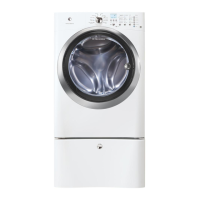
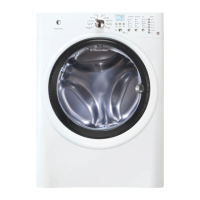
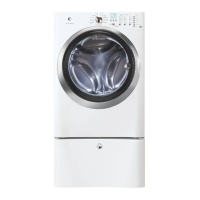
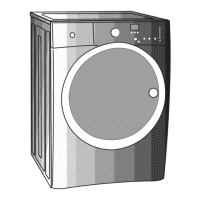
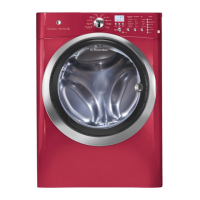
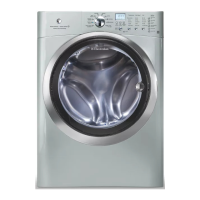
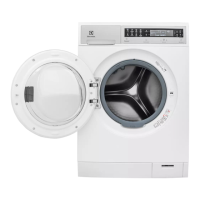
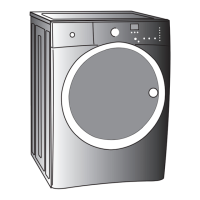
Identification and description of key parts of the front-load washer, including the control panel, drum, and door.
Initial steps for using the washer, including sorting laundry and selecting cycles/settings.
Explanation of common sounds produced during the washer's operation, such as draining and motor hum.
Guidelines for separating clothes based on color, soil level, fabric type, and lint-shedding properties.
Instructions on emptying pockets, closing zippers, and protecting delicate items with mesh bags.
Guidance on applying stain removers before washing for effective treatment of tough stains.
Tips on how to load clothes for optimal washing, avoiding overloading and ensuring load balance.
Instructions for adding detergent, bleach, and fabric softener to the correct compartments in the dispenser.
How to properly add liquid detergent to the designated 'Main Wash - liquid only' compartment.
Method for adding powder detergent, including removing the liquid cup and using the correct chamber.
Guidance on using color-safe bleach, water conditioners, and boosters with your detergent.
How to add detergent for the prewash option on heavily soiled or stained loads.
Proper dispensing of liquid bleach to the 'Liquid Bleach' chamber and fabric softener to its compartment.
How to select the desired wash cycle using the selector knob and understanding cycle indicators.
How to change temperature, spin speed, soil level, and options using the control panel buttons.
Steps to begin the washing process, including closing the door and pressing start.
How to pause the cycle to add forgotten items, then resume the wash.
Warning regarding potential entrapment hazards for children if the door is left ajar.
Information on the normal cycle's duration, temperatures, spin speeds, soil levels, and available options.
Details for the colors cycle, including duration, water temperatures, and settings for mixed loads.
Information specific to the whites cycle, recommending liquid chlorine bleach for brighter whites.
Description of the heavy duty cycle for sturdy, soiled items like jeans, and its available settings.
Use of the deep clean sanitize cycle for sanitation and killing 99.9% of bacteria with higher temperatures.
Information about the NSF certification for sanitization performance of the washer.
Information for the casual cycle, suitable for permanent press items and minimizing wrinkling.
Details on the fast wash cycle for quick cleaning of small, lightly soiled loads in 18 minutes.
Information for the delicate cycle, suitable for knits and fragile items with gentle action.
Instructions for the hand wash cycle for items labeled washable by hand, with intermittent tumbling.
How to use the spin only cycle for draining water and spinning loads, or as a follow-up to 'no spin'.
How to program and use a personalized favorite wash cycle with preferred settings.
Selecting and adjusting water temperatures for optimal fabric care, energy saving, and reduced wrinkling.
Detailed explanation of sanitize/cold, hot/cold, warm/cold, warm/warm, and cold/cold temperature settings.
How spin speed affects water extraction, drying time, energy conservation, and wrinkle reduction.
How to adjust wash time in 3-minute increments based on the soil level of each load.
Adding an initial wash period to a cycle for heavily soiled or stained loads.
Using the stain clean option for a 5-minute soak in the middle of the wash for tough stains.
Using extra rinse for removing excess dirt and detergent, recommended for sensitive skin.
Adding time to the final spin for better water extraction, decreasing drying time.
Reducing hot and warm water temperatures slightly to save energy.
Activating a sound signal at the end of the cycle, with adjustable volume.
Scheduling the start of a wash cycle for convenience, up to 14 hours in advance.
How to lock controls to prevent accidental operation, especially by children.
Understanding cycle time estimates, display messages, and indications during operation.
Features for drum illumination during loading and door hinge configuration for left or right opening.
A comprehensive chart showing temperature, spin speed, soil level, and option availability for each wash cycle.
General safety guidelines for using stain removal products, including proper storage and avoiding mixing.
Caution about mixing chemicals like bleach and ammonia, which can create dangerous fumes.
Key advice for effective stain treatment, including promptness, checking labels, and testing colorfastness.
Specific instructions for removing various types of stains, from adhesive tape to wine, from fabrics.
Steps to perform the System Clean cycle to refresh the wash drum and remove residue.
Instructions for cleaning the drum, gasket, door opening, and drum vanes to maintain hygiene.
Detailed steps for removing and cleaning the dispenser drawer and its inserts to remove residue.
Tips for wiping down the cabinet, cleaning chrome parts, and preventing floor damage when moving.
Steps to prepare the washer for storage in freezing temperatures, including using RV antifreeze.
Solutions for issues like blue stains, graying, greasy stains, and improving soil/stain removal.
Tips for preventing and fixing lint issues, holes, tears, snags, and fabric degradation.
Solutions for fabric pilling and residue left on dark items, including tips for stiff fabrics.
Advice for minimizing wrinkles on synthetics and addressing yellowing from body soil.
How to treat yellow or brown rust stains on fabrics, advising against chlorine bleach.
Solutions for common noises like jet engine sound, rattling, thumping, and vibrating washers.
Solutions for when the washer doesn't start, won't spin, has residue, or displays DEMO MODE.
Solutions for water in bellows, slow water entry, improper temperatures, and water leaks.
Tips for slow draining, clogged hoses, house drain issues, and loose hose connections.
Solutions for oversudsing, incorrect wash/rinse temperatures, and water not filling the tub.
List of conditions not covered by the appliance's limited warranty, such as commercial use or cosmetic damage.
Legal disclaimer regarding implied warranties and limitation on consequential damages.
Contact information and procedures for requesting warranty service, including required documentation.
 General
| Brand | Electrolux |
|---|---|
| Model | EIFLW55HIW0 |
| Appliance Category | Washer |
| Washer Type | Front Load |
| Capacity | 4.4 cu. ft. |
| Color | White |
| Steam Function | Yes |
| Sanitize Cycle | Yes |
| ENERGY STAR Certified | Yes |
| Width | 27 in |
| Voltage | 120 V |
| Spin Speed | 1300 RPM |
| Control Type | Electronic |
| Display | Digital |
| Vibration Reduction | Yes |
| Warranty | 1 Year Limited |
| Height | 38 in |



 To Next Page
